How many hulls is too many ?

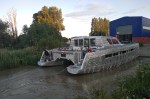
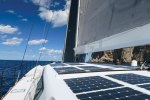
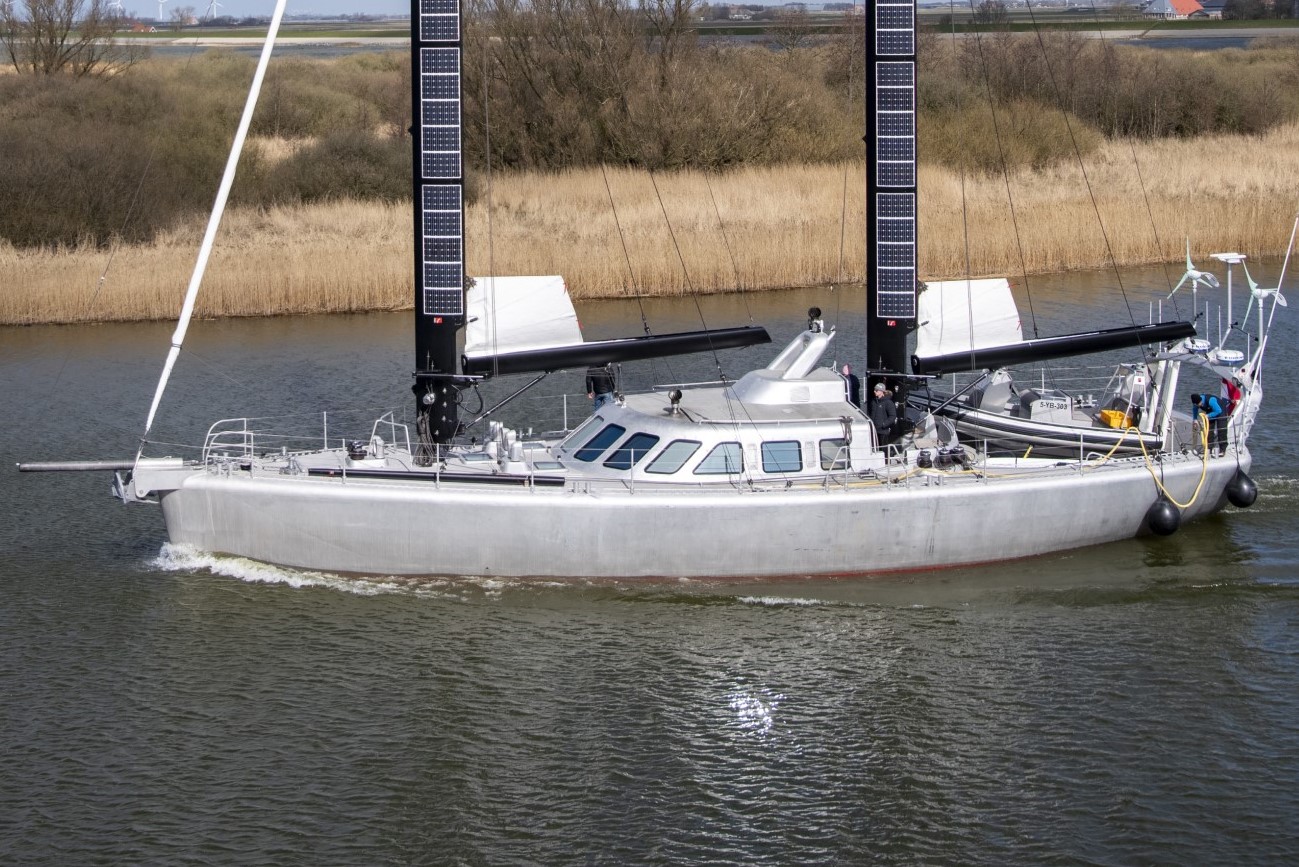
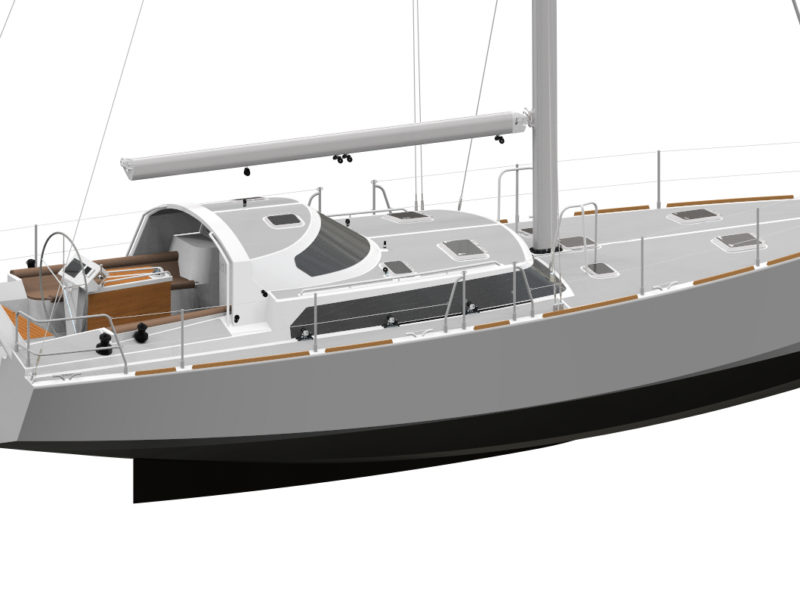
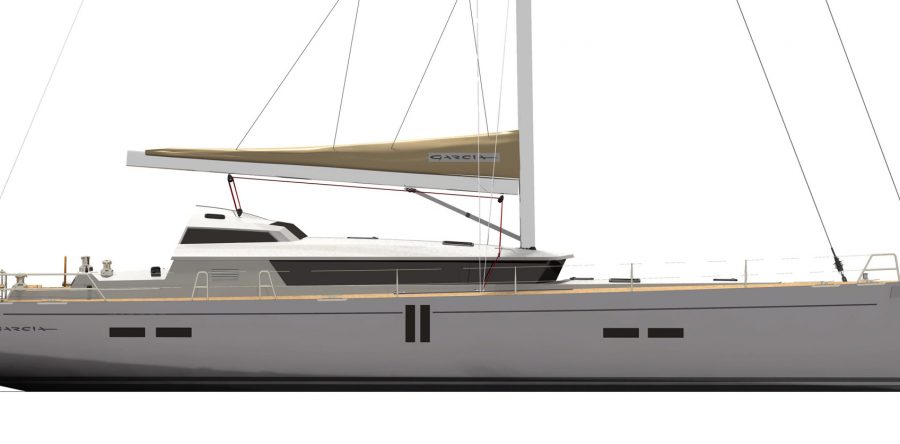
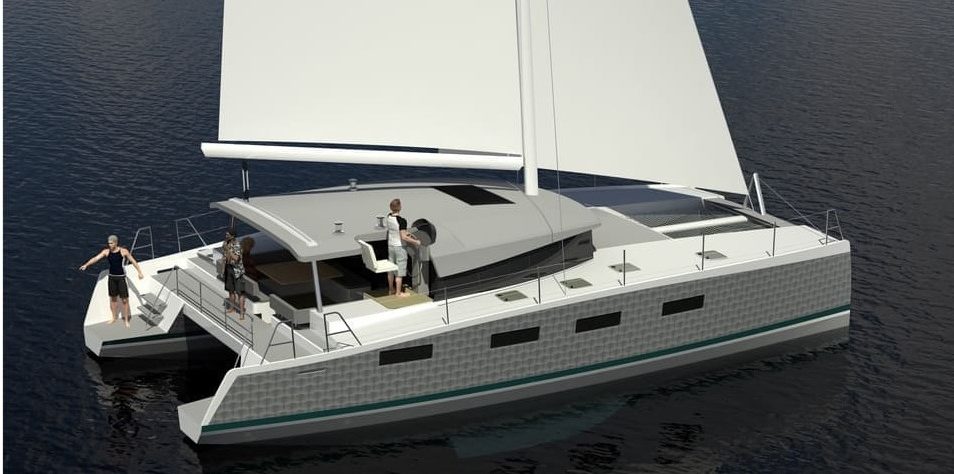
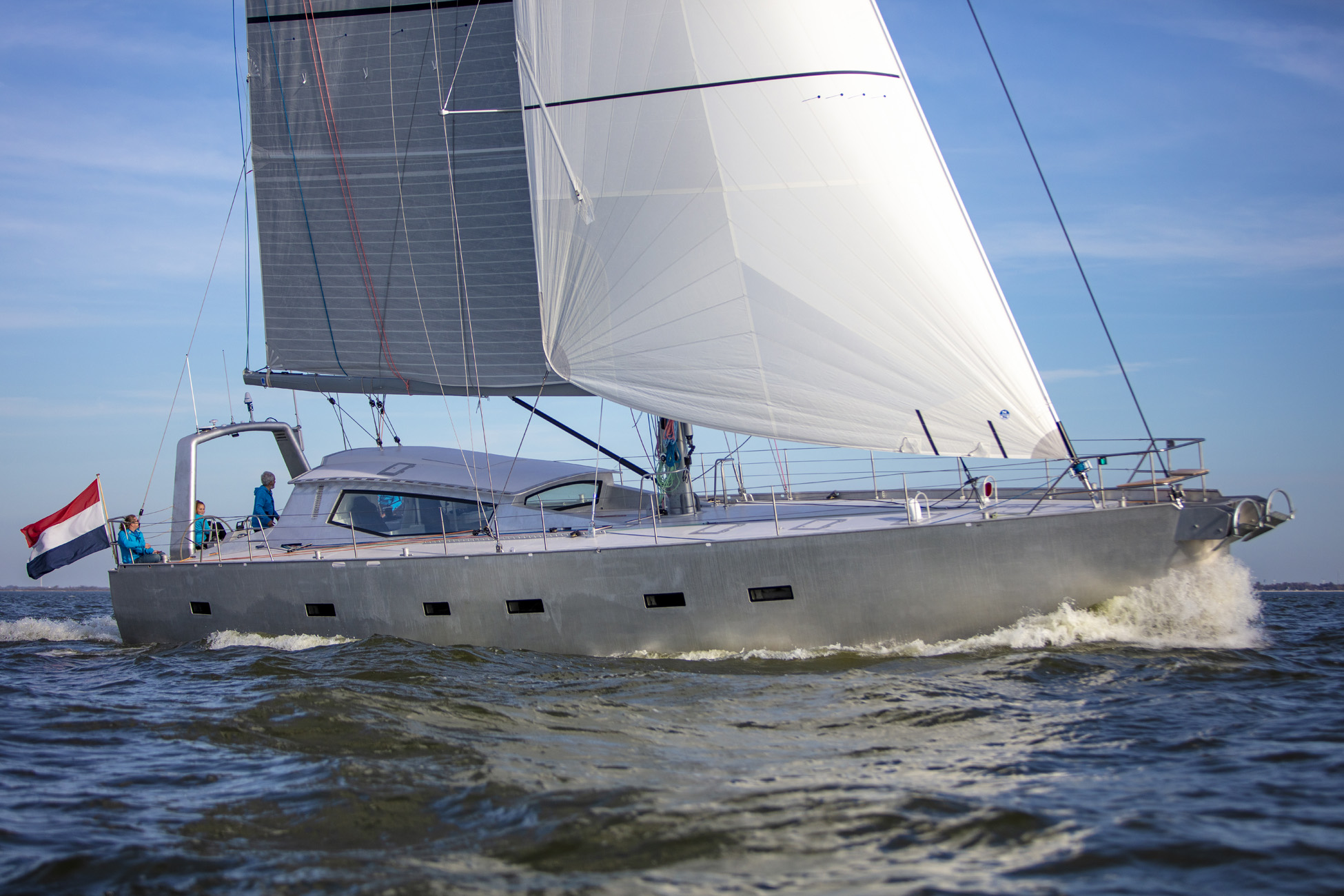
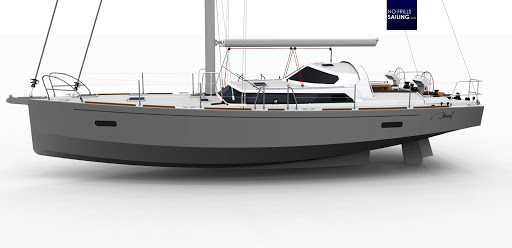
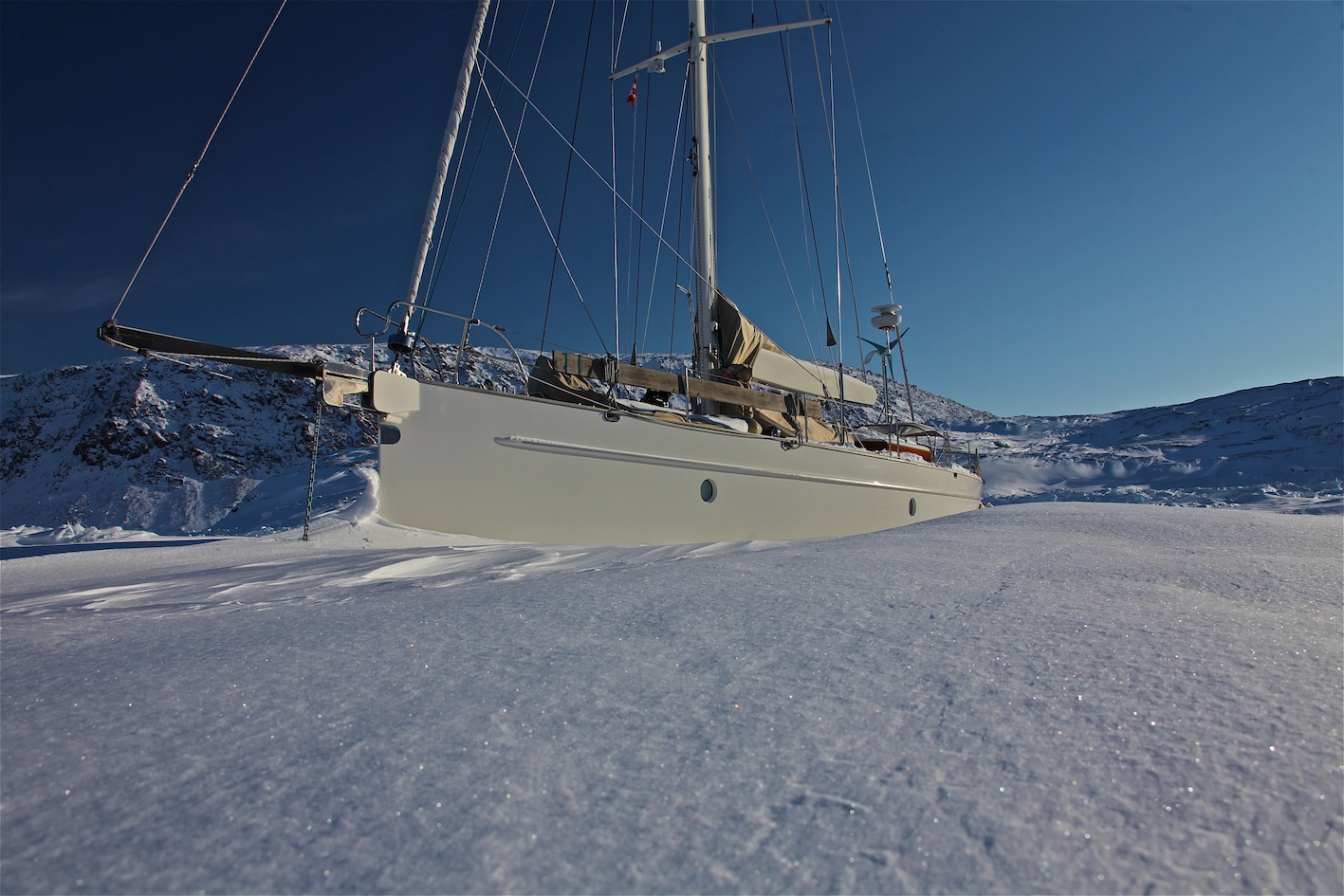
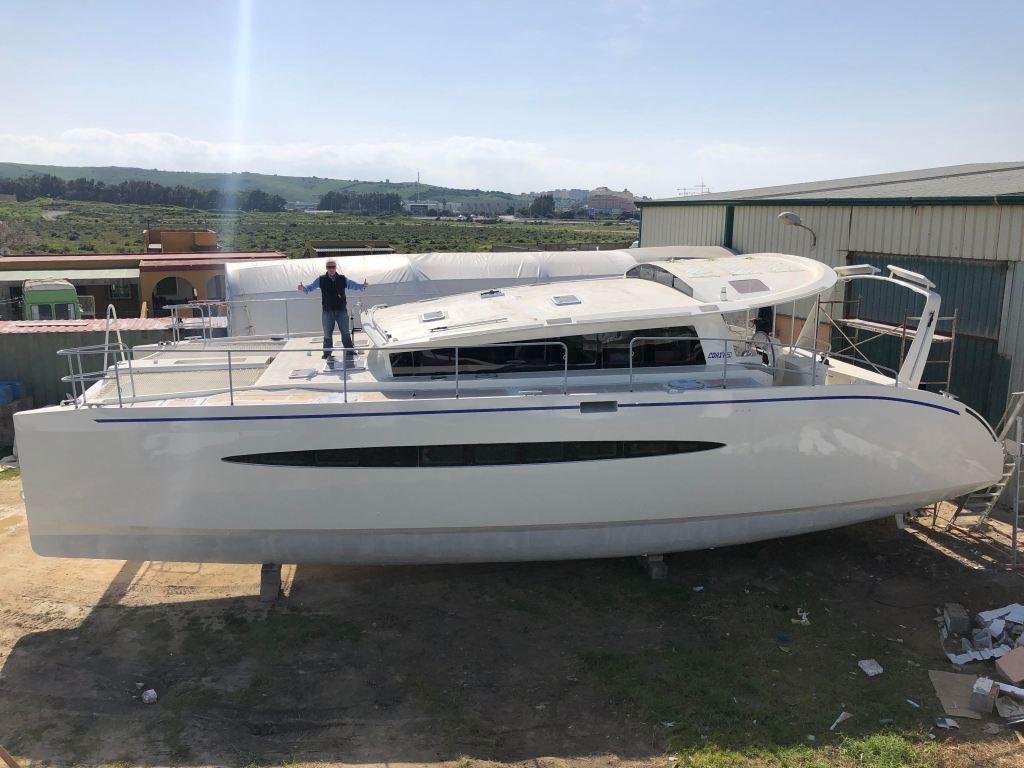
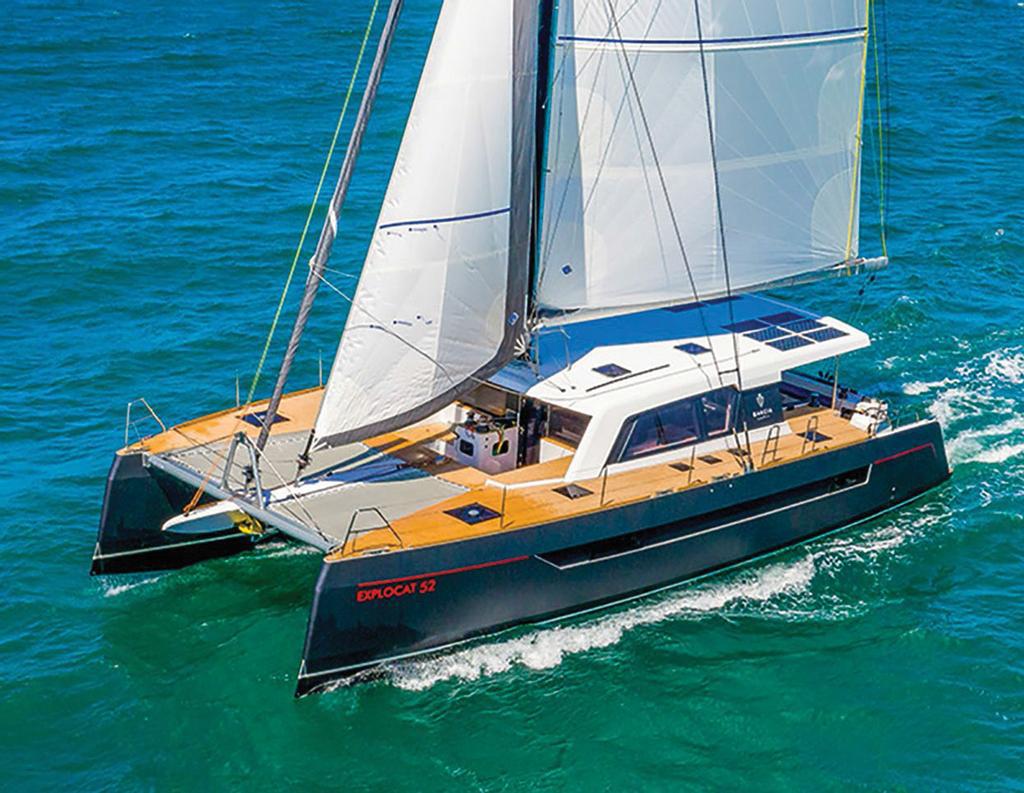
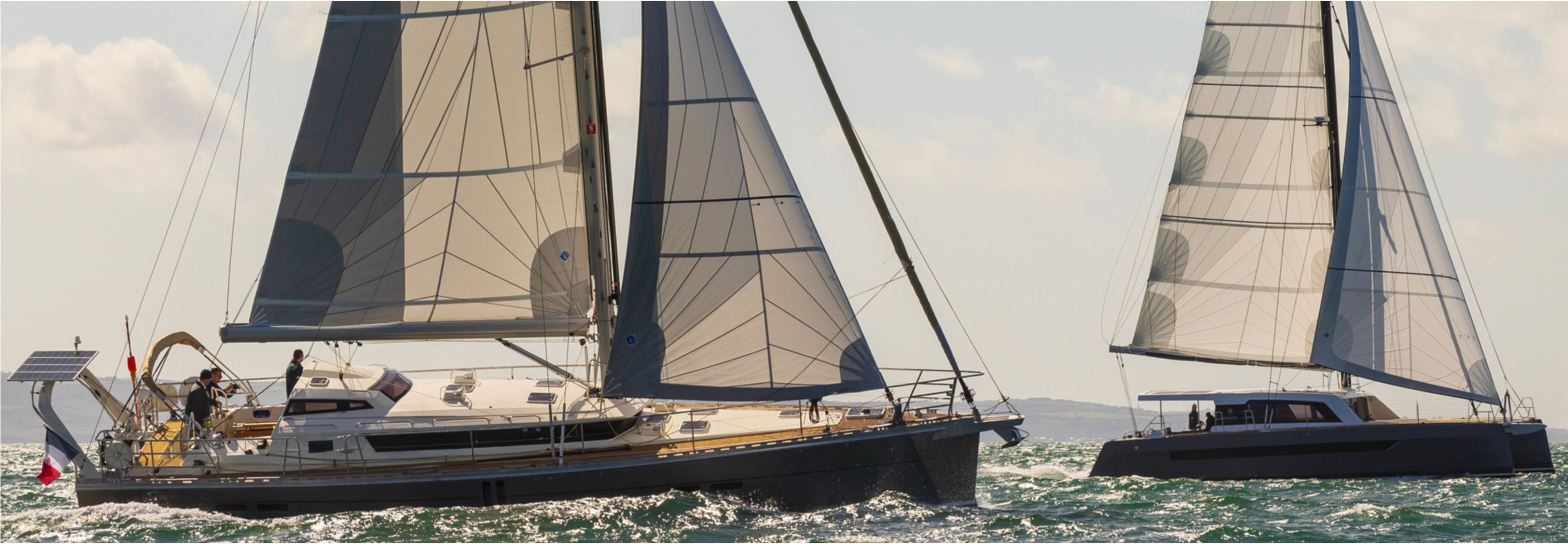
Let’s face it, coming from a catamaran world makes it difficult to imagine a long range sailing life in a monohull. It’s a mix of habit of course, comfort as well, and safety in any kind of rough sea condition we encounter. The layout makes you feel protected from foul weather, and we’ve been sailing her in winter without any afterthoughts. But for this project, we need to lay down everything on the table, especially when you see side by side the Exploration 52 and the Explocat 52, two equally appealing units from Garcia Yacht.

Safety wise, we’ve had our deal of strong wind, but never above F9, and we avoided most of the bad seas which occurred over our decade in the Med. We have experienced a few tricky situations when the larger size and obvious higher windage weren’t an advantage including while mooring in cramped places. But in our 24.000+ sailing journey up to now, we only reefed #3 once, on a sporty passage of the Bonifacio straight. So basically, we have no actual experience of the handling of a catamaran in very harsh conditions, combining heavy wind and large waves.

Of course, life on board is another matter, and we wouldn’t make many changes in this area for a future boat.

For such an adventurous sailing program, most conventional answers will say monohull is the only way to go. At some point in the conversation, the boat Godwin point, e.g. capsizing and righting moment, will come up, clearly not in favor of the catamaran.

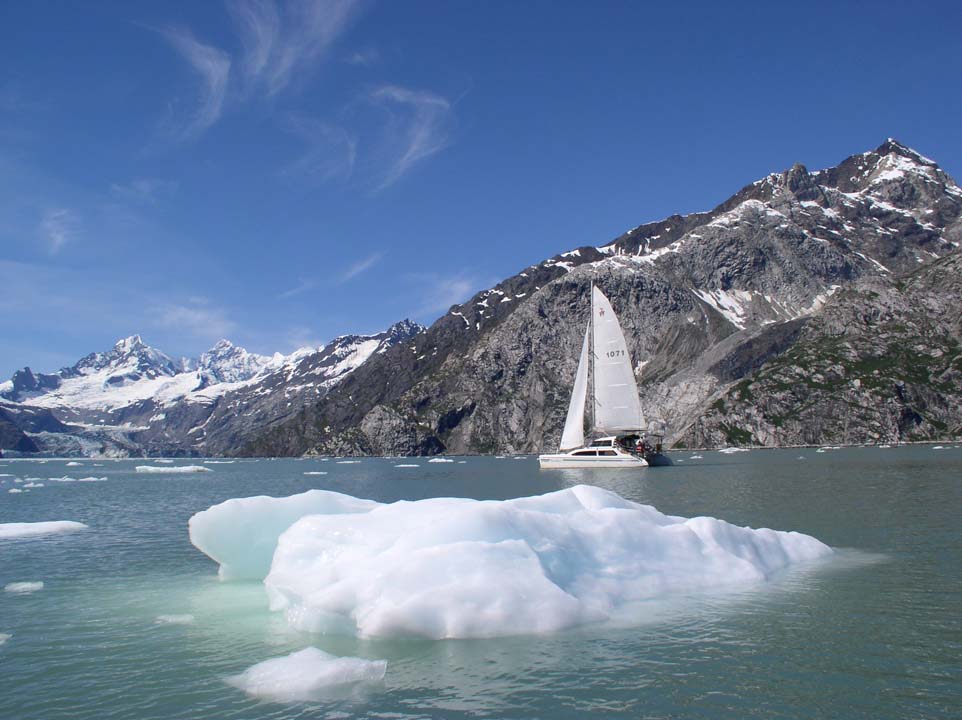
You can cruise them up North if you avoid ice … a dicey proposition

Anonymous sailor about catamarans in an high latitude-related post (2015)

The monohull vs. catamaran debate has been raging for a long time. Back at the pub, after a nice day at sea, that’s surely a way to spark a no limit and passionate conversation, of equivalent magnitude to those of the Valladolid debate, or the legalization of marijuana. It is usually closed with personal choices and targeted sailing areas, on top of a definitive nod, and maybe a drink refill to cool things down. These are the most classic arguments we collected along the way:

MonohullCatamaran
SpeedHigher wetted surface, especially while these recent large hull designs are heeled, will reportedly provide monohulls with a speed handicap.
Well, it might depend on many other factors, such as sea states (monohull are more stable in crossed seas), hull design, weight distribution, … all the classics in fact.
Usually faster than “same size” monohull, credited with half the wind speed potential on average, though this will still depend on their key ratios (sail sqm/t) and weight distribution.
Let’s take the Lagoon 55 and the Outremer 55 for instance, both GRP, both designed by famous VDLP architects.
While the 1rt will measure 6.5 upwind sail sqm/t, the 2nd will be at a staggering 12.4 sqm/t, adding dagger boards to its speed-oriented design.
Upwind capabilitiesThat’s an endless controversy within the global one. Monohull will indeed upwind better than most recent “condomaran”, especially if equipped with this deep keel every sailor needs while sailing, and regret having while trying to anchor in this little secluded little cala.Most catamaran have a long shallow keel, limiting their upwind capabilities. However, some brands include dagger boards (Catana, Outremer, Balance) for this purpose.
And of course at the end of the day, taking into account the VMG and not the speed over water, this is a limitless harbor pub conversation.
SafetyIn the most extreme situations, it all comes to “stability curve” and “righting moment”, although that won’t be the most attractive feature one looks at when considering a new boat.
From this standpoint, obviously monohull have the advantage there. But in these extreme situations, any small boat design and their crew is at risk. Capsizing a monohull is likely to bring her down, while catamarans are supposes to have a natural buoyancy for them to float while capsized.
While it is a fact that catamaran are as stable standing upward as they are while capsized, advanced and more reliable forecasts should and in fact do limit there occurrences. But there is a cruiser forum titled “How many cats have flipped ?“, and the funnier post is “once per involved catamaran“.
Another safety point to consider, in fact a way more common one, is crew safety on regular or heavy condition boat handling.
While not precisely as “stable” as usually advertised, moving around a catamaran is considered to be safer than on the deck of a 20° heeled monohull.
ComfortThat’s where catamarans usually build a consensus. Larger living areas, both inside and outside, same-level galley (or chart table) to cockpit, 360° visibility while sitting on anchor, large protected outside space for foul weather watch … that’s hard to beat for a monohull below a very respectable size.Some would argue, though, that both hulls aren’t exactly on the same level. In fact, not only do you have one more stair to deal with in a catamaran vs. a monohull, but they make it hard to communicate from one hull to the other in case of emergency.
Of course, these would be grumpy sailors, who never experienced the little siesta in the trempolines.
DockingGiven their lower real estate surface, monohull are easier to maneuver in a cramped harbor, especially with the help of a bow thruster.
And of course, the price will be cheaper, as catamarans are usually charged on a list price x1.5 to x.2 basis (not to speak of Capri, which charges based on the beam size).
With their twin engines, catamarans are amazingly maneuverable. That’s until you get a significant cross-wind precisely when trying to slip into that tight docking space. It all comes to windage of course, but we’ve missed a bow-thruster so many times over the last decade of docking a 45 feet cat Med-style, that this equipment will come high in the next boat priority list.
Preferred sailing areaGiven the adequate preparation the boat hull design doesn’t seem to limit the targeted sailing area. Best for intertropical zone, or mild climates. The truth is these latitudes are likely to concentrate the bulk of the global catamaran fleet, and you don’t see many above 45°N.
The passionate monohull vs. catamaran debate

We can’t dodge the fact that higher righting moment makes catamarans more stable than their comparable keeled monohull. Even while flipped over, and that’s the key point.

Given the fleet out there, this sort of accident seems so rare there aren’t any public statistics about it. Reading through some accounts of these, it’s hard to differentiate extreme and rare weather conditions – in which case a catamaran and a monohull are likely to experience the same fate – skipper unable to slow down a heavy cruising catamaran in big seas, and burying the bow in the forward wave, tripping the thing over, and last, some account of more sporty catamaran with daggerboard down, tripped over laterally by a really big wave. Other story will involve hitting a UFO, one hull making water before the actual capsizing, but the truth is, not all the details are available online with reliable sources for each of these stories.

The only rather rational information one can gather on this topic is the insured value percentage paid for insuring both designs. As per our broker’s feedback’ there aren’t any significant differences, which could lead one to think their accidental record doesn’t differ based on their design, including such definitive fatalities. But then again, there aren’t many cats sailing high latitude, and they’re more prone to hurricane accidents in the tropics.

As far as extreme conditions are concerned, modern weather forecasts combined with recent telecommunication progress reduce drastically the odds of being caugh in a nasty situation. More importantly, added speed coming with the second hull might help to move out of the way of the incoming gale with smaller notice – and that’s when weather forecasts are the most accurate.
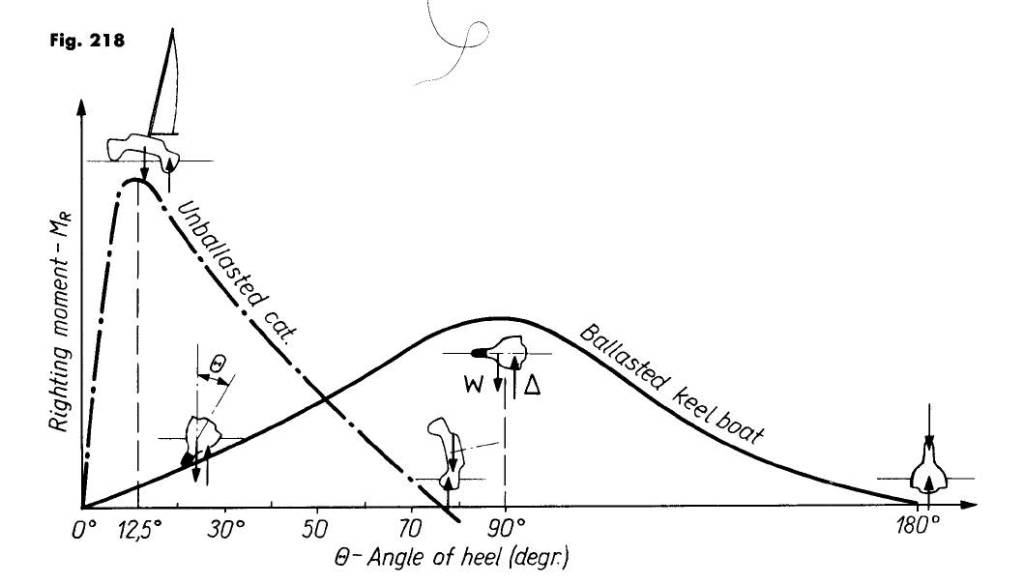
Stability curve – Catamaran vs. keel monohull

At this stage, having extensively sailed a catamaran for a decade, together with some monohull experience as well, we wouldn’t want to add anything to the classic controversy between both designs. We’d rather try to takes notes on high latitude specifics, both challenges and benefits, coming with two hulls instead of just the one:

  • Heating a larger volume on a cat, while at the same time more surfaces in need of thick isolation, or providing more condensation opportunities, this might be a challenge in very cold climate, inducing strain on fuel tankage and energy consumption. And at this stage, we never saw a gravity-fueled stove installed in a catamaran, neither have the Refleks guys we asked. On another hand, it is easier to fit two heating systems (redundancy of all key system principle), either with two identical hydronic system in each engine compartment, either with an hydronic system coupled with a connected fuel stove, should this be possible.
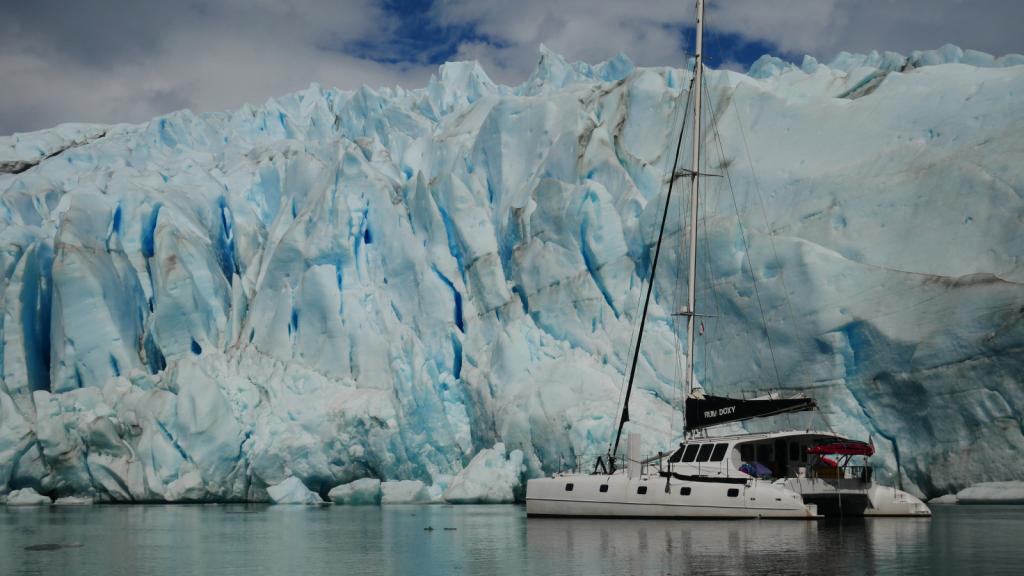
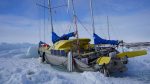
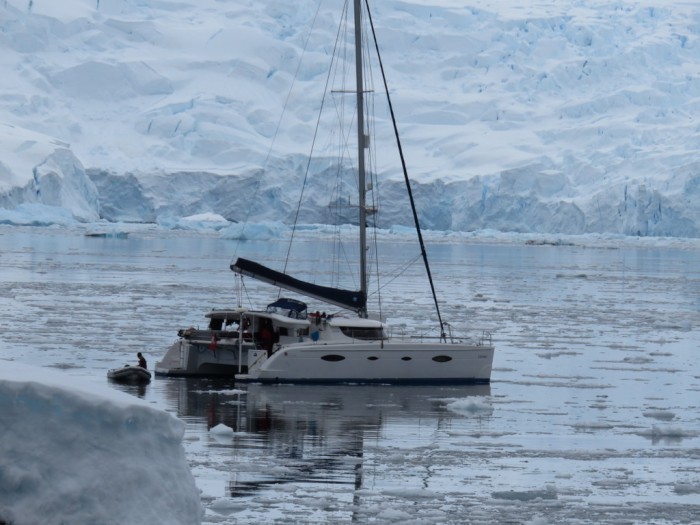
  • Packed ice: one can see how ice may get jammed between hulls, while a monohull could slowly cut its way ahead, so that looks like a condition to avoid, implying seasonal sailing, and thorough ice forecast attention. There are a few catamaran which have ventured into the NW Passage, or down to Antartica (see below), but it seems really like an exception. Then, let’s not forget that the fatal dangers of being trapped by moving ice pack are the same for any small sized boat, monohulls and catamaran alike, especially if not specifically designed for overwintering on ice.
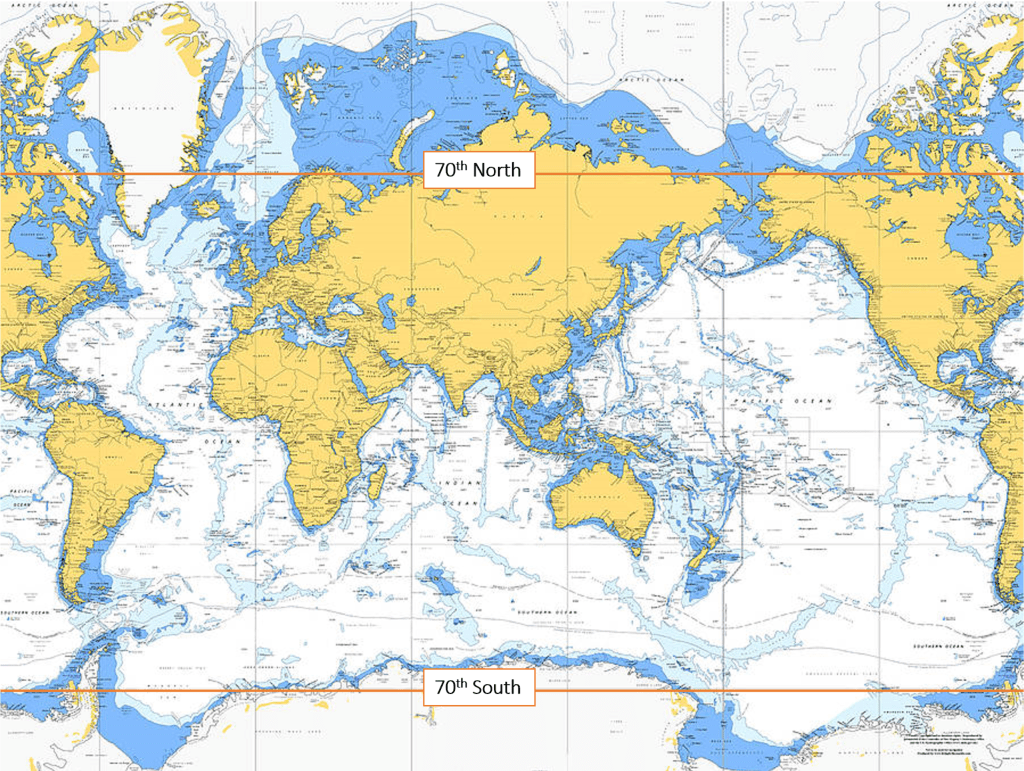
  • Sailing zone: Speaking of ice, our plan is not to overwinter in these high latitudes. A very specific boat design is required for this. But should the opportunity present itself, we could consider sailing in areas with up to 2 or 3/10th of ice concentration, which can be encountered even in summer time. So South Svalbard why not, North East of it unlikely. This is at this stage the clearest limitation to 70th Parallel. Maybe should it be named 60th Parallel after all (name was taken).
  • Fuel efficiency: that’s not supposed to come as a significant criteria when speaking of a sailing boat. Unless speaking of in-season (meaning summer) high latitude sailing, when wind will be light, at best. In case motor-sailing is required, catamaran are reputed for being more fuel-efficient than monohull on a windless sea, due to their lower wetted surface. In fact, running on one engine at the time can be quite a fuel-saver, when fuel autonomy is critical. In these conditions, we would plan for an average 0.8 l/nm.
  • Hauling out: the consensus is that facilities to haul-out an 20t catamaran with an 8m+ beam are quite scarce in high latitudes. On another hand, it’s easier for a cat to beach over a tidal swing, as these increase with latitude. The Garcia Explocat 52 has a smart hull design feature, allowing to attach two shackles and tractor her out of the water on any rolling logs, provided it is a gentle slope shore.
  • Sailing speed: assuming a catamaran makes faster runs than its equivalent monohull, which is quite controversial (see above), speed would be an advantage, as weather windows are usually narrow in high latitudes.
  • Capsizing: it happens. It can happen. How rare it may be, the consequences are life-threatening. The size of the catamaran and its weight distribution would matter tremendously. A 50+ feet catamaran with light rigging and centered weight, would be way more stable than the average 40-45 feet with both of its hull-peaks filled with high latitude-related stuff. In the potential choice of a Catamaran, these factors would be deal breaker criterias.
  • Comfort: when on a long range sailing journey, the fact is we spend most of our time on anchor, or docked to this nice remote little public quay. Larger living quarters giving an all-around view is a benefit that’s hard to give up. Large rain-protected cockpit is priceless in any latitude. And above a certain size, say 50 feet, even the most performance-oriented catamaran is fitted with very comfortable cabins – not to speak of the huge so-called owner-cabin, in fact one whole hull with house-like amenities.
  • Key system redundancy: considering the engine as one of the first key systems, especially for high latitude in-season sailing (in fact mainly motor-sailing), having two on a catamaran is one huge advantage over monohull design. With the one running engine comes not only mobility, but as well electricity, heating and hot water.
  • Storage: that’s a two-sided argument. Catamarans have indeed larger storage space than most equivalent monohull – so, this is good for high latitude sailing plans. But their performance can drop drastically if overweigh, or if the weight distribution is less than well centered – beware of filling up the peaks with heavy stuff.
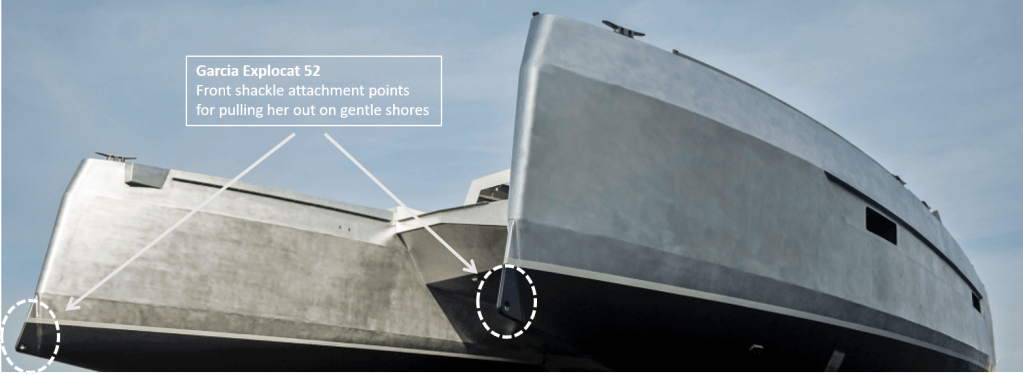
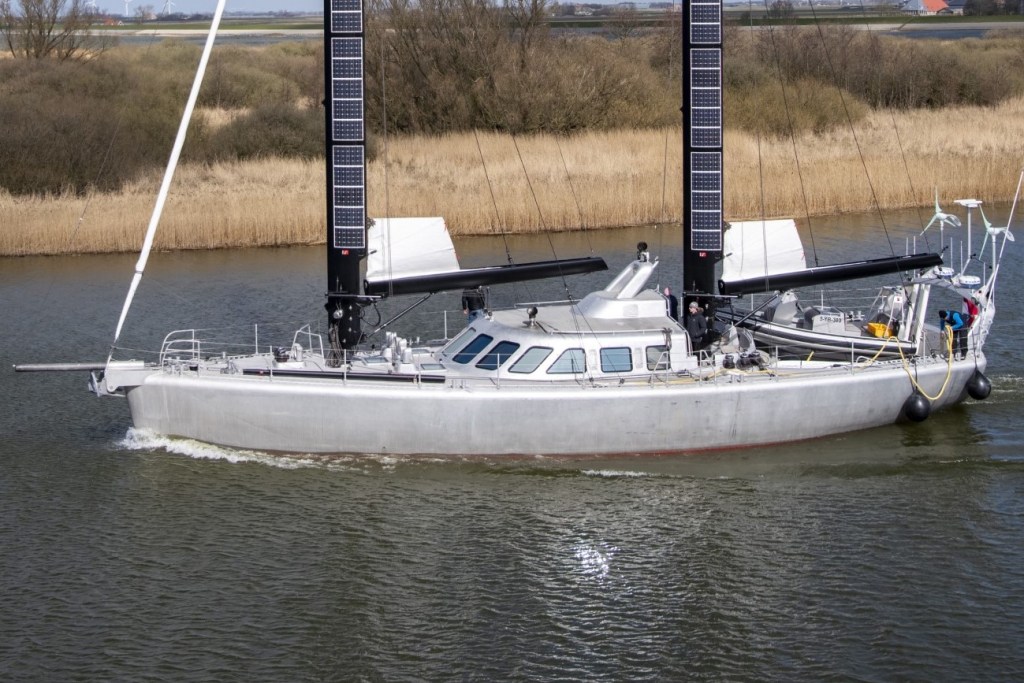
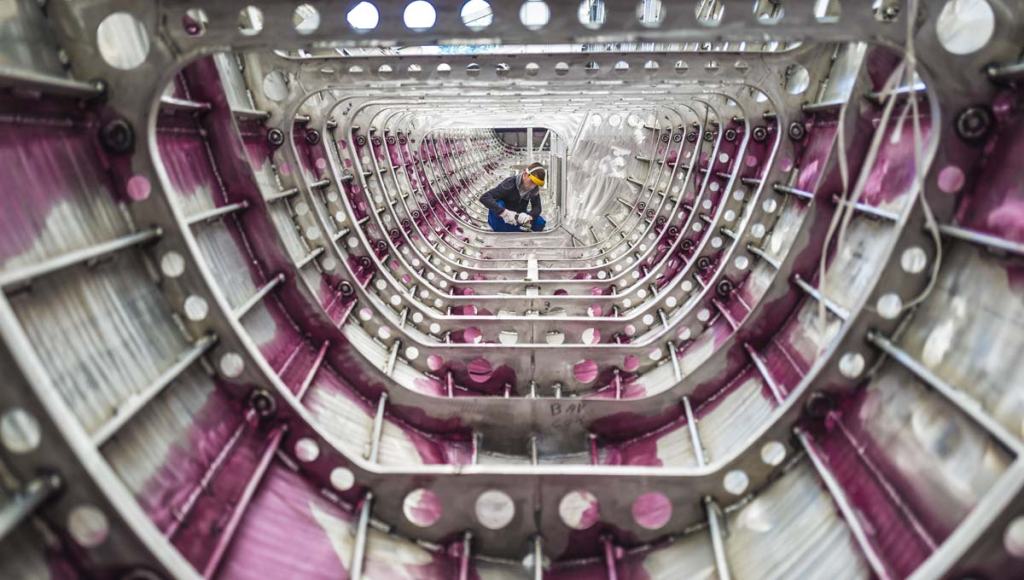
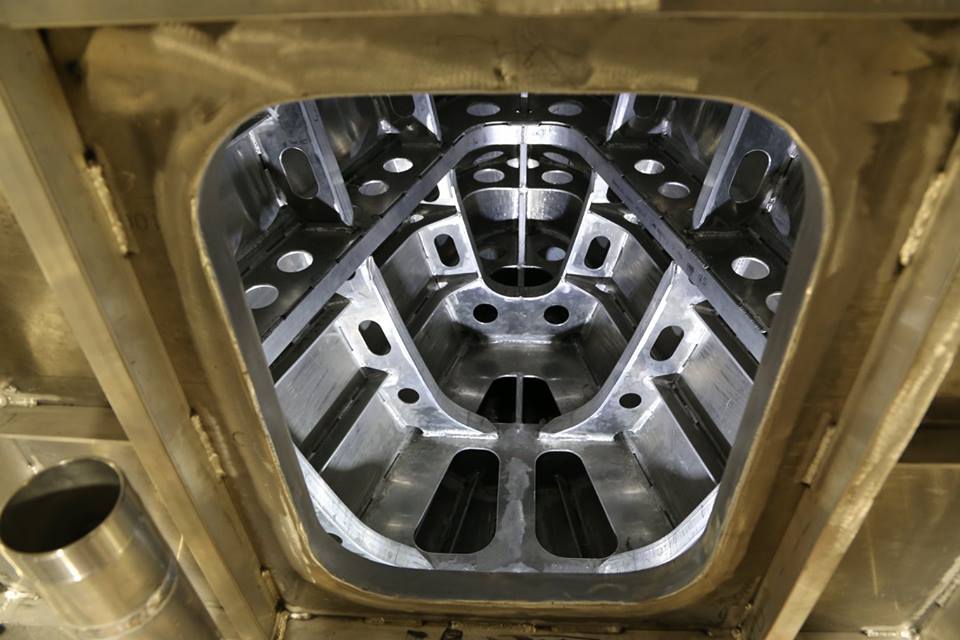
Garcia Explocat 52 has a smart hull design allowing for pulling out shackles attachment. It seems this design was imagined by Jimmy Cornell for his Garcia Exploration 45, and it gives an idea of the benefit of such a rich experience transposed into a new catamaran.

Not many of them, but there are some significant high latitude catamaran exemples which proves that at least some skippers have done it:

The catamaran market is undeniably the fastest growing segment of the pleasure boat sector.

BusinessWire study (2019)

Many factors are influencing the catamaran market growth, the booming size of its charter segment not being the least, but this is irrelevant for us. Given that this trend is still young, it will surely increase the likelihood of seeing them in higher latitudes than their classic present turfs. On top of some isolated one-off initiatives, it’s significant that highly reputable aluminium boat yards, such as the French Garcia and Alubat, add an aluminium catamaran model to their range. One can dream of seeing Netherland’s KM Yachbuilders, another all-roads reference, adding one as well – after all they launched the Bestevaer 53 en 2020, a motor yacht.
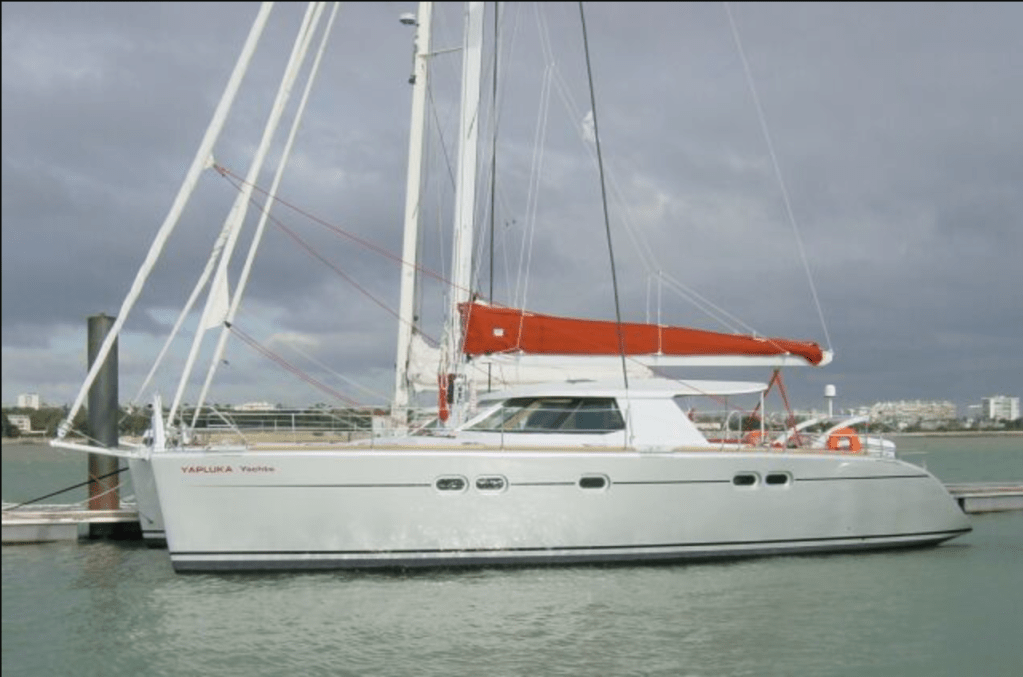
That’s the point, we only focus on the aluminium model, putting aside the high latitude preparation which is always possible for a composite model. So here comes the very limited list of aluminium catamaran we could set our hand on, with some current composite counterpart for benchmarking purpose:
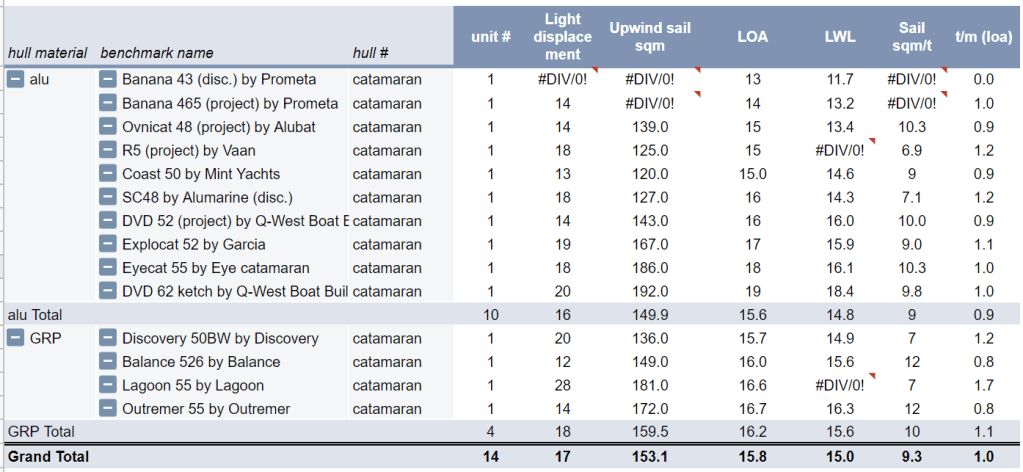
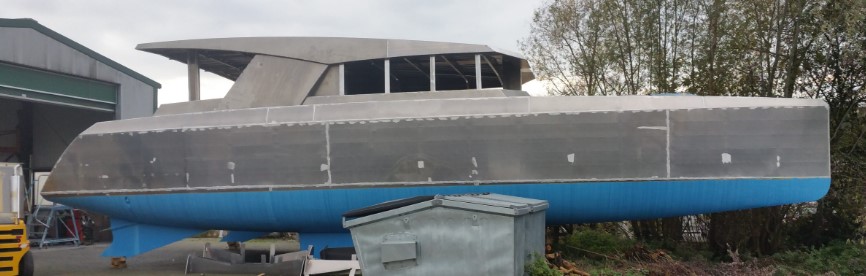
In this respect, the French boat yard Garcia seems to have the lead in this industry initiative. While Alubat only provides plans and designs for its Ovnicat 48 not only have Garcia pioneered this trend with its SC48 (to be fair, an Alumarine initiative, before being integrated to Garcia), launched in 2013, but it did it again with the launch of its Explocat 52 in 2020, despite the lower-than-expected success of the former. Seeing them side-by-side, one can guess one single architect has been behind both projects, and this would be Pierre Delion.

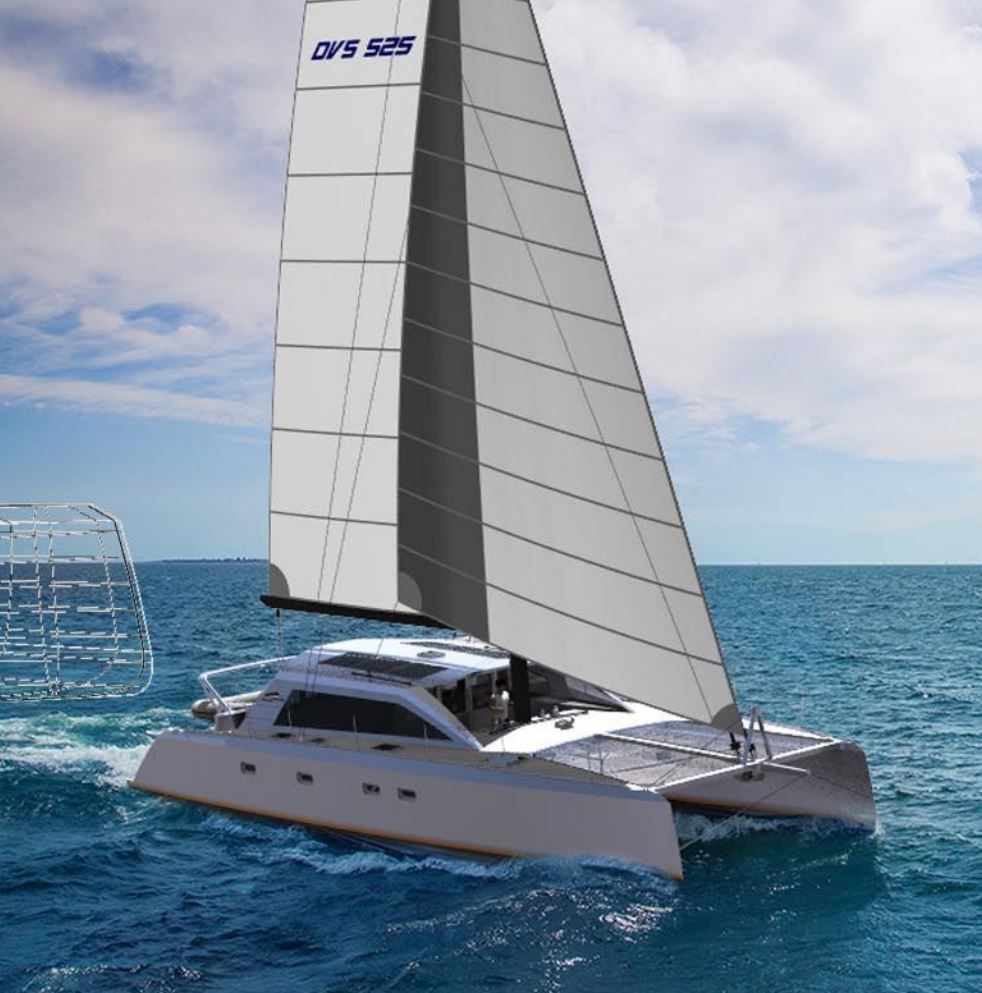
Other aluminium industrial projects exist, such as Prometa’s Banana 465 (heir to the ‘Banana Split’, famously skipped around the world by french singer Antoine), the Ovnicat 48, the New Zealand DVD 52, based on the first DVD 62 experience, or some one-off construction, like the Mint Yard Coast 50, or the Eyecat 55, but they are falling behind Garcia’s.

There are now two Explocat 52 units in the water and over 10 additional orders (Nov.23 edit : 5 in the water, including our “Anamor”, launched in Aug.23, and over 15 in total), with a backlog exceeding 3 years. Considering all the added benefits of fitting into twin hulls the rich experience gained out of their successful Exploration monohull range, this head start could last for a while.
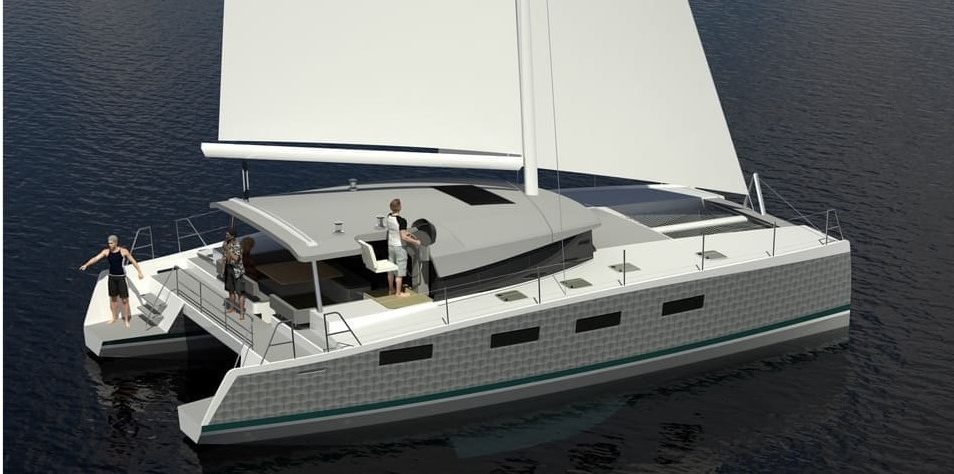
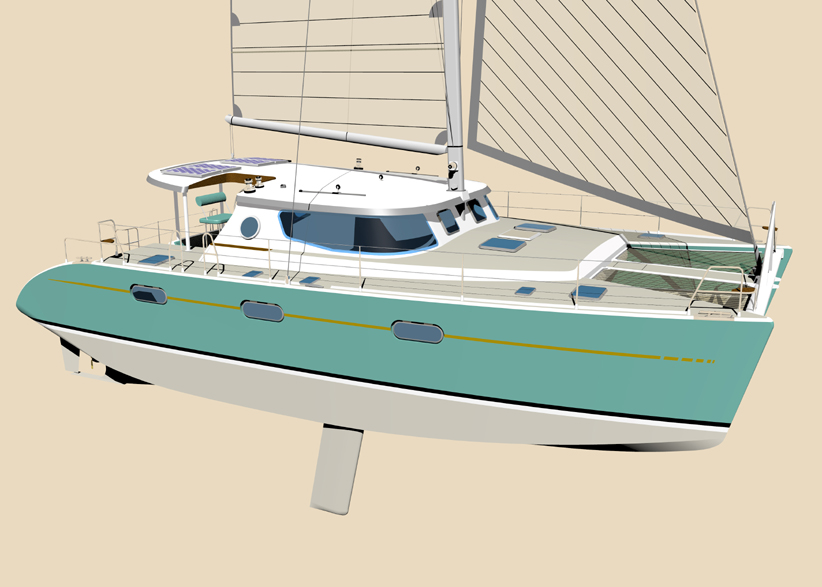
Eyecat 55 (dec.19)

Having completely missed the SC48 at the time of its launch, we were quite amazed to scroll down the Explocat 52 initial brochures and specs.
So that’s how we got to know Garcia better.

Homework

So that’s how the journey goes on: spending hours on boatyards’ website, all specializing in all-roads aluminium boats, reading blog stories of sailors commenting their choices, good or bad, taking notes of the mistakes they made and the issues they encountered, and how they overcame them. Putting quite a few new destinations on this on-going Google map project of ours.

In the process, we get the feeling that this little venture is getting increasingly popular, not only within the sailing community, but as well for rookie sailors either looking for a radical lifestyle change, or with the digital flexibility to keep working while aboard. In fact, for some millennials, off-the-beaten-tracks seem to be the new normal, and going to Antarctica or through the NW Passage on a sailboat is now on the same list as would be climbing the Kilimanjaro, or the Mt Blanc for the less adventurous ones. So much for the Ravello, Goa and Bali of the previous generations. Not only is the “adventure” or “expedition” boat in high demand, but even such catamarans are now being featured.

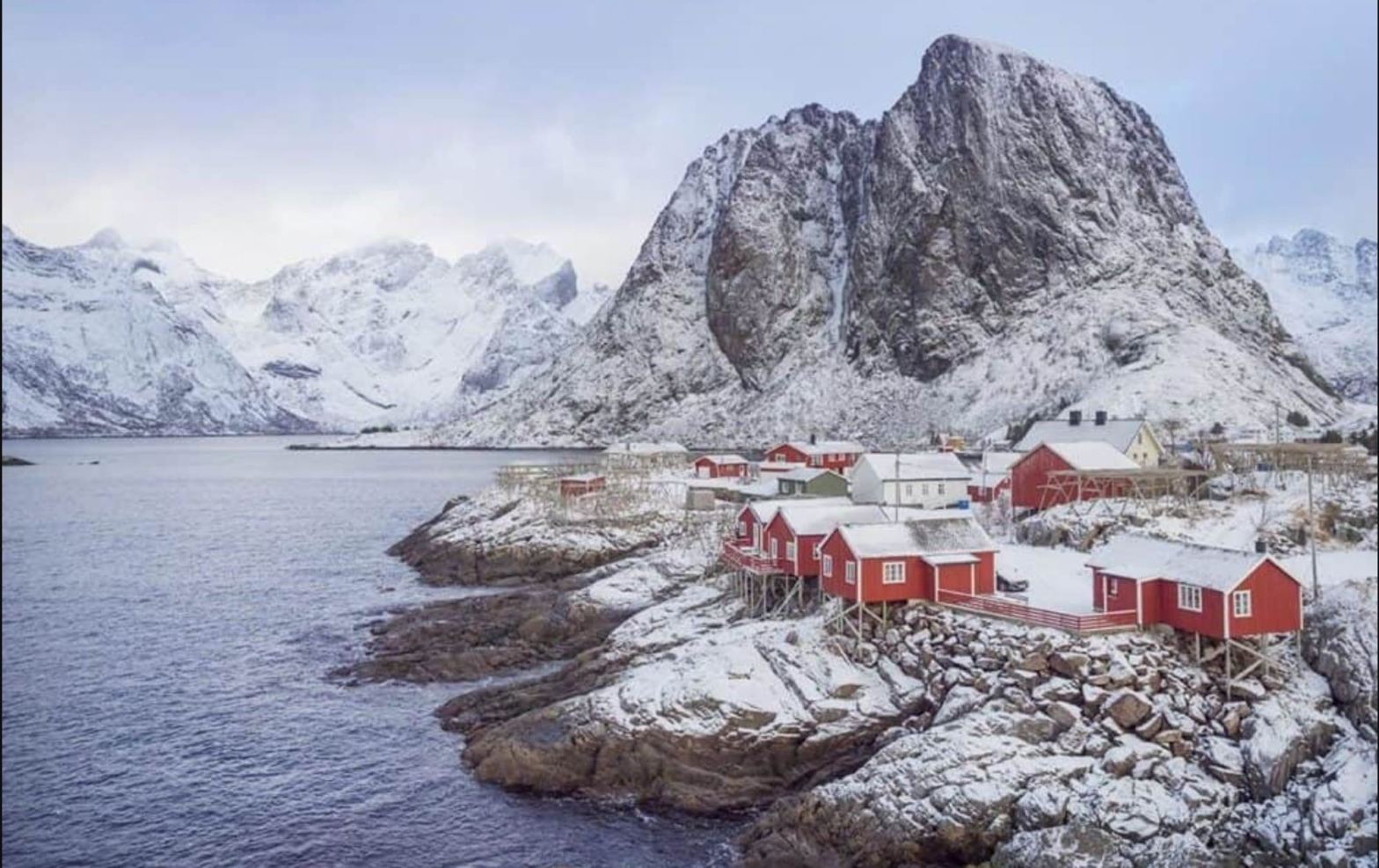
Tedious homework requires some Lofoten sailing motivation – ©LifeSong Sailing (Garcia 68)

At some point there were too many of them, so we started a small database to compare their key specs, such as displacement, sail area, LOA, LWL, and so forth. At the end of the day, apart from the purpose-built one-offs, most of these boats would come out of a handful of boat yards, each with the proven experience for this specific kind of sailing program.

Coming from the composite world with our current catamaran, we included into this table some composite boats as well (Lagoon 55, Discovery 50BW, Outremer 55 and Balance 526), for benchmark purpose, and to validate that above a certain size, aluminium construction, supposedly heavier, is in fact more weight efficient.

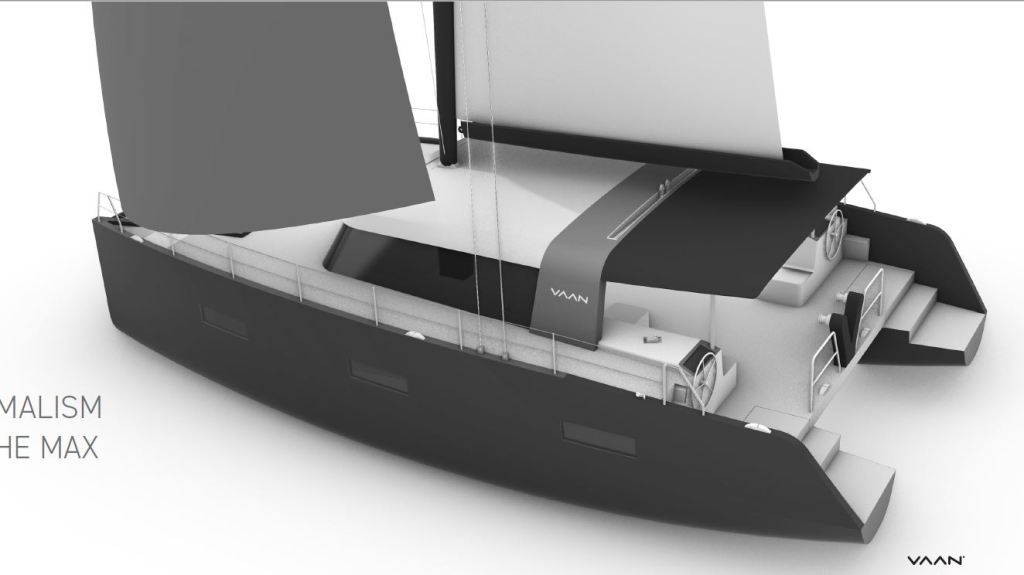
In this respect, the Outremer 55 and the Balance 526 are both clear outliers with identical ratios (12.4 sqm/t | 0.8 t/LOA m) and obviously performance-oriented, while the Lagoon 55, launched in 2021, seems more comfort-oriented (and Vaan’s R5 project design-award-oriented).

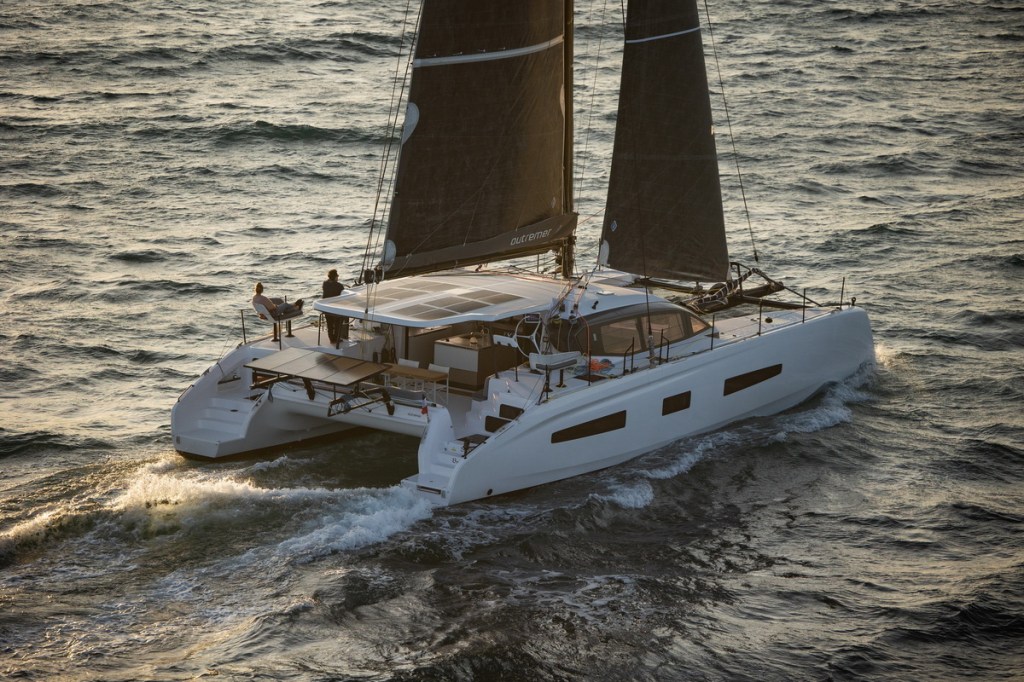
Outremer 55 – Not eligible for our high latitude short list, nonetheless a very convincing performance catamaran – ©Outremer

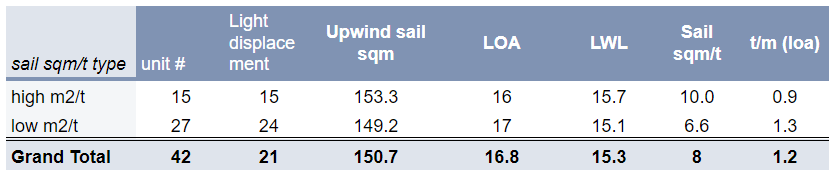
Setting up a 8.5 sqm/t. threshold of upwind sail area, two very different potential performing boats appear, both bearing more or less the same upwind sail sqm (circa 150 sqm), but the leading group being 50% above the lagging in this respect. In terms of t/m (LOA), the leading group is nearly 30% lighter.

We drilled down into the group for which we managed to gather light displacement weight and LOA information, both for catamarans and monohull, per size brackets:

We can see that in the 15-17m LOA range (19 boats in this benchmark), catamarans are 4% lighter compared to their monohull counterparts (that’s for both hulls of course :-), but bear 9% more sail sqm (14% more sqm/t) for equal LOA, all metrics which relates into some speed advantage under sail. We’d love to have the wetted surface to rank them in regard to light wind conditions, but this information is harder to get.

Now, only keeping the aluminium production within the <17m LOA range with relevant data (30 units in this benchmark), we can see that catamaran and monohull have nearly the same LOA, 9% lighter displacement for the 7 catamarans, but these bearing 7% more sail sqm (15% more sqm/t).

And if we focus on all 11 catamaran in this <17m group, 7 aluminium and 4 GRP, we notice that the aluminium ones will be lighter (adjusted with their size), and this is despite the Outremer 55 and Balance 526, which are both very light at 0.8 t/m.

It seems that above a size threshold which we estimate between 45 and 50 feet, aluminium construction looks like the wise choice for a rugged all-road catamaran. Of course while we can check that Garcia’s Explocat 52’s bells and whistles compares with Balance’s, Lagoon’s or Outremer’s, it’s impossible to do so with the Ovnicat 48, the Eyecat 55 and the Coast 50, for which we couldn’t read any detailed specifications above their basic design information.

So, as one seems to convincingly appear in this benchmark, is there the off-chance that a catamaran could fit an adjusted high latitude program ?


Architect, yards & boat references

All in all, we reviewed over 50 boats within our size brackets and with off-roads or even advertised high latitude features. Along the way, it appeared the top four (KM, Garcia, Boreal and Alubat) seemed to suit our needs best.

Featured boats

  • Atlantic 51 – Aluminium built to order cruiser with lifting keel and double rudders.
  • Besteaver (by KM) – Each of them is fitted to to client’s specs, so there aren’t one alike the other. All of them share high latitude sailing characteristics.
  • BM53 DS – Cruiser with lifting or fixed keel and deck salon, one in a large range of Berckemeyer design.
  • Boreal 55 – In a range starting with 44 feet, this 55 feet model launched in 2020 seems like a good compromise between long range autonomy, safety and comfort.
  • Coast 50 – An aluminium catamaran designed by Philippe Renaudeau in France, and built in Spain by Mint shipyard.
  • De Villiers 525 – The smaller version of the 62ft Alloy Ketch Catamaran which has covered over 100k nm as an expedition boat.
  • Enduro 54 – 54′ aluminium sailboat with lifting keel and pilot-house
  • Exploration 52 – From Garcia, an upsized version of the famous Exploration 45, co-designed with Jimmy Cornell. But now, there is the Exploration 60, due in 2021, as the real upsized version.
  • Explocat 52 – From Garcia, launched in 2020. All the famous boatyard DNA in twins hulls.
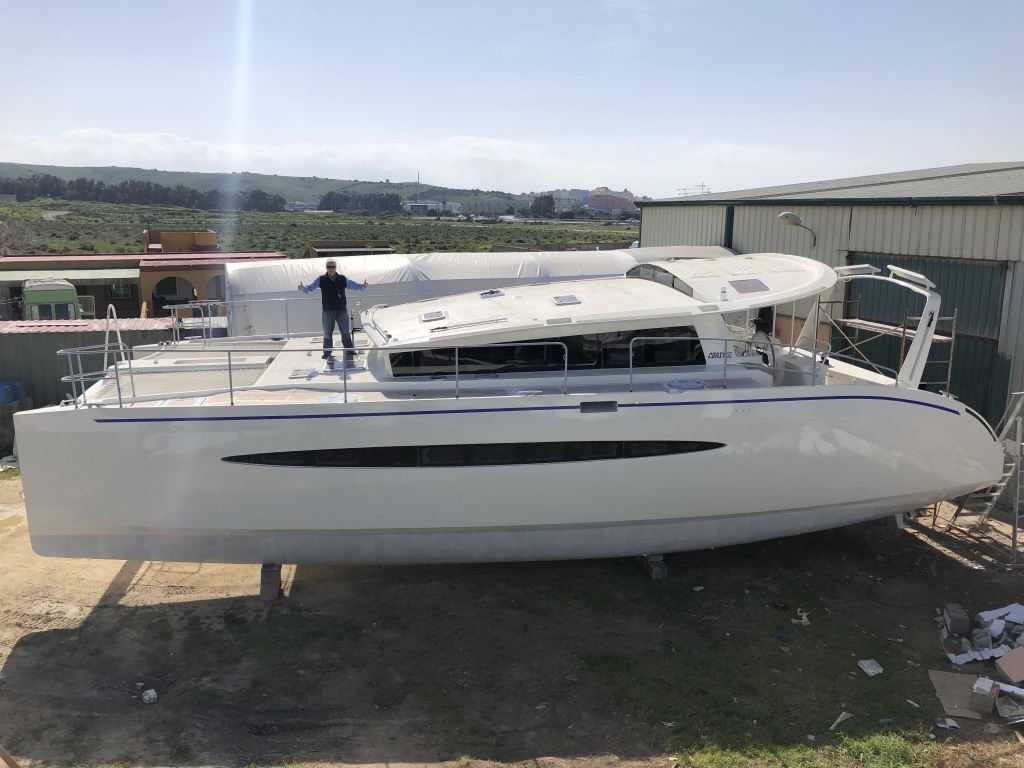
  • Eyecat 55 – An aluminium one-off catamaran, delivered in the summer of 2021, aiming for larger industry footprint.
  • Icebird – Purpose-built by Trintella shipyard (disc, Netherlands) this Van de Stadt 61 is fitted for high latitude conditions and ice, with Aero-rig sail setting.
  • La Louise – 19m wood/epoxy/glass fiber/kevlar schooner, launched in 2010 (french only)
  • Nanuq – 60 feet Grand Integral, designed for minimal environmental impact, launched in 2014.
  • NanuQ (by KM) – 24m polar explorer launched in 2019 and designed by Dykstra.
  • Noordkaper 56 – The largest unit in a range from 40 to 60 feet. It’s a steel cutter, long keel design, with lots of storage space.
  • Northabout – 16m Bermudan cutter, designed by Caroff ­Duflos and launched for polar sailing in 2001
  • Puffin 58 – The largest of the aluminium Puffin range, which was remodeled in 2021.
  • Qilak – 20m Sealium sailboat built by KM and designed for polar regions
  • Vaan’s R5 catamaran project
  • Seal – A 56 foot aluminum sailboat to explore high latitudes and support scientific and adventure expeditions, designed by Chuck Paine and Ed Joy
  • Stern 60 – (“Pooh”) Designed by Bosgraaf, custom built by de Sluis Jachtbouw.
  • Vagabond – 47 feet polar yacht designed by Gilbert Caroff.
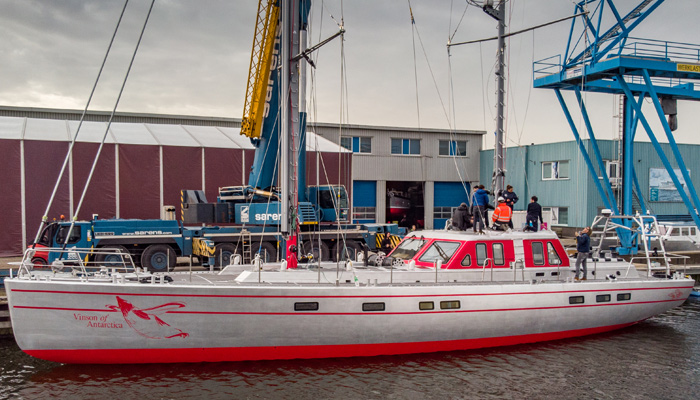
  • Vinson of Antarctica – 77 feet expedition yacht designed by Tony Castro for Skip Novak, of Pelagic Yachts, and launched in 2021.
  • Why – 20m aluminum schooner, by Underpole expeditions
  • (…)

Yards and designers


Size matter

There are quite some Aluminium boats out there especially if we include the second-hand market. From the purpose-built one-off, like Nanuq featured above, or the second-hand one which is available after a proven high latitude track record to the series some reputable yard have built for a long time, such as the legendary Ovni (Alubat yard) or Passoa (Garcia yard) or even more recently, but with undeniable success, Jean-François Delvoye’s Boreal range.

In between, there would be the semi custom approach, like the Garcia Exploration range, or the KM Bastevaer. For the latest, semi custom doesn’t seem quite appropriate, as it seems the owners can make any personal choice, provided it fits the hull. And of course, many projects based on an initial design, maybe even a 1rst client, but not yet brought into any industrial development.

It’s hard not to go day-dreaming while scrolling through their specs, or history (KM “Tranquilo” for instance). Which is exactly what we did for quite a while, spending time reviewing their DNA, construction smart details, standard features, as well as customization which made each of them special for their high latitude purpose.

Here are some examples of the boat which caught our attention at this stage.

While all of these are likely to fit the programme one way or another, it comes easily to the mind that size will be an important factor in regard with sturdiness and autonomy, but to some extent, to seaworthiness as well.

Even if we’re sometimes sailing shorthanded, given the remote places we’re considering, we thought the boat should be able to fit comfortably a crew of six for an extended period – say 4 to 6 weeks. The weight associated with this, added to the boat’s space and stuff does imply a certain size so that the boat copes with our seaworthiness criteria: wetted surface in low wind, or sail speed when aiming for a narrow weather window, or dodging a gale (sail sqm/t).

Size wise, we’d be looking for a boat able to satisfy all our basic criteria while still being manœuvrable shorthanded, or even single-handed on very limited occasions. From our experience, anything above 60 feet will require lots of technical assistance and the loads involved are a real challenge for a small crew, even if some boats in this size bracket have a deck conception precisely fitting small crew handling requirements.

Polar 65 s/y Fraternidade | Helio Viana

Regarding high latitude fitting, these would be our basic expectations:

  • Reinforced hull construction (> 10mm in the bottom, thick framing for stiffness)
  • At least 3 watertight compartments, 4 expected in a monohull.
  • At least 3 cabin for long range accommodation of 6 adults (owners included), with the spare occasional sleeping space while in milder climates – one hull peak or living quarters convertible sofa for instance.
  • At least 3 individual sink & head space, 2 individual showers
  • Space for thick hull insulation (50mm+), from waterlines up to and including deck. While we’re eager to keep it as bare as possible, we’d consider faux teak deck cover as an additional insulation layer, provided it doesn’t add too much weight (for instance Flexeeteek, adding 4.5kg per m²).
  • Hull space for the redundancy of key systems
    • Engines (x2), this criteria alone will focus us on the few catamarans out there, as twin engines monohulls are usually over our size bracket. And since we’re on this topic, enough power to move against tide and get out of a nasty channel, or to motor upwind in case of necessity.
    • Autopilot system (x2, dual rams and pumps, completely independent one from the other)
    • Watermaker (x2)
    • Generators (x2), ideally of the variable speed, smaller sort, which can be combined if in need of a large output
    • Heating system (x3), combining three radiator-type heating sources with boat engines, a classic radiator heater plus a connected coiled stove heater (Refleks type) in the living quarter.
    • Inverter/charger (x2)
    • Rudders
  • Protected watch position, ideally enclosed, better if doubled as a nice place to enjoy the sceneries while on anchor.
  • Protected space to get in and out of foul weather gear, with drying space for them. We would be looking for a rain-protected back cockpit, achieved with smart fabric layout and cockpit design, and this would not be a specific high latitude feature, nonetheless a way to increase the living area in mild weather.
  • Fuel tankage above 1500 l., aiming for 1000mn+ autonomy on engine, based on an average 0.8 l/nm consumption in very still seas. Heating and electricity would be provided by the engine while motoring. Alternatively, we aim for 2 month of heating autonomy while docked or anchored. Refleks Danish stoves would advertise 0.3-0.5 l/h, which we rounded to 260 l/month. This requirement only seems needed for the off-chance we sail her down the Drake.
  • Water tankage above 700 l.. Most sailing vessels in remote areas would insist on savings before storing or making water. We read about the salt-water showers on some high latitude expedition boats, but we’re not sure about it. We’d be adding a small tank (15-20 l.) dedicated for drinking-water, with a specific filtering system. Our estimated 700 l. is based on a 7 days autonomy for a crew of 6: dishwashing, drinking water, personal hygiene including a quick shower every other day.
  • Storage for sails and spare anchoring systems (2 at the front, 1 at the back), including 4x150m dyneema lines when anchor isn’t a reliable option. We plan for inflatable fenders, so that’s one storage issue less.
  • Good accessibility on all engines requiring regular or accidental maintenance (engines, generator, watermaker, water pumps, etc), which rapidly equals decent hull space.
  • Storage for long range boat spare and workshop area with all required tools.
  • Storage for outdoor stuff : 2 electric bikes, mountain and ski gear, 2 scuba diving equipment and compressor, 2 dinghy outboard, 1 spare 3.6m inflatable dinghy on top of the main aluminium-hull one, …
  • Food and beverage storage for 6, for over a month, meaning 2 x 180l. fridge/freezer capacity, and quite some additional storage for fresh and groceries.
  • Space to spare, for fishing, scuba diving and other fun stuff for friends and kids, including maybe 2 inflatable kayaks.

We didn’t go into detailed weight calculation, but we narrowed our search to 55 to 65 feet monohulls, and initiated a search on the rare aluminium catamaran in the 45 to 55 feet range: both Garcia and Alubat French boat yards are featuring a model, and there are a few early stage one-off projects in this size range (Turkey, South Africa, Germany, Spain, …).


Autonomy

There will be as many autonomy approaches as there are sailors to describe it. It starts with the Skipper who is able to perform any repair in any system of his boat, electrical or mechanical, all by Nigel Calder‘s finest standards. On the opposite, there would be the one who’s best ability would be to perform the online search of the nearest skilled helping hand.

That’s the point with high latitude sailing: the nearest helping hand might be many days away, with no DHL/UPS drop.

Sitting in between like most, we had to think in terms of some repair ability, but also in terms of redundancy of all key systems. And of course keeping in mind that an unused system is prone to failure when precisely one needs it.

Key system redundancy

EnginesOver a decade and 23.000 miles, with regular engine maintenance, we’ve had 3 failures. Once, a cooling system water pump had a leak and we had to do with the one engine left. The other two failures were related to dirt in the fuel pre-filter system that were difficult to detect.
Have you ever tried to set in motion a catamaran with one engine? Well, it’s not a situation you like, especially when sitting near obstacle, but after 2 to 3 boat lengths, you recover steering control. In each of these situation, we were quite happy with the 2nd engine helping us to reach a repair spot.
WaterOur boat is fitter with a Dessalator Duo water maker. It provided 60 to 80l./h flawlessly, with very little maintenance.
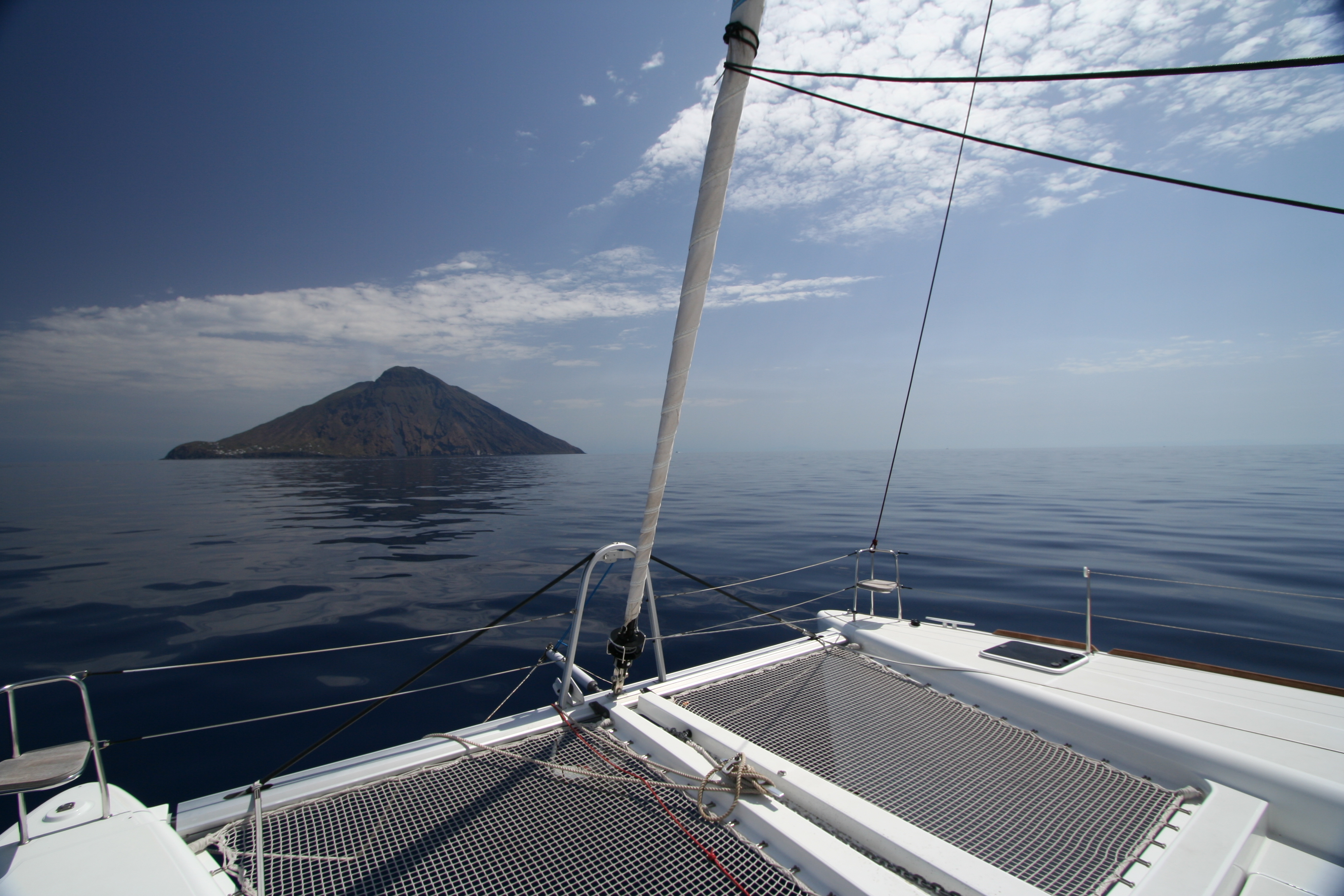
Only once did it fail us, when a corrosion-related leak appeared on one of the high pressure plugs. There were only two of us on board, we where in the Aeolians. The tech was in Ischia, 120 nm North. We solved the issue in a couple of days and we had a nice early breakfast in Capri along the way.
What if it happens with a full crew, far away from any logistical support?
HeatingIn temperate latitudes, heating can be optional depending on everyone’s lifestyle. Some would put a 220v radiator while on shore electricity. Others would have a heat blowing system fitted such as Eberspaecher‘s quite popular ones.
Sailing at high latitude implies the ability to sustain very cold temperature for long periods. And it’s not always a question of personal confort. That’s clearly a key system we weren’t familiar with which we wanted to be as secure as possible.
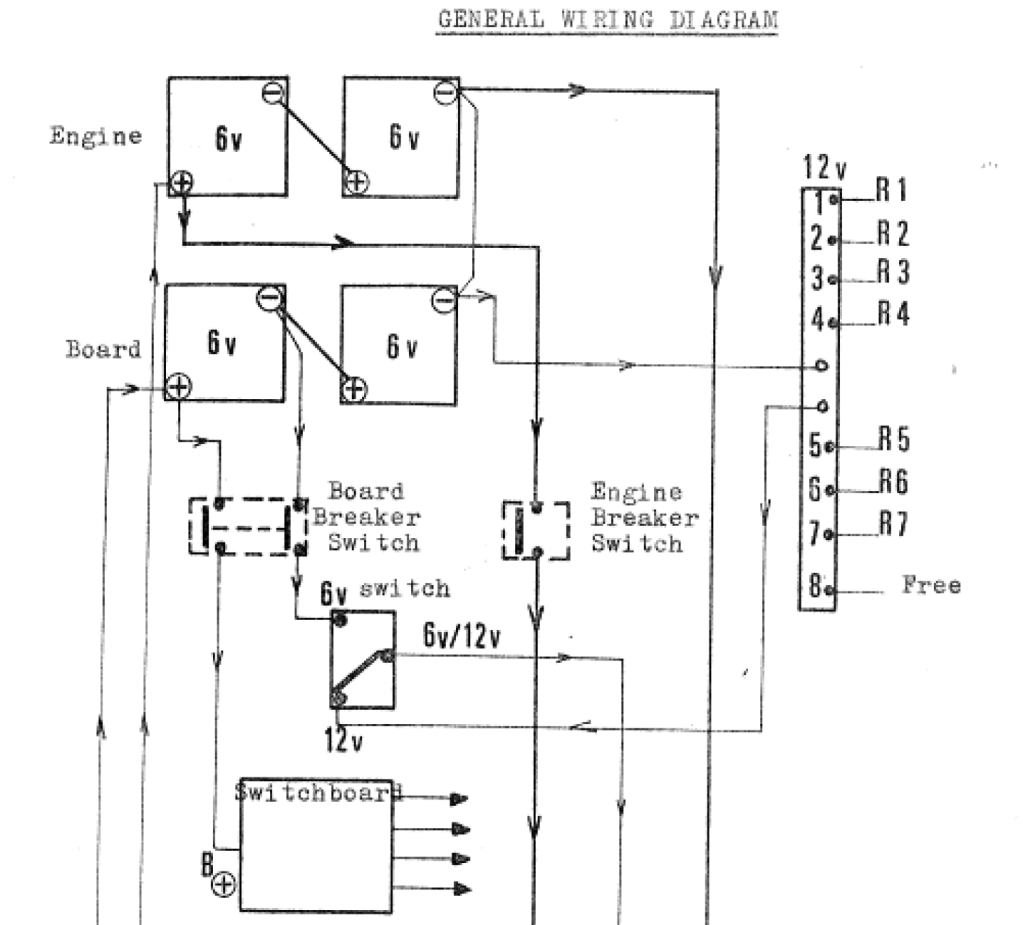
EnergyThere has been quite some changes in our sailing energy needs since I started sailing. Back then, my college friend dad’s Jeanneau Melody was fitter with four 6V batteries.
Today’s requirements will again vary from one to the other, as not everyone is Bernard Moitessier or whishes to go back to the 70’s.
But if you want to keep your options open, to invite working crews (or just their kids), to have lots of cold-storage capabilities, redundant electronic systems, well, if you’re heading in this direction, being a little spoiled by modern habits and comfort, energy production and storage is a key element of your autonomy.
Dinghy & outboardFor most, this one isn’t exactly a key system of the boat.
However, when in a remote area with no other way to reach the shore, a powerful and reliable outboard engine is indeed quite essential. Rowing a loaded dinghy against strong winds is a venture no one wishes to try.
And high latitude remote anchorages will make whole new dinghy experiences very common, such as tying the boat on long shore lines as quickly as possible, when anchoring isn’t an option. Plan for more outboard HP for this exercise, and for a solid bottom dinghy, as it will meet with rocky shores more than once.
Being so essential to the boat’s life and safety, having a backup inflatable dinghy, and switching between two similar outboard engines (spare and maintenance optimization) seems like a safety requirement.
Sails & RiggingThat’s the main engine of the boat. I’ve had a mainsail torn out once in a squall. Just below reef two, so we were able to continue to a harbor and organize the repair. Another time the Genoa furler was jammed with mal-practice, and that could have resulted with some serious damage, should the wind grow stronger.
High latitude sailing means precisely high and more sudden winds, especially in the South. While working hard to prevent any damage in the sail and rigging system, working on some redundancy and repair capability in this area is a key goal.
AnchoringOur boat was fitted on delivery with a 25kg Spade anchor and 80m of 12mm chain. In the Med, anchored by the book, we did drag a few times too many, and we switched to a Rocna 40kg. This one never failed us … until we lost her in the weed, when its attachment D-shackle broke while getting her out of the water. Unable to retrieve her in the weeds, we were quite happy to set back the initiale Spade which was kept as a spare. And we also have a 25kg Fortress. which was never used until now.
Another time, the windlass failed us. Retrieving the 40kg Rocna in a 10m anchorage by hand — in fact using a set of DIY line system running from the front to a main winch — was only possible with helping hands. And the conditions where perfect, no wind, no sea.
In Santorini, we were in a situation were anchoring wasn’t an option, with shores quickly running down to depth exceeding reason. We had to use a 100m Dyneema lines to tie ourselves to the shore on one side, and to a big floating ton on the other.
High latitude will be more demanding in all of these respects.
AutopilotWe sailed our 23.000 miles with a 2013 Raymarine spx30 autopilot combined with a Lacombe hydraulic drive unit, and it failed us only once. On this occasion, being alone on board, I was happy that we had installed a fully independent spare system, with its own GSM, calculator and drive unit. A toggle switch is used to activate the backup while deactivating the main – one can easily see the problem with two active autopilots trying to override each other.

Energy systems have evolved since our early sailing days on a Jeanneau Melody (see electric diagram). Not only are the boats and crew using more electricity, but they have developed many ways of producing it, and Lithium technology batteries, which appeared in the late 90’s on racing boats are now increasingly affordable, thanks to the electric transport revolution and their inherent benefits: 5x more cycles than their classic AGM counterpart, high discharge acceptance, higher charging current (50amp+), higher density, just to name some.

But that’s not the end of it.
Autonomy equally means storage capabilities. We’ve seen about energy storage, but there are fuel and water as well, and food, and spare parts for all those systems, and tools to work things out when necessary.

Food

Imagine what a 30 days food autonomy for a crew of 6 means in terms of meal preparation and food storage. It’ll be a mix of freezer and fridge capacity, as well as fresh produce storage. The good news is that high latitude provides nearly limitless amounts of cold storage. In any case, it is clear that more fridge/freezer capability than for our regular cruiser will be needed over time. Recent systems are now quite energy efficient, and would even have the option to decide whether to set them on fridge or freezer position. And while still in the food department, what canned food would you store on top of all this for the event that the freezer fails you?

Fuel

In the Northern high latitudes, say from Norway to Iceland or Svalbard, motor sailing for extended periods can happen in summer time. When wintering in cold places, a running heating system might be pumping fuel at a 1 to 3 l./h rate, and some will use energy as well (ducked heated air, or water radiator circulation). And how about heating some shower water now and then? The way to compute this into a high latitude boat seems to be “how many days of fuel autonomy?” and “how is this compatible with the motoring distance to the next fuel station?”

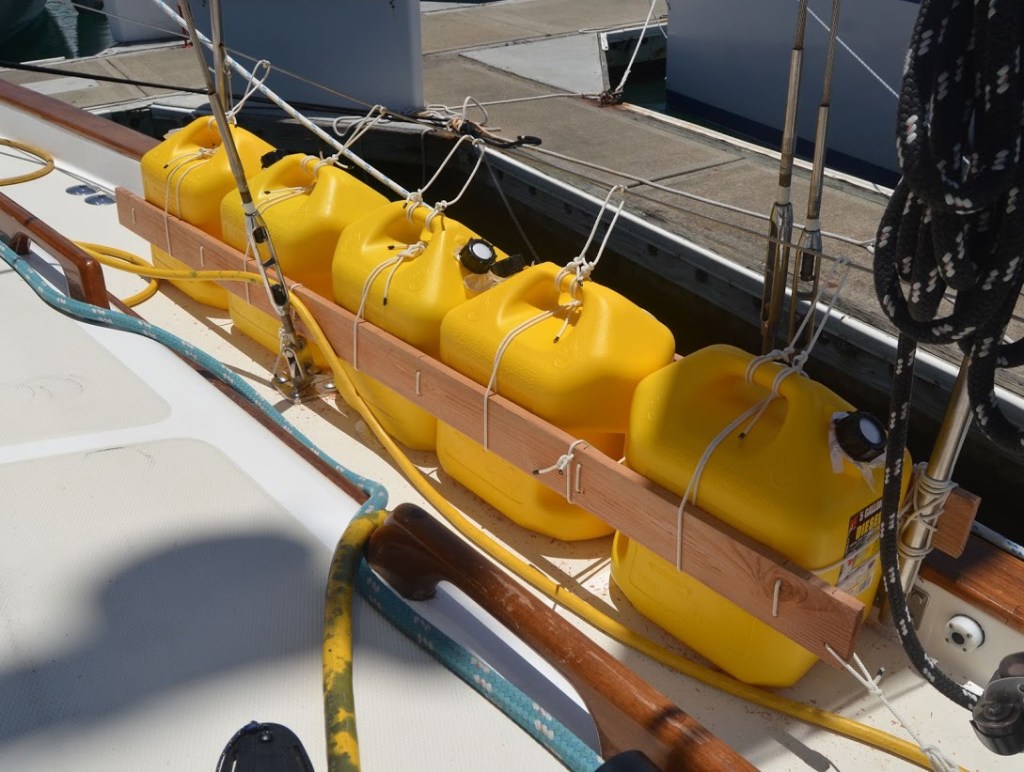
This is why current sailing boats in these areas either have disproportionate fuel tank capacity, or temporary add racks of plastic tank and their deck, with the stability impact to deal with.

For what it’s worth, we collected fuel tankage and HP data for about 30 boats we reviewed. The aluminium group has an average fuel capacity of 17 l/hp, 30% higher than their composite counterparts. And doing the same math within the catamaran group, the aluminium ones would carry an average of 30 l/hp, 80% higher than the composite group average. Given the catamaran is supposedly more fuel efficient, at least in low wind conditions, with their ability to run at 65-70% nominal speed on one engine only, would this give them an edge against their monohull counterparts?

Water

Regarding water, the equation isn’t the same as for fuel, as there are ways to fill-up the tanks along the journey, even if some will require fuel (running a water maker or melting ice does use quite some energy). In the South, collecting water from the frequent rain showers should be an easy way to refill, and some large coach-top areas could be set to do this easily. Otherwise, water is a scarce resource and attention to consumption and storage should apply as well.

At a constant pressure rate, a reverse osmosis watermaker production will decrease drastically as does sea water temperature. With a water temperature of 5°C, output could be half the nominal one.

And regarding drinking water, It is not unusual to set the watermaker circuit with a set of remineralizing filter system, although this is mostly a question of taste, as most of our minerals come from fruits and vegetables we eat.

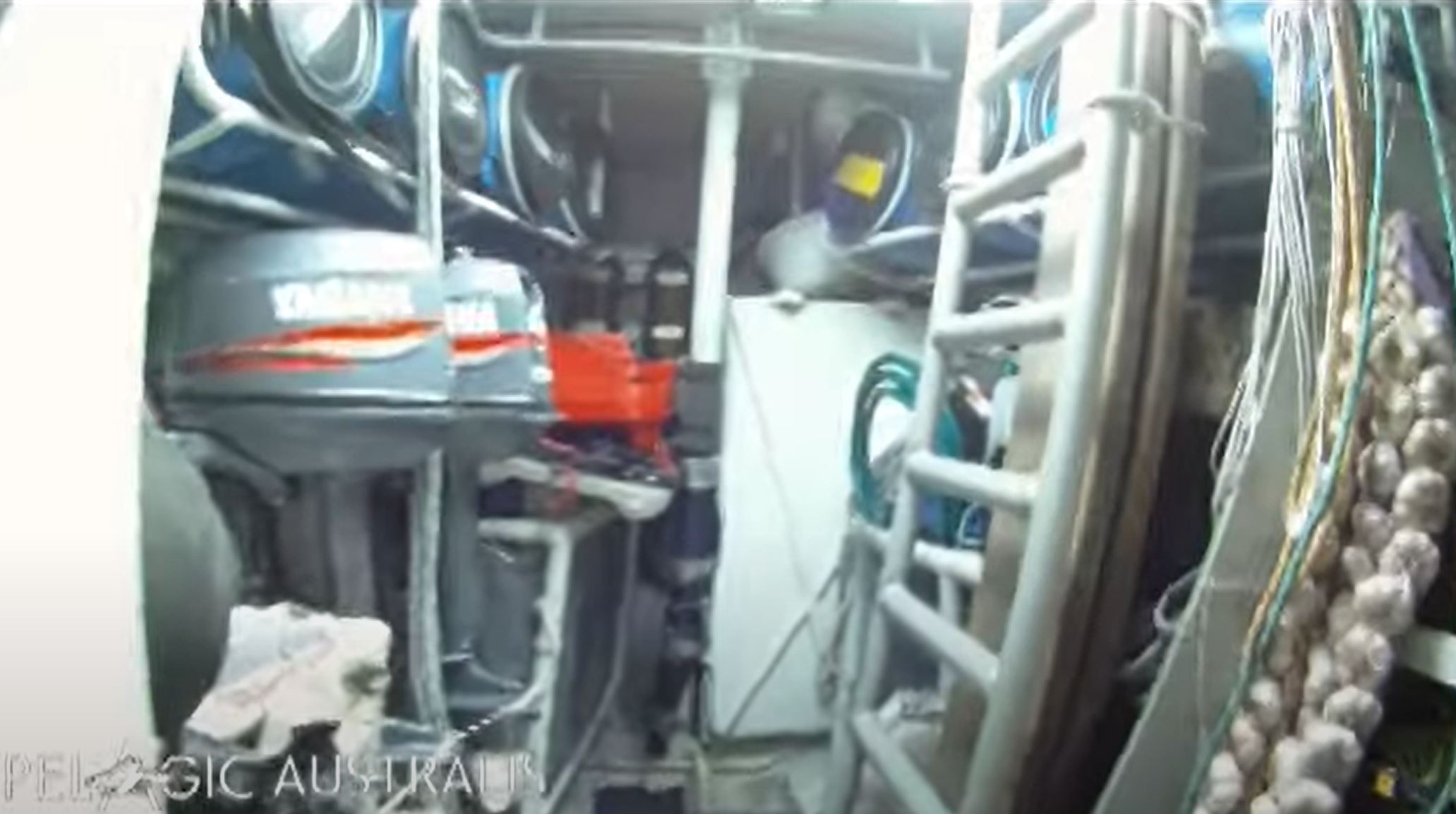
Skip Novak sharing s/y Pelagic Australis peak storage layout

So, to summarize it all, a high latitude boat should cope with the highest standard of reliability and/or redundancy for all it’s key systems, provide an abundant storage capacity to operate and repair whenever necessary, and care for the crew for an extended period of time. But not become prone to overweight in the process, as this would impact its sailing capabilities in the northern light winds. It should as well be strong like a tank, but again not too heavy.

Trying to find the right compromise between these three paradoxical injunctions is where the initial challenge starts.

Seaworthiness

It has been the IRC goal for thirty years to calculate how seaworthy were the boats engaged into races all around the planet. Their Safety and Stability Screening (SSS) method was define to rank all participating boats from a stability and safety perspective. The higher the SSS number is, the more seaworthy, in regard with IRC’s criteria.

When speaking of seaworthiness for offshore and high latitude boat, although we have speed and stability considerations in mind, in no way do we consider racing capabilities. What we have is mind is speed in different sailing circumstances, like light wind and upwind, anchoring behavior and boat handling in storm condition.

Speed

Because of their rugged and autonomous design, high latitude sailing boats are usually heavy, and likely to sail at their hull speed, which is determined by their waterline length.

Hull Speed: otherwise called “displacement speed” is the speed at which the wavelength of the bow wave is equal to the length of the boat. The bow wave’s wavelength increases with the speed, and usually its crest-to-trough dimension (height) increases as well. Hull speed formula is H ~ 1.34 × √(L), where L is the boat’s waterline length.

Wikipedia

Weight is a key factor, but all the other sailing parameters should be considered, especially sail area compared to weight or to wet surface. In the Southern seas, wind isn’t an issue, and sailing will usually be reefed – with the exception of Antarctica, where low pressures will induce motor sailing mainly. High North, sailing will as well mostly occur in light winds, requiring a minimal wet surface, combined with large sails.

And of course, the boat should have the usual sailing capabilities for all areas in between, especially upwind capability, as downwind isn’t always an option when trying to dodge an incoming gale near a coast.

Anchoring

From our standpoint, as we know we spend most of the time on anchor, seaworthiness should include boat behavior while on anchor in gale conditions. There are many anchor and anchoring techniques to be discussed here, but at this stage, we’re only interested in windage and deck cluttering as key safety factors in those circumstances. Many high latitude boats will have lots of stuff on deck related to autonomy increase (fuel tanks for instance), or specific anchoring condition (large reels of long mooring lines). Windage is a difficult value to calculate, but we can easily understand how deck cluttering and layout can impact its value.

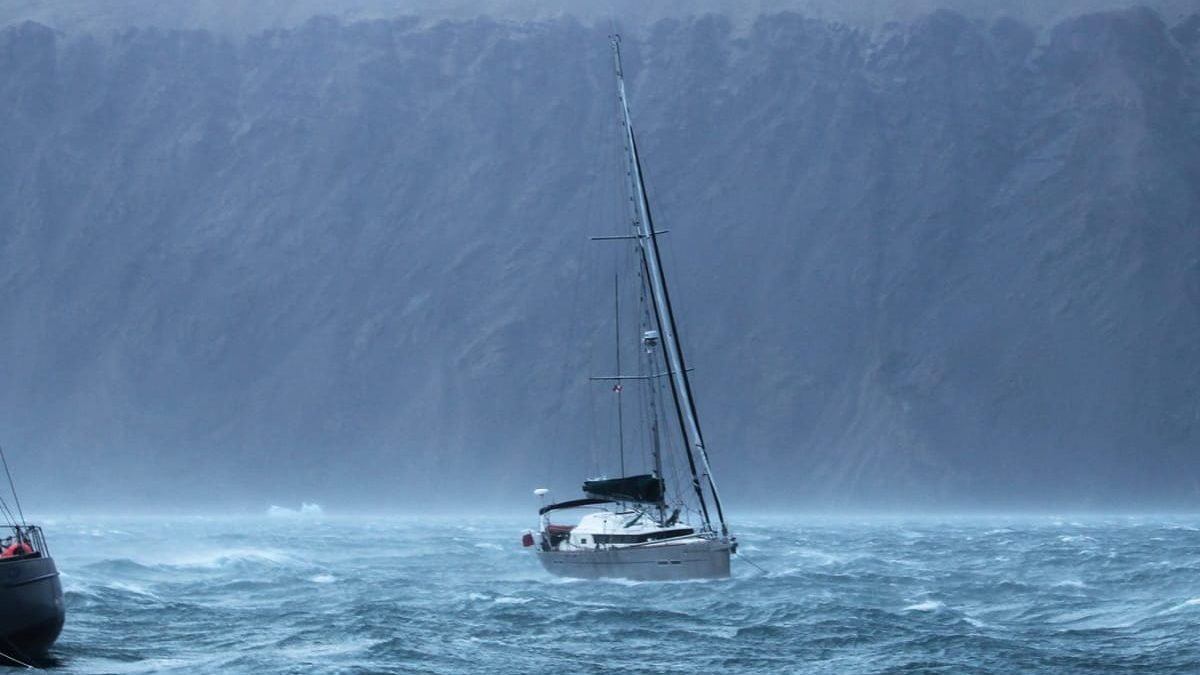
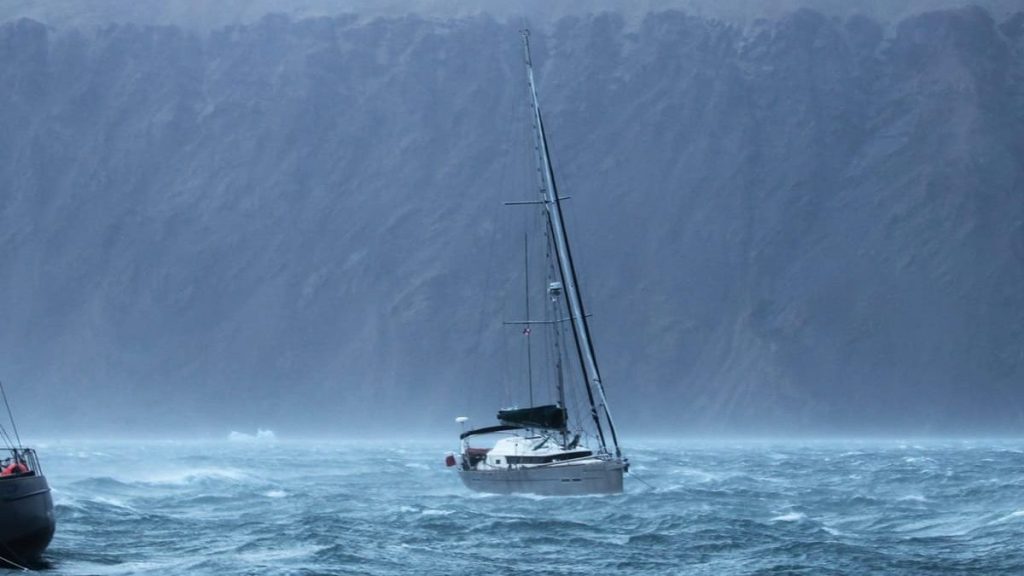
Boat at anchor in storm condition ©unknown

Handling

Another item to factor into our seaworthiness assessment is how the boat behaves in very strong winds. These days, thanks to global communication systems and increasingly reliable weather forecasts, a boat captain is unlikely to be surprised by a storm. Even the Drake passage, for a long time considered as one of the most hazardous sailing journey, is now crossed in optimized weather windows. Mind you, that doesn’t mean that a sudden squall or storm won’t ever hit you, either by surprise, or by necessity (forcing you to move out of an anchorage for instance). On the contrary, this will happen pretty often, and reefing easiness and boat handling in these condition are key safety factors.

With this in mind, boat handling in gale condition is an important criteria for us, especially since we’re regularly sailing shorthanded, or even solo. Staysail, or even storm sail, winch position, reefing organization etc all important points to factor in.

Strong wind conditions brings up the topics of reefing or Jordan Serie drogue deployment. Regarding reefing, we’ll be looking for a 4 reef main sail instead of the usual 3, and while we rule out in-mast furling we’ll consider boom furling.

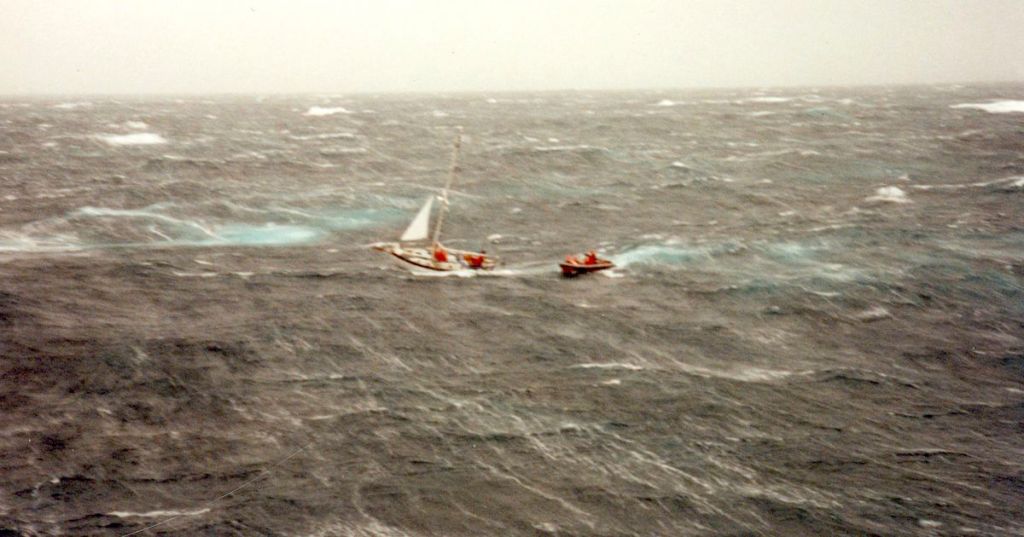
75 miles south Nantucket Island, MA (Oct. 30)–Coast Guard Cutter Tamaroa’s crew approaches the sailing vessel Satori. ©U.S. COAST GUARD

So that brings up the question : how specialized should a boat be?

Some sailors have a radical answer : one program, one boat.
Most try to compromise. Demanding sailing areas such as iced North, or the Roaring Forties in the South, would suggest that the boat should be fitted for the most demanding areas.

As far as we are concerned, we plan to keep her for at least ten years, and there can be only one boat. So we’ll try the exercice of complying with the most demanding places, while not making deal-breaking choices for the tropical cruise which will surely happen at some point.

When considering our options, as far as seaworthiness is concerned, we’ll be benchmarking potential sailing performance against a few key data :

  • Sail area / displacement
  • Sail area / wetted surface
  • Lenght / displacement

Sail area/displacement” is a key ratio to assess speed capabilities in windy conditions, while “Sail area/wetted surface” is better to assess light wind speed capabilities. In the high North, light wind sailing capability might come directly in contradiction with the large fuel tank weight impact on wetted surface.

Which brings us to the boat’s length and hull shape, as it is directly related to the sail area it can carry. For instance, recent boat design, with their large flat hull, carry larger sail surface than older classic design, but increasing as well their wetted surface, especially while heeled. As these cruising boats are usually deeper than their racing inspiration, an overweigh such boat is likely to underperform in light wind because of its additional wetted surface.

The “length/displacement” ratio will be used as well to rank the results of our search for the ideal high latitude boat, taking into account its seaworthiness.

Rugged

It’s obvious that off-beaten-tracks will come along any high latitude sailing plan. Although there seem to be places where every sailor going after this sort of adventure would gather (Ushuaia in the South, Reykjavik in the North for instance), at some point the anchoring will be in uncharted territory.

Grounding or hitting a rock on a slow approach, increasing the probability of hitting a floating object under full speed in a rough sea, that’s a prospect any ocean offshore sailor dread, knowing that being on alert is only part of the solution.

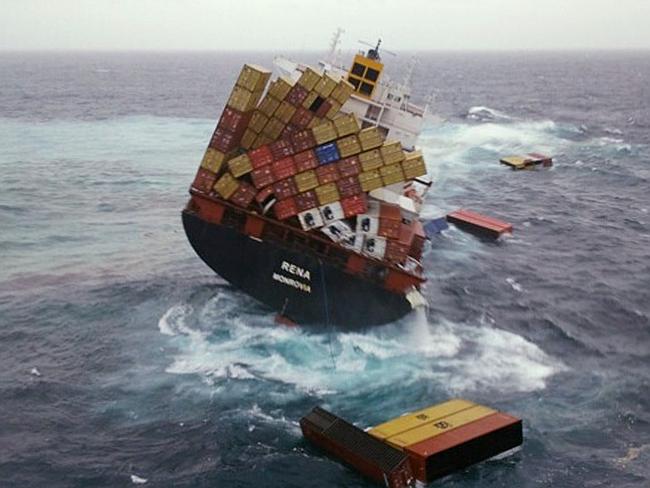
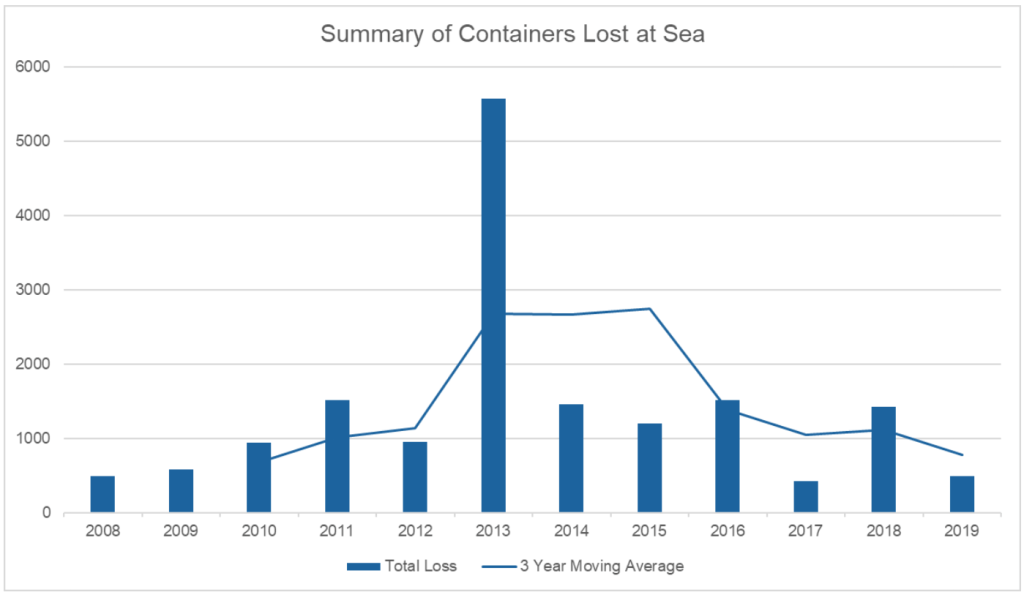
Over the last two decades, over a thousand containers were lost at sea on a yearly average, according to a 2020 BIFA survey. While most will drown, there is still the odd chance of hitting the floating exception. And containers are only a small part of the offshore UFOs (F standing for Floating). Although it is not widely advertised by the sailing community, both leisure and competition, many UFO encounters are related to “ship-strike”, aka whale collision.

Responding to the dramatic increase in the loss of containers at sea in the past year, the Maritime Safety Committee of the International Maritime Organization discussed the issue at its recent meeting. Agreeing that the loss of containers at sea represents a potential danger to maritime safety and is a threat to the environment, the IMO’s MSC took initial actions focusing on detecting and reporting lost containers. The IMO said that it will also work to address efforts to prevent the loss of containers and restore confidence in container shipping practices. (May 18th 2021)”

IMO Safety Committee Addresses Reporting for Containers Lost at Sea

In any hypothesis, all high latitude sailing stories will value a strong and/or extra reinforced boat, equally made to resist ice abrasion, the occasional grounding while looking for a poorly charted protected anchorage, and finally the potential UFO.

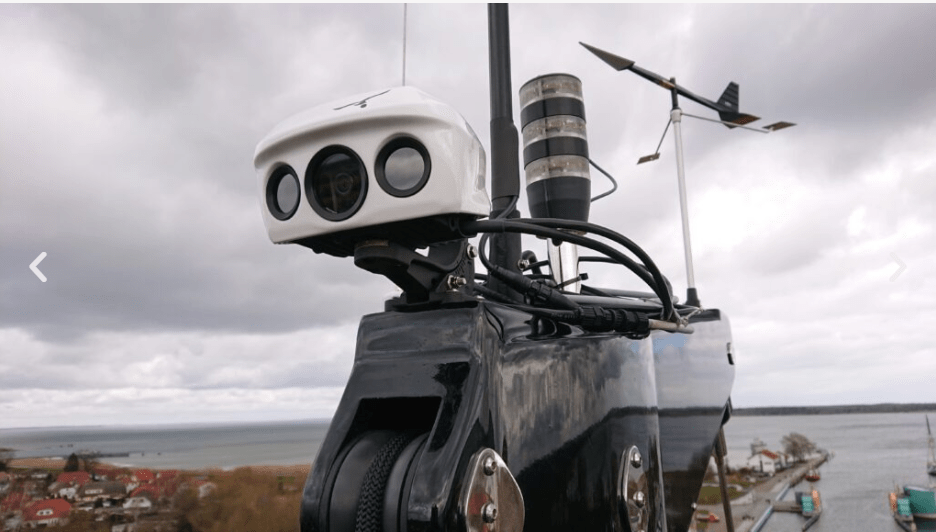
At this early stage, we focused on the boat structure and construction material. We’ll cover the systems recently designed to ease the mind of offshore and off-beaten track sailors. Tremendous progress occurred with forward scan technology over the last few years, and lowered costs for these systems finally puts them in the “potential” list. Let us just mention here two startup initiatives: the seatrack box project and the Oscar system, which was fitted on 18 of the 33 boats aligned on the 2020 Vendée Globe starting line.

“OSCAR combines optical sensors and artificial intelligence to detect floating objects on your course. OSCAR automatically assesses the risk of collision in real time and warns you of any potential danger. OSCAR significantly enhances your safety and that of your crew.”

Oscar Company

We wouldn’t have definitive statistics there, but surely metal boats are the majority, and as far as recent leisure and adventure sailing is concerned, Aluminium construction stands out.

No consensus comes out of reading informed opinions about what rugged means for a boat. For most, “rugged” seems to be another word for “heavy”, while some will point out that boat conception, construction quality and choice of material will matter just as much.

While a watertight bulkhead and/or crash box is the minimal requirement, and most sailing boats over 40 feet would include this design feature, serious high latitude sailor value 2 or 3 watertight compartments. A water-tight engine room is another valued feature.

And then there is the ice. Boats designed to overwinter on ice are a very rare breed, and their specifics make them less than ideal for other type of sailing. This is not our plan anyway. But we do imagine the possibility of staying in places where small bergs and maybe thin icing would happen, such as Norway or Iceland in winter. Pushing down the Drake is another question, and that would depend entirely on the conditions at the time. Based on the ice forecast, we’d be looking for up to 3/10th cautious sailing capability, either high North or South.

Just so that everyone understands the issue here, there has been the dreadful accident of “Anahita” in 2018, an “ice prepared” Ovni 345 built by Alubat. Disregarding the Canadian Coast Guard warning on persistent ice that summer, its crew apparently tried to force its way into Bellot Straight ending in the tragic loss of their boat – they were rescued after some dreadful hours in the cold.

“Under the pressure of the ice and current of Bellot Strait, the “Anahita” then ruptured and began leaking resulting in sinking. The crew, two Argentines, had to flee to the drifting sea ice floes. However, they still managed to drop an emergency call and activate the epirb of the boat. It sent just long enough for the Canadian SAR in Trenton Ontario station to start a rescue operation.”

“CCGS Larsen helicopter picked two stranded individuals off ice floe and they appeared unharmed. The conditions were rather heavy fog with little wind. They had spent 11 hours on the ice floe and they were lucky no Polar Bears spotted them.”

Daria Blackwell – 29/08/2018
Explocat 52, the ultimate aluminium exploration catamaran - Garcia Yachts
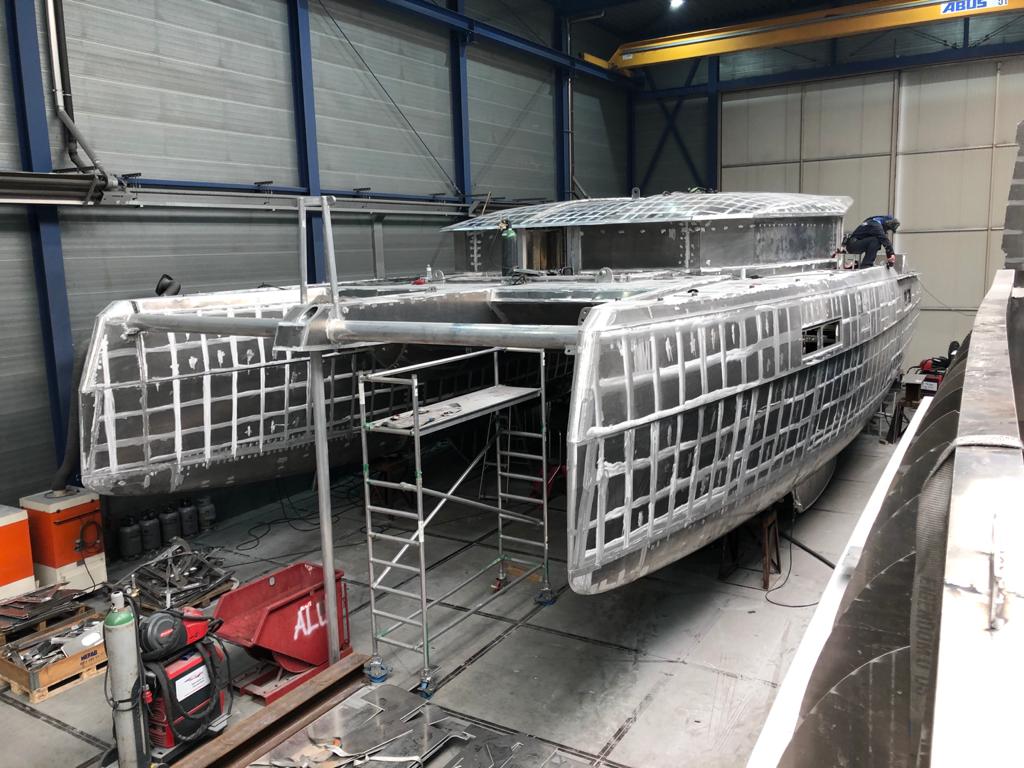
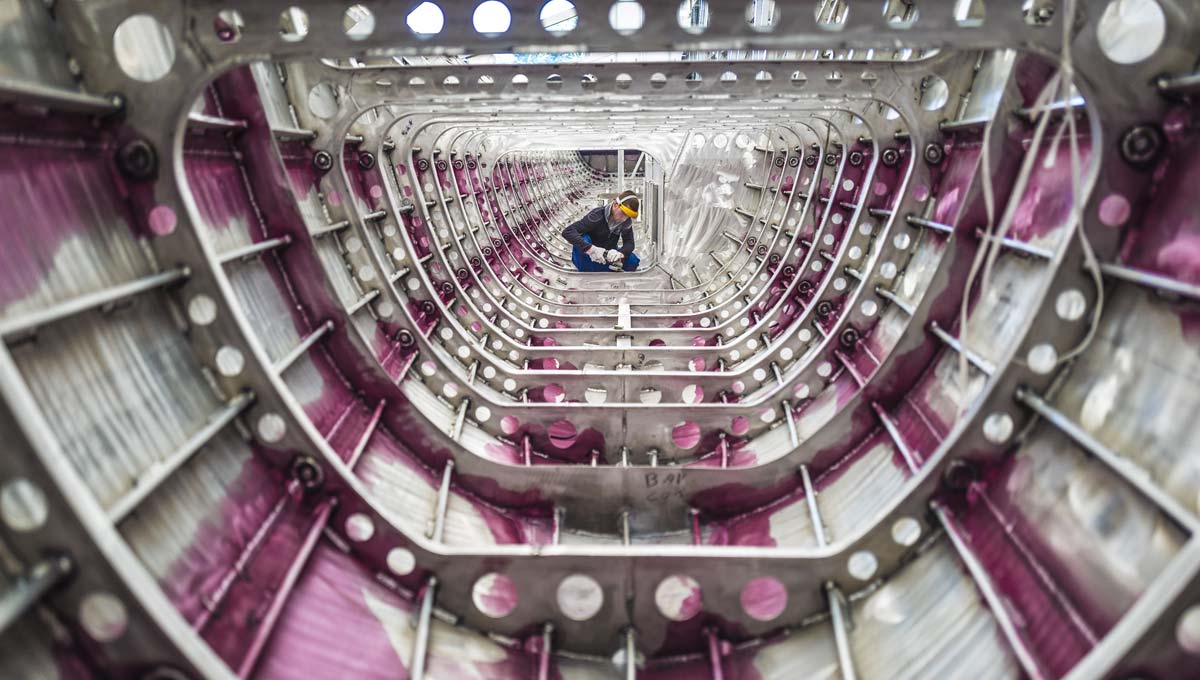
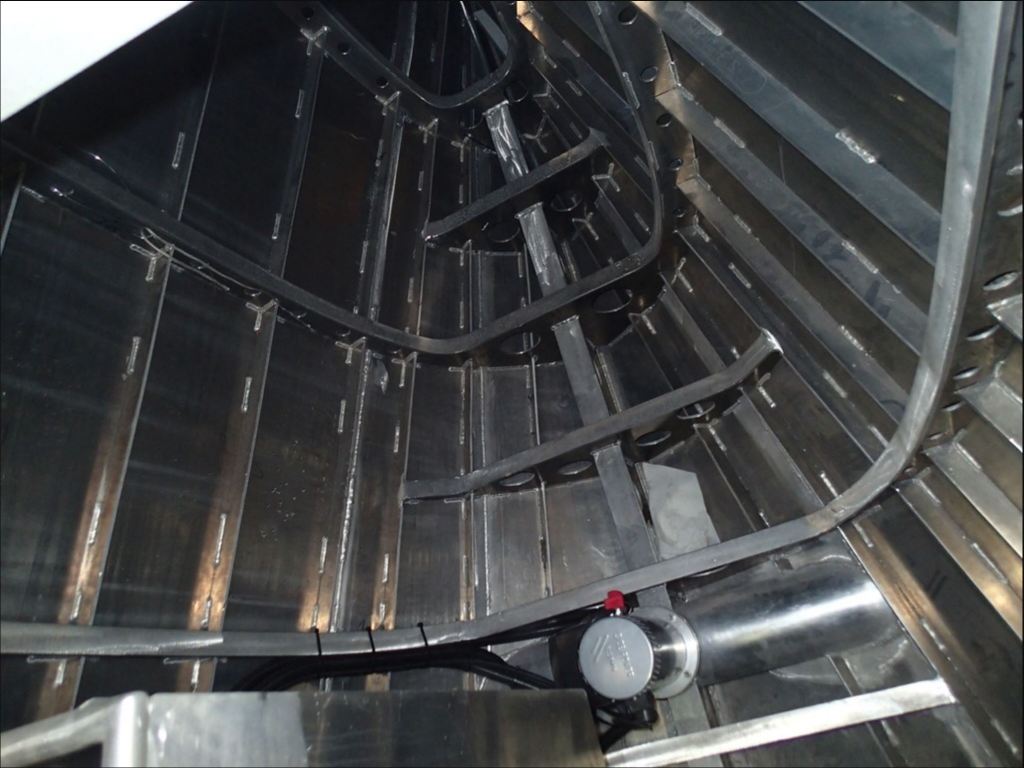
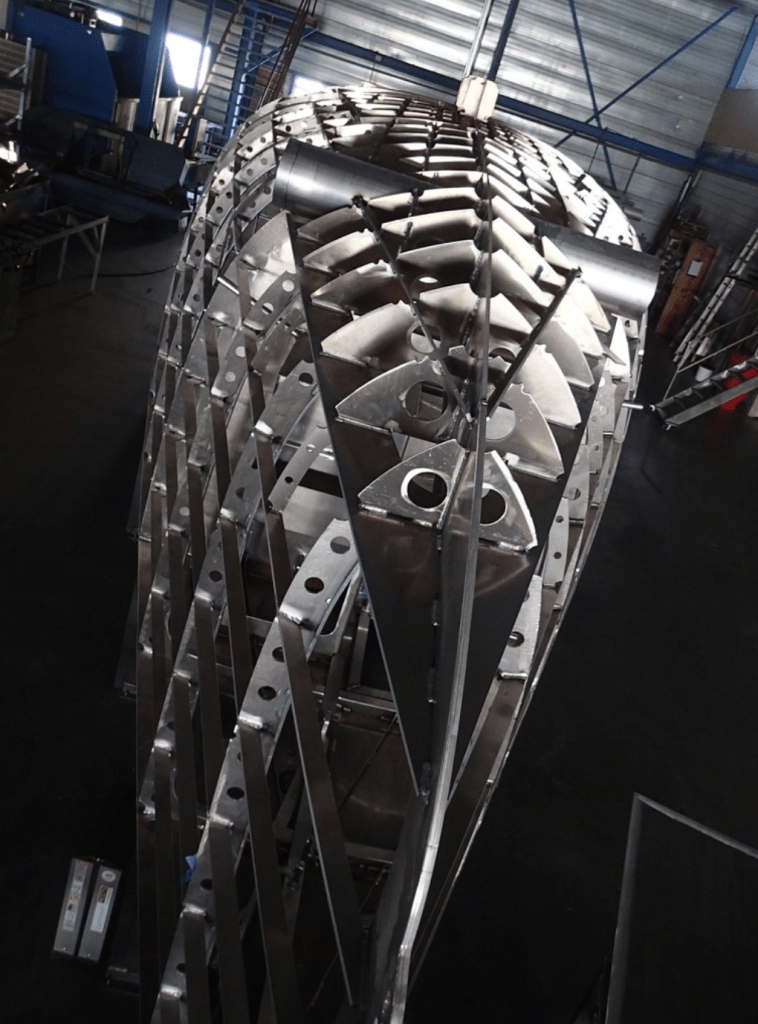
Garcia Explocat 52 construction
KM Bestevaer 49 in construction phase

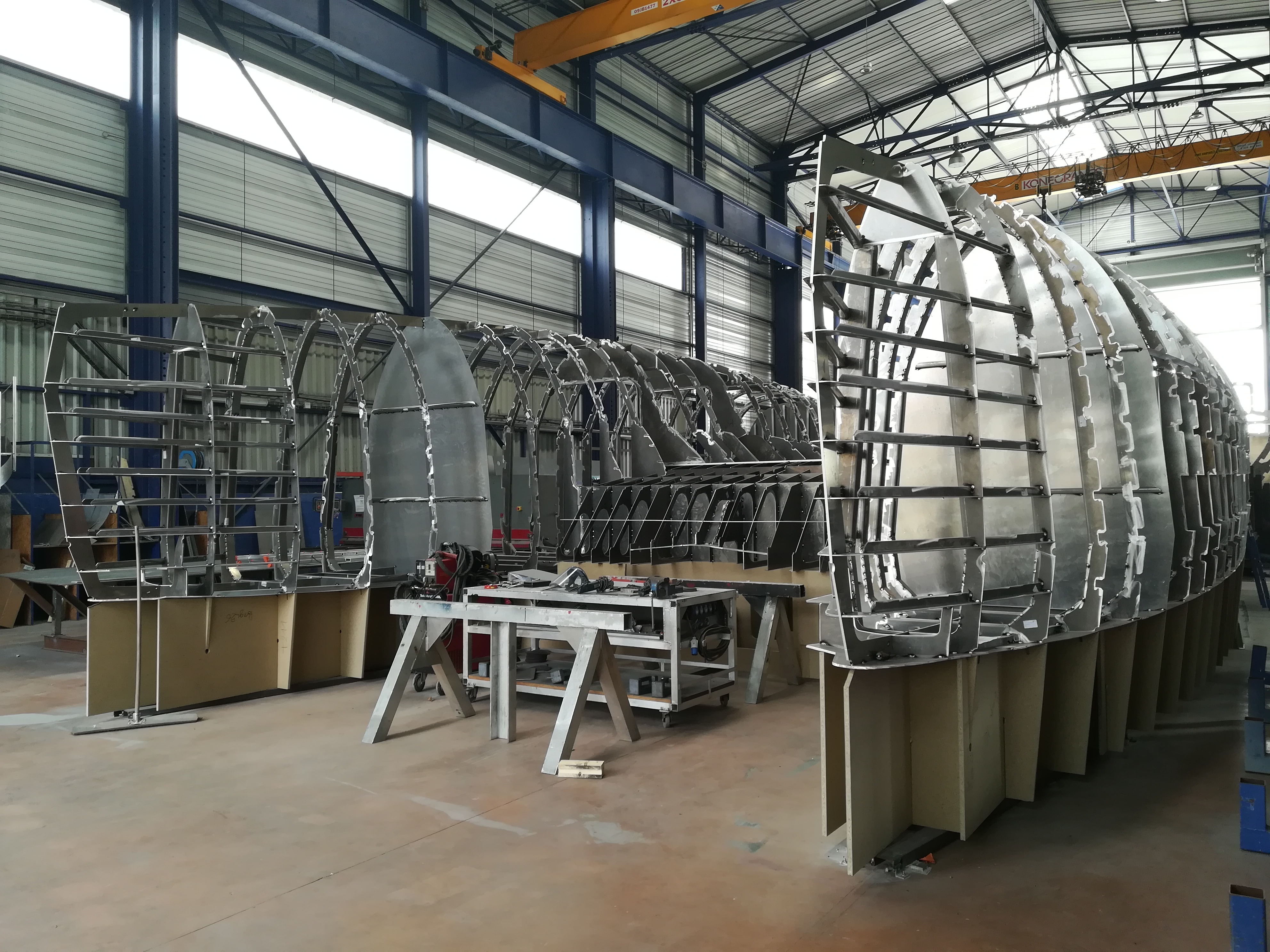
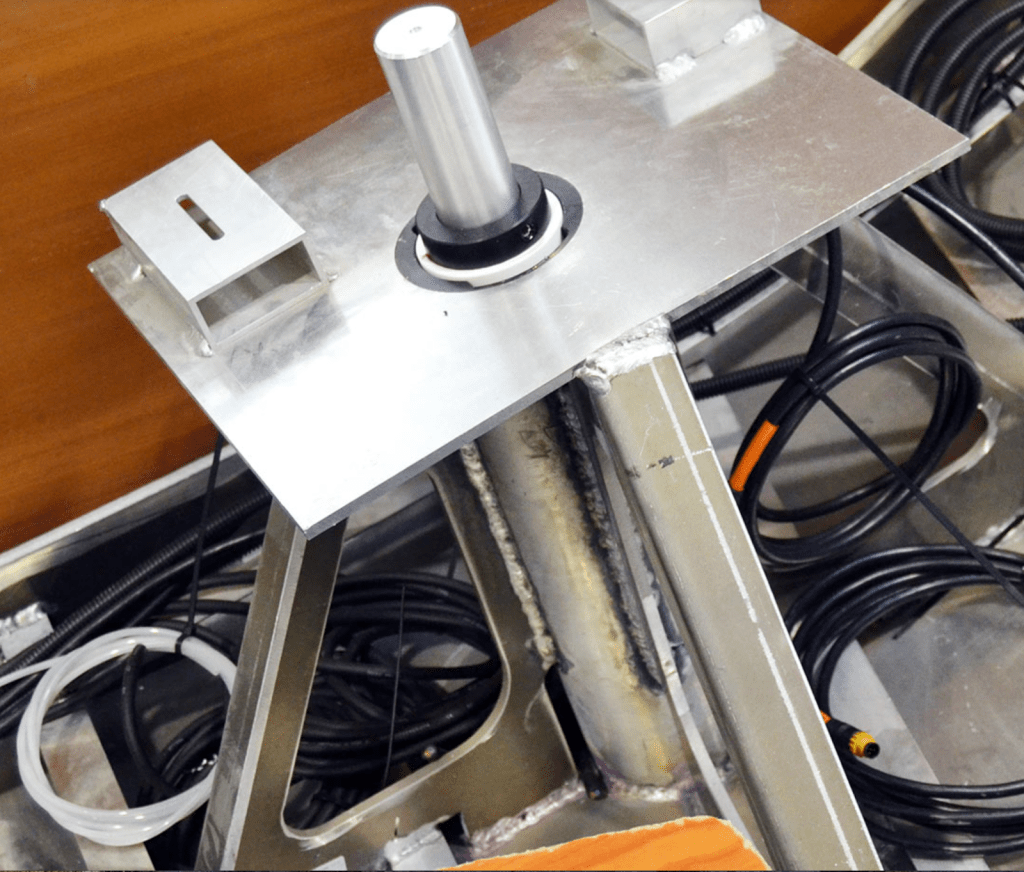
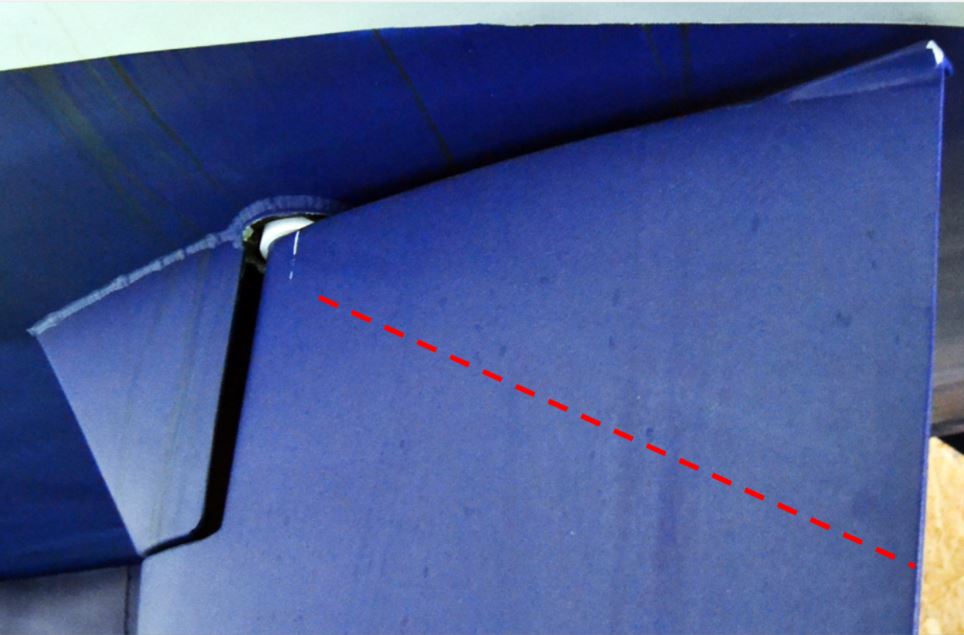
When thinking of boat sturdiness, we don’t limit ourselves to the potential bergy or UFO crashing, and the hull peak reinforcement. There is as well the possibility to hit the bottom and damage the rudder system. Some yacht builders have this in mind while designing their boat. In these exemple, we can see a reinforced bearing system (left), and an aluminium rudder which includes a diagonal pre-define GRP breaking point (right), both on the Garcia Exploration range (©no-frills-sailing.com).

Sailing in harsh weather, a protected watch position is also very much in demand, provided it doesn’t add too much windage. A comfortable enclosed space allowing for watch and sail trimming like the one set in Boreal Yacht design seems to be the best solution to cope with long journeys in the cold (or worse). And while on anchor, it will provide the crew with a unique viewpoint on the spectacular sceneries.

There are added benefits to aluminium construction besides strength and capacity to deform vs. break. The boat will be stiffer as well, with the added performance benefit, especially if combined with a carbon mast.

The formula here is S = T3 (S standing for stiffness and T for thickness), meaning that doubling the plates thickness from 4mm to 8mm for instance, results in increasing 8-fold.


What is it that makes a high latitude boat?

Being a rookie has its advantages. It allows you to search for inspiration from role models you get to pick, and the unlimited access to online information streamlines drastically the process. And beyond the smartass answer (“Its crew is what makes a high latitude boat”), we’ll try to understand the specifics of such a boat, structure, preparation and equipment. Shown here, Morning Haze, an aluminium Bestevaer 55ST, is the typical high latitudes yachts, as an illustration in an 2019 Yachtworld article (©Benedict Gross).

A few names will quickly come up on the tip of your fingers:

And behind these very preeminent figures come the numerous anonymous contributors willing to share their experiences and visions.

Bestevaer Tranquilo, launched in 2006 – Another proven high latitude reference | ©KM Yachtbuilders

We started to read anything and everything related to high latitude. And of course we watched Skip Novak’s video on sailing techniques in the Horn weather, along with others from anonymous sailors. It all revealed a fascinating sailing world, existing beyond the ones we get in milder latitudes.

There are the sudden katabatic winds, not unlike the treacherous ones blowing over Greece or Croatia in summer. There are the big waves, big enough for the thought of being rolled-over to overcome any other consideration. There is the cold, meaning a whole new boat organization, and clothing as well. And of course, there is the ice, with it’s own forecast and a whole new set of sailing rules and constraints.

All of these get your heart to beat faster, but your mind quickly catches-up to define three top-level criteria what would define a high latitude compatible sailing boat.

  • Rugged construction, to withstand hitting ice and the odd rock in uncharted waters
  • Autonomy, meaning abundant storage, tankage and space for redundant systems and their spare parts
  • Seaworthiness, while dealing, or dodging, with extreme weather and sea states, which is more common and harder to avoid in high latitudes

“They are tough, they are comfortable or they are fast,
you can only pick two of the three”

It’s easy to see how these requirements can oppose themselves. Many specialized high latitude boats are built like tanks, with strength contradicting weight requirements for any decent seaworthiness. But then, high in the North, or along the Antarctic peninsula, they would usually motor more than they sail, requiring huge fuel tanks.

This is not new. Any boat owner had to walk himself toward the compromise he felt best for his specific sailing program and lifestyle, even in sailing areas with little imperatives, like for instance being the fastest at sea, but with all amenities on anchorage.

The only difference that comes to mind with high latitude sailing is that the required fittings dont seem to be negotiable in these areas, and so any compromise would have to be related to less demanding sailing zones.

As far as High Latitude is concerned N and S. aren’t exactly equivalent. While Iceland and Lofoten are places where most cold-isolated boats could sail to, Antarctica, or even Patagonia is another matter. Very few boats are strong enough and specifically designed to sustain being held in ice, or to overwinter on ice. In any case, this is not something we’re looking for.
What would Skip Novak say ?

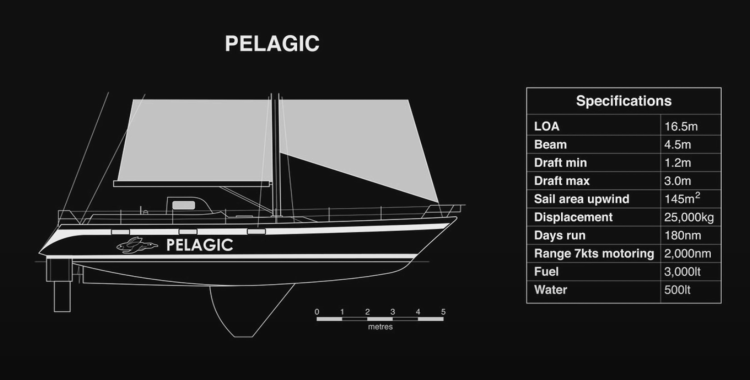
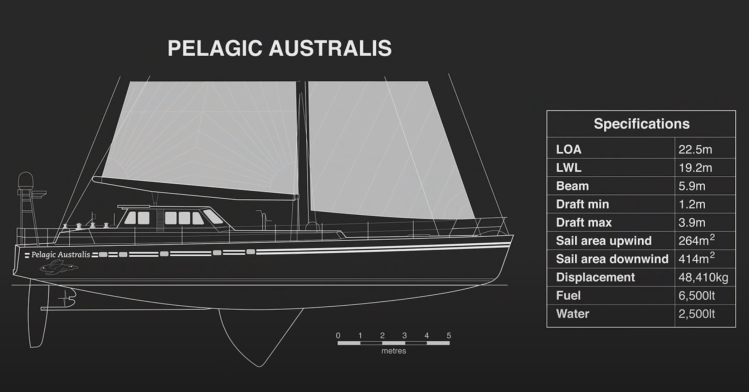
Searching for experience and inspiration, it was hard not to start the journey with the video tour of Pelagic and Pelagic Australis performed by Skip Novak on YouTube.

Let’s take note of some keyword along Skip’s tour of the boats:

  • Robustness and simplicity
  • Ability to beach
  • Refleks stove, defined as the life of the boat, fed by gravity day tank. In Pelagic Australis, used to heat all the radiators throughout the boat.
  • Self sufficiency, ability to repair anything
  • Big workshop and storage area in the peak of Pelagic
  • Pilot house, great for being out of the weather while still watching around
  • Diving compressor on both boats
  • Lifting keel
  • Four reels of 120m polypropylene mooring line on deck of Pelagic, 150m for Pelagic Australis
  • All safety equipment at the ready near boat entrance
  • Watertight doors (Pelagic Australis)
  • Two inflatable dinghy and two outboard engines
  • A winch at the foot of the mast able to cope with windlass failure (Pelagic Australis)
  • Clean deck while crossing the Drake

While Pelagic is built with steel, Pelagic Australis is an Aluminium boat. Built by KM and delivered in spring 2021, the 77 feet Aluminium schooner Vinson of Antarctica is the latest addition to Skip’s high latitude fleet.

Pelagic 77 on the water and the rig goes in | © Guy Fleury

There are flying fish, but these aren’t the majority of the specie

So what kind of boat construction should be considered? Material coming first, the rugged criteria seemed to rule out composite construction (generic for Epoxy/Kevlar/Carbon material), although it’s not at all that simple.

AluminumComposite
ConstructionPerfect for one-off projects, as there is no need for a mold. Alloy is easier for the owner (or a surveyor) to check quality insurance – so particularly great for boat yard with a short track recordCheaper and quicker mold-based construction.
Alloy can be designed to be strong and stiff, but so equally can glass structures, especially when reinforced with Kevlar.
Impact resistanceMore likely to deformMore likely to crack
Ice abrasionUnless sailing at night, or lowering steering watch, ice is more about bow & waterline abrasion than impact.
The ice skim also will gouge aluminum (which is, in fact, softer than kevlar/epoxy)
Glass boats in high icing latitudes would often have stainless plates bent to protect their bow waterline areas from ice abrasion when breaking through thin (15-25mm) ice surface.
CorrosionAlloy (inc. ‘marine grades’) has corrosion concerns both electrically and with stainless fastners. This don’t exist with glass construction
InsulationAlloy needs 75mm of foam) because of its high thermal conductivity …… but the requirement for thick isolation is valid for any high latitude boat.
RigidityIn rough seas Alloy boats will usually be more rigid than their glass counterparts …… but this will greatly differ from one yard to the other.
RepairThey can both be repaired in remote places, … … for an owner without welding skills and equipment, glass is easier.
That being said, reading stories after stories of metal boats sailing into high latitudes – Aluminium for the most recent under 60 feet units, that’s the preferred hull material we decided to pick.

How it all starts

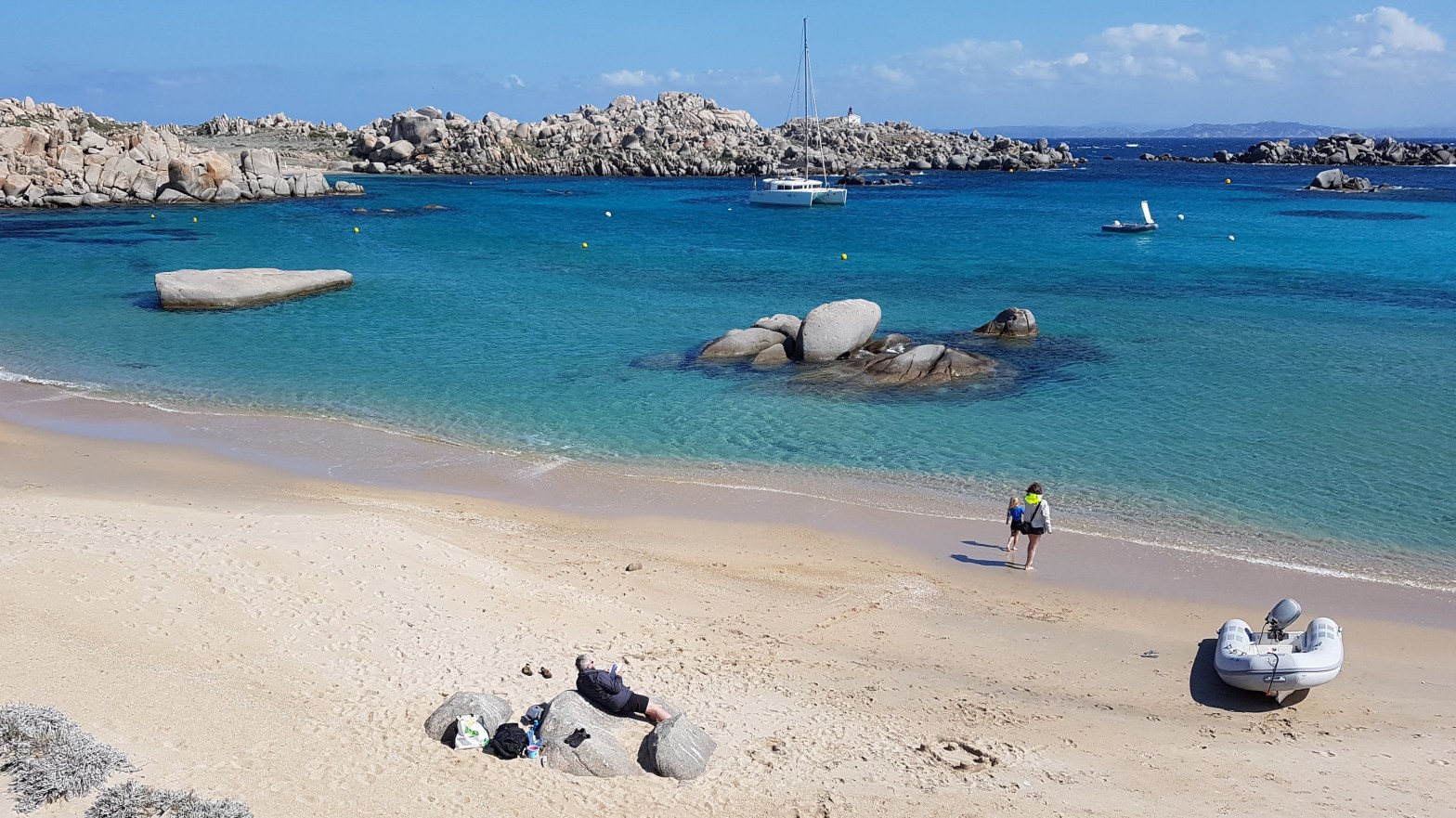
Ten years sailing the most enchanting places within one of the most beautiful sea, not only rich with incredible sceneries, but also with a unique cultural heritage on each of its shores. And doing this in the best of conditions, as we’d be sailing in all seasons, but especially when the nicest anchorage or little moorings wouldn’t be overcrowded, as it happens in the peak of summer season – try to imagine the Lavezzi, featured above, in summer time.

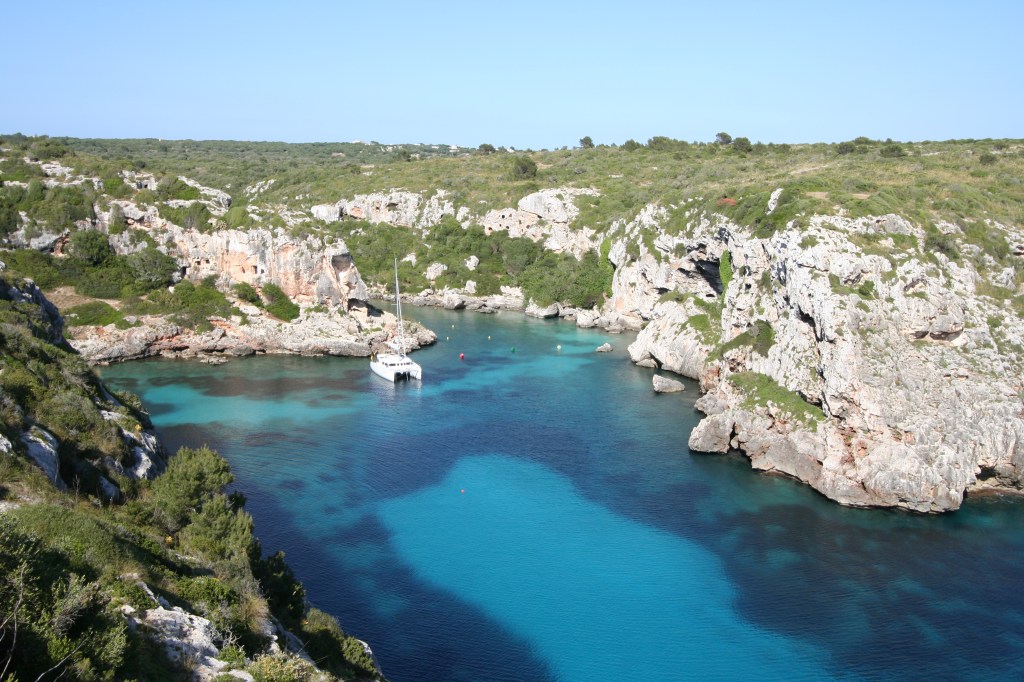
Menorca, Cala Coves (N 39°51,805′ – E 4° 08,726′) | ©Dick Bernard

So, how can one get tired of it ?

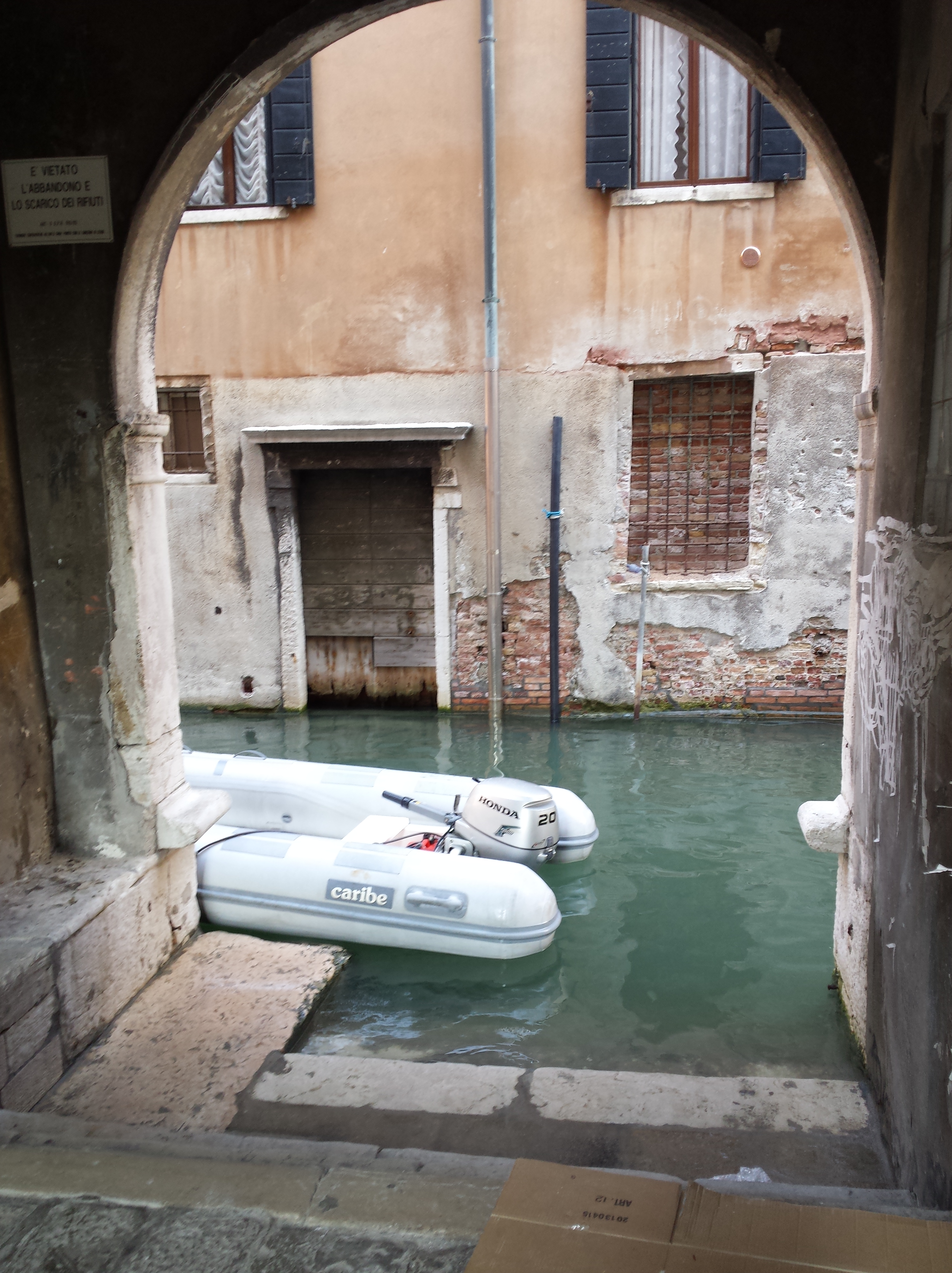
The feeling of liberty you experience when sailing out of your Trapani wintering marina, asking yourself whether you’d head North-East to the Amalfi coast, or North-West to Sardinia is exhilarating. We do otherwise tend to clock our lives to rhythms which are imposed upon us, not always for the best. So it’s been Sardinia. 4 times. And Amalfi coast and Naples’ bay. 3 times. And so many other places you feel you can die after you’ve been there. Spending 4 month in Marina Vento di Venezia, with the ability to go along the canals on a temporary registration of the dinghy, has been one of these many magical highlights, with the learning of the gondola etiquette as an icing on the cake.

Being curious of the world, its people and landmarks alike, their infinite differences, this curiosity can’t be satisfied in a few countries, mostly European, however lasting is each discovery.

“O God, thy sea is so great and my boat is so small”

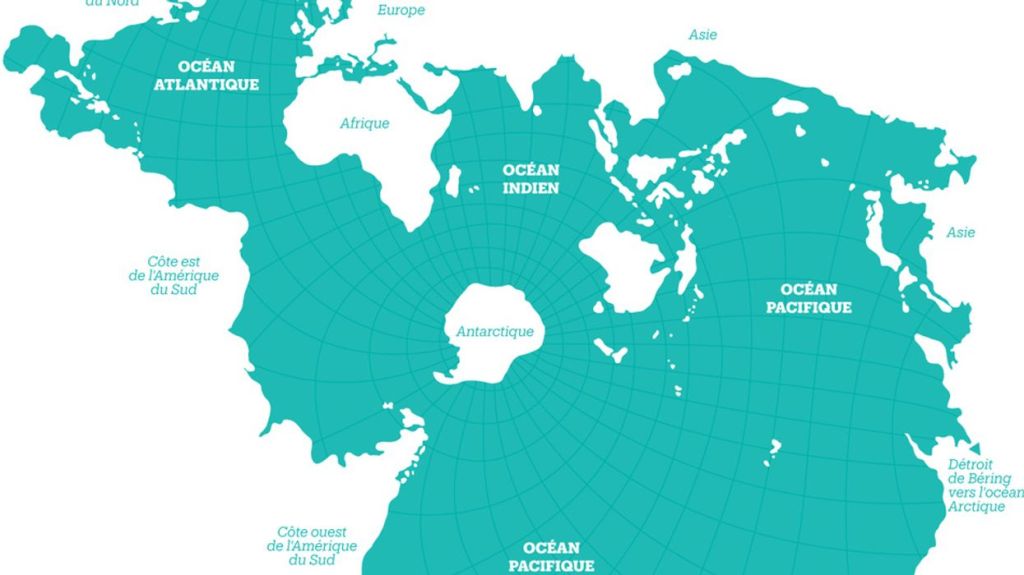
It only takes a minute on any chart to realize how small this initial play ground is, compared to the immensity of the oceans. In this respect, Athelstan Spilhaus published an interesting Smithsonian article “To see the oceans, slice up the land” (November 1979), with a new projection which would become very popular among sailors in the late 2010’s.

Spilhaus Projection

“The distortions at the two corners around the poles in South America and China are very great indeed, but it is in the land that we wish to concentrate maximum distortions. This map has extraordinary additional property of being doubly-periodic. This means that if you had multiple copies, you could match the edges perfectly and repeat the pattern just like decorative tiles. The endlessly repeating mural which would result would tell us that a true map of the world has no edges.”

With this in mind, the urge for greater space steadily grew up, to the point when it became obvious that we’d have to comply with this imperative. The early stages became visible when we started a Google map with all the places we’d like to sail to, getting inspiration from all parts, sailing and airline magazine, specialized blogs, any travel-related media, and of course a long history of sailing books, from classics like Stefan Zweig’s Magellan to the adventurous tales of Mike Horn.

Boy, how Google Earth is your best friend !

When the map quickly became spotted with dozens of little dots, some of them actually North or South of their respective 70th parallel, it became clear that we had to move on to the next sailing plan.

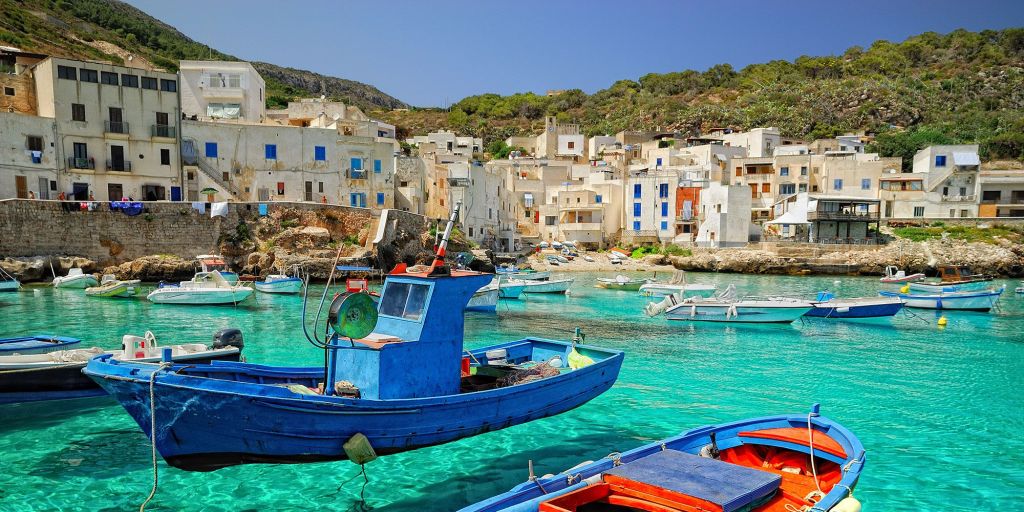
We were in the fall of 2019, coming back to Sicily from a beautiful journey around Sardinia. I vividly remember when I created the first file related to high latitude requirements for sail boats, as I was sitting on the terrasse of the Romano bar, having a morning coffee overlooking Levanzo’s little harbor. It all felt surreal to initiate a line of thought focused on boat safety in the hardest of conditions, on isolation, heating, autonomy, all of this by a very warm September morning, sipping coffee over a dead still, deep blue Med.

Levanzo, one of the Egadie Islands off Trapani (Sicily) – This is sure to be missed one day or another on an high latitude sailing plan

Yes, defining high latitude sailing had to be the next step.