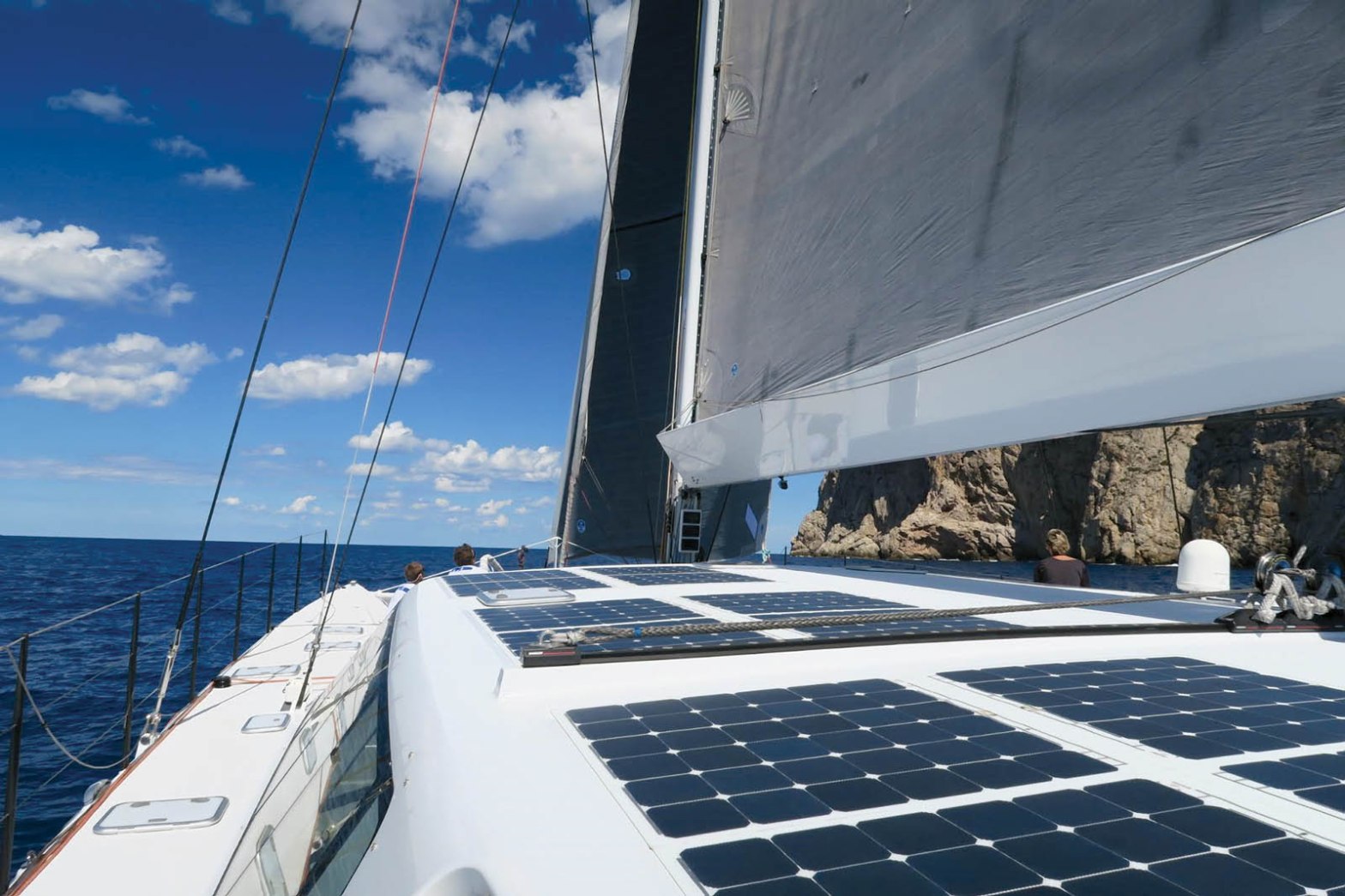
While we’d agreed that boat life has to be more frugal than our on-shore ones, we’re not on a radical journey in this direction, as the passive igloo project was. We plan on continuing computer-based work, using the same main appliances we’d use at home and to some extent we expect to keep globally our standard of comfort – shorter showers maybe, but showers nonetheless. However, high latitude impacts the output one can usually expects from energy-production systems, for instance solar panel output, or dominant high pressure weather systems meaning no wind for a wind turbine.
Setting this perspective, the electric part of a long range liveaboard boat becomes central, as it implies the interconection of various voltages, both input and output (DC and AC), not to speak of the various production systems which work together to match our planned consumption. Some parts of the system are safety-related (covering the windlass use while at anchor, or the electronics while under sail for instance), some comfort-related (having a movie night just like at home). Electric cooking will fall in-between, only conceivable with the huge progress solar or LiFePO4 technologies have made over the last decade.
The goal of the energy production systems installed on board is to cover the large array of situations a long range boat will encounter. While solar panels are now the way to go in most places, their output in high latitude will be too low to cover the boat’s needs. And along with the redundancy principle, at any given time, we want two relevant energy production systems available.
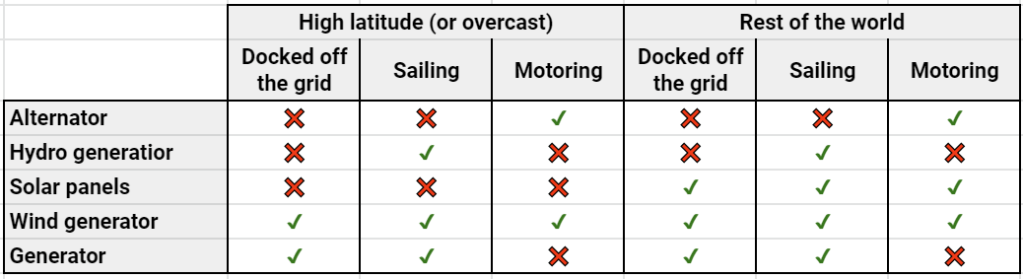
Solar panel vs. high latitude
Background info
Solar panel production (W/m2/d) depends on latitude and climatology. The further out of the equator, the larger difference in average monthly insolation.
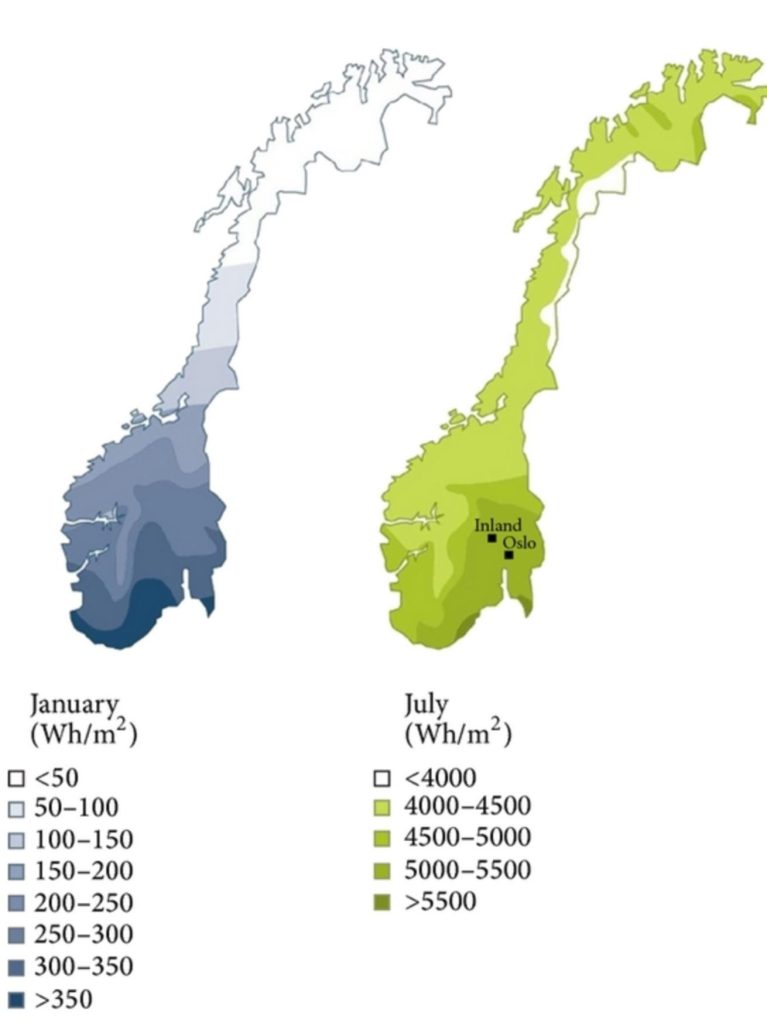
As an example, we can see here how Norway gets 10x more W/m2 in July, compared with January. Nominal solar output (Wh) will be reduced depending on the solar angle (A), and the loss (L) can be calculated with the formula:
- L = cos(radians(A))
- actual Wh = Wh x L
For instance, if the sun angle is 30° out of the perpendicular (Bergen in March), the output will be 1-87% = 13% of maximum.
There are many solar angle calculators online, which will indicate why solar need to be oversized, but can’t be the only option for high latitude sailing.
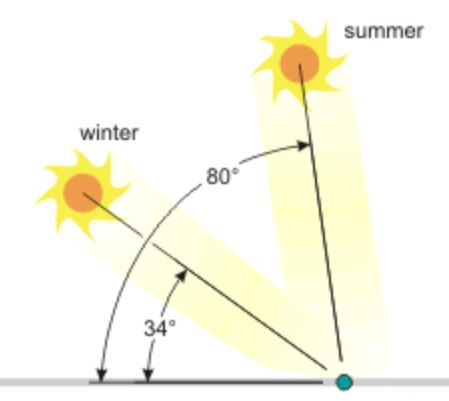
The panel should always face toward the equator, and tilt from horizontal at an angle approximately equal to the site’s latitude (NREL 2005). These recommendations represent an average, based on the angle of the sun over the year.
Since we can’t set the orientation of the boat, or built tilted-panels system, we just as well lay them flat on the roof, and over the davits.
The Sun Calc web site gives a visual understanding of how the sun moves, depending on location and seasons. Bellow we have the data for Bergen (Norway), Punta Arena (Chile) and Reykjavik (Iceland):
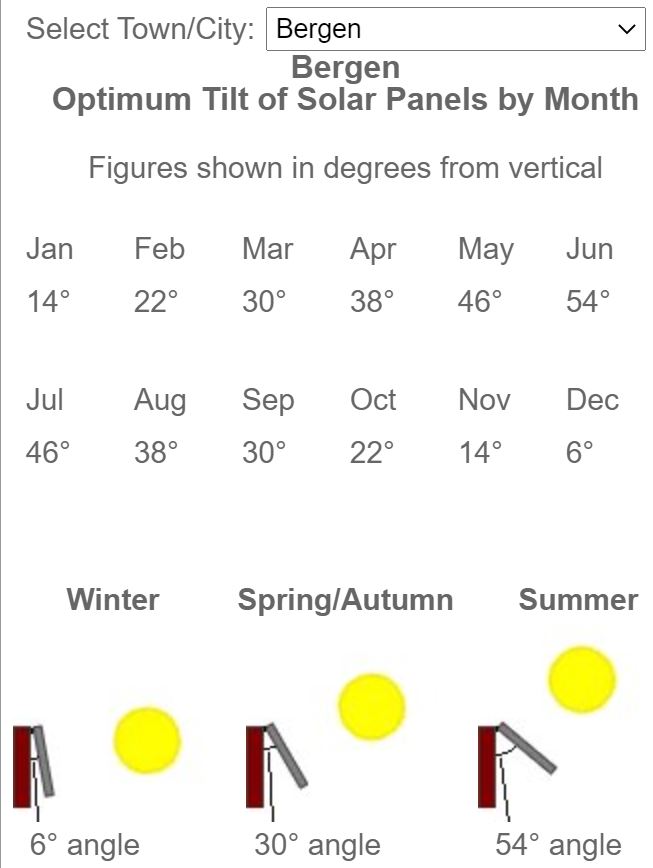
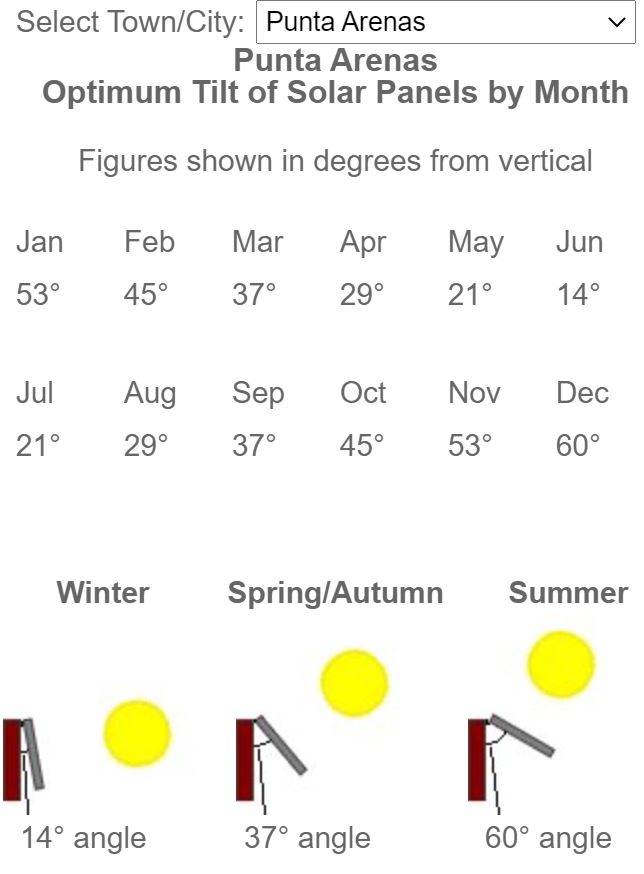
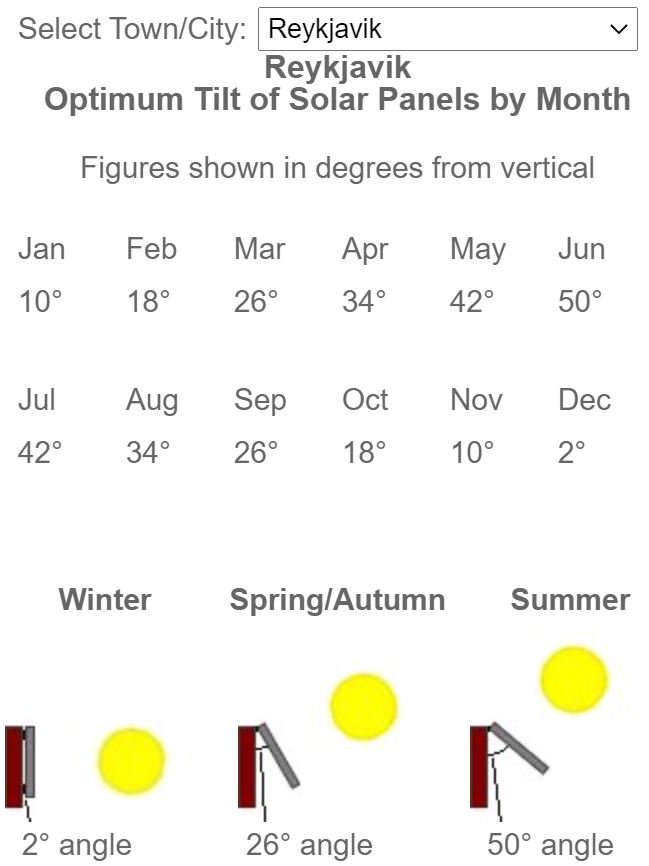
On top of sun angle, being the key efficiency factor while sailing in high latitudes, solar output will be impacted by temperature and overcast. Regarding temperature, the rated formula for Sunbeam systems, is to reduce output by 0.29% for any °C above 20°.
Some use case limitation
| Use case | Limitation |
| High latitude sailing area | Solar angle will go from 50° to 30° from nominal, and output will drop to 30% to 50%, not computing weather overcast |
| Light overcast | Panel output goes down to 60-80% |
| Heavy overcast | Panel output goes down to 20-30% |
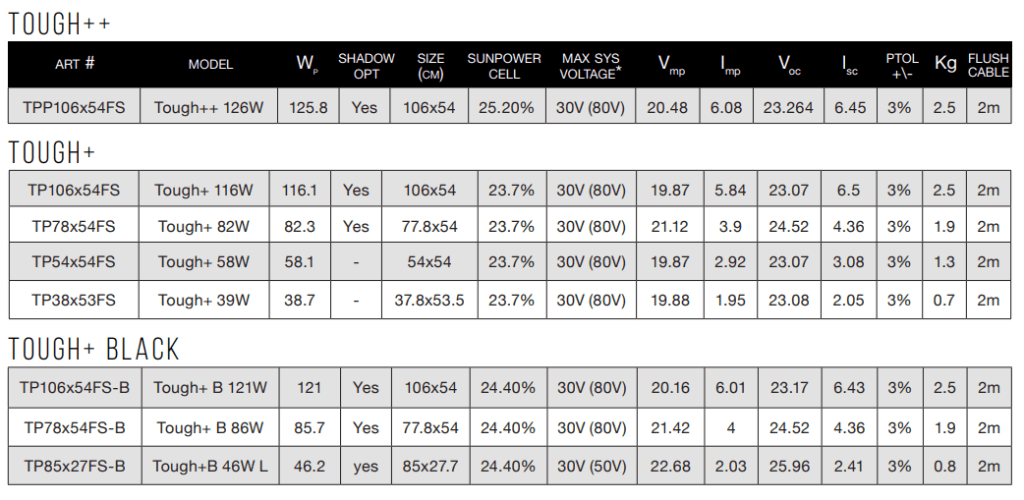
Selected panel information
- Sunbeam systems (Sweden) for the roof panels, we’re planning for 1750 W there.
Wind generation
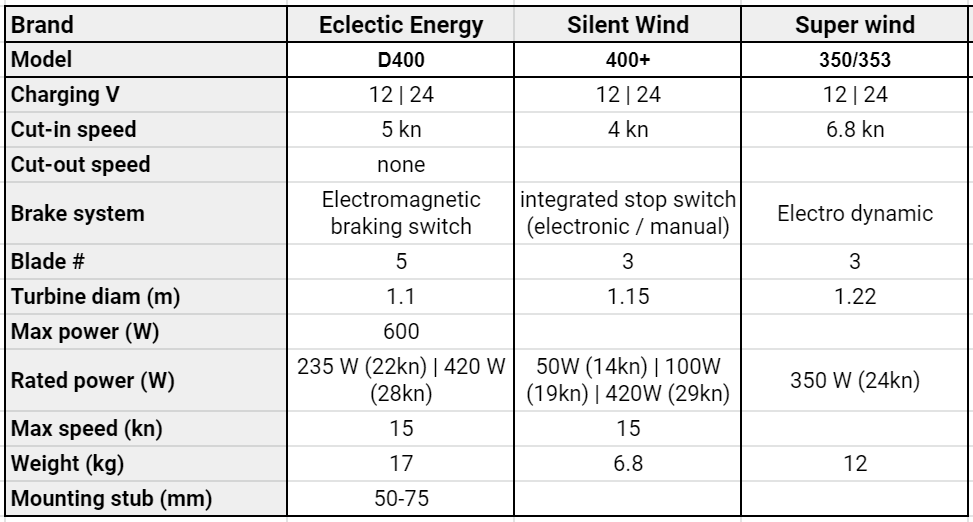
Wind generators were a must-have a decade ago for long range boats, especially the ones sailing in high latitude areas. Many would complain of the noise or vibrations, but most would agree that night and day production made it a useful complement to solar and hydro generation. We’ve had a d400 for over 10 years, and it did induce some significant nuisance after it was damaged by a hasty reefing. Since its replacement, we can’t complain about any noise or vibration. The use case for a wind turbine would be “extended off-the-grid mooring (or anchorage of course) in windy and mainly overcast location”, and we’ll run it in our energy model.
- Eclectic Energy D400 (UK)
- Silent wind (Portugal)
- Super wind 353 (USA)

Silent Wind 400 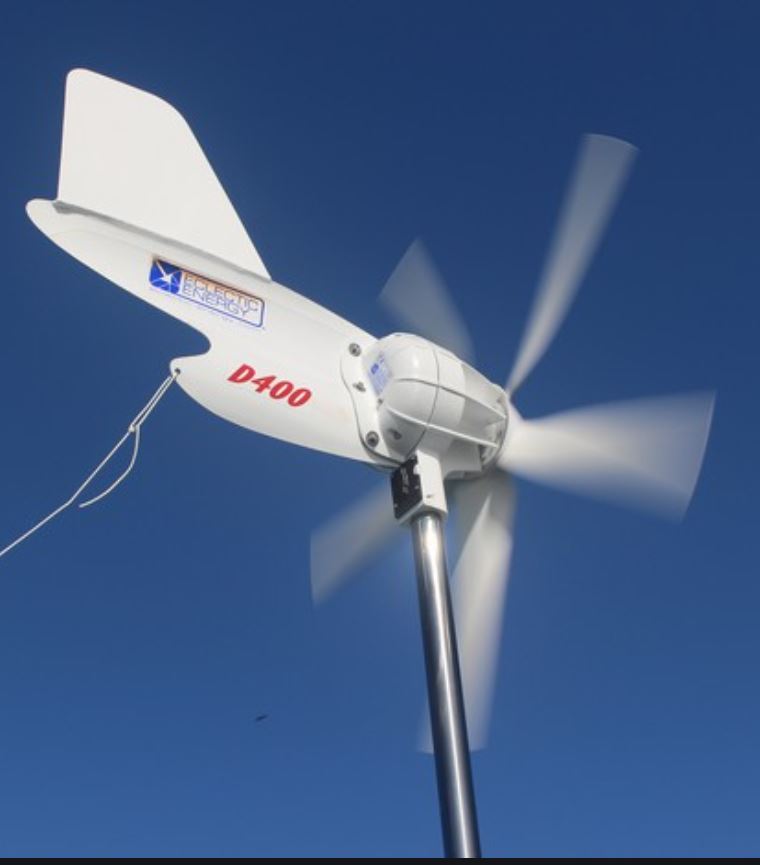
Eclectic Energy d400 
Super wind 353
Hydro generator
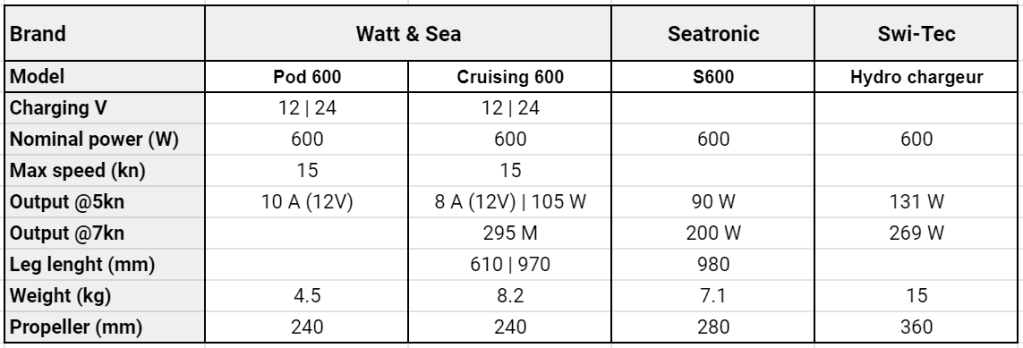
We definitely plan a hydrogenator for long range sailing journeys. We plan on Watt and sea, but not the pod600 system, despite its seducing form factor. What happens when anything gets stuck in the propeller under the hull?
The use case we’ll run into the model will be “long range sailing when solar is mainly covered, or in overcast weather areas”.
- Watt and Sea (French)
- Seatronic S600 (French)
- Swi-Tec (French)
- Ocean Power (Germany)
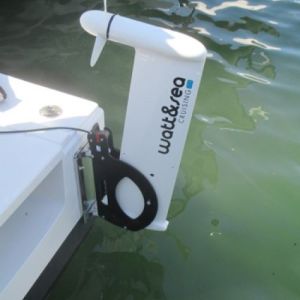
Watt & Sea 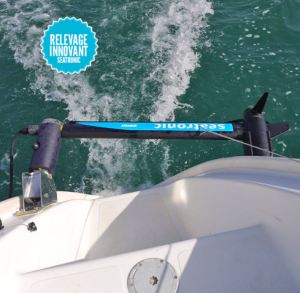
Seatronic 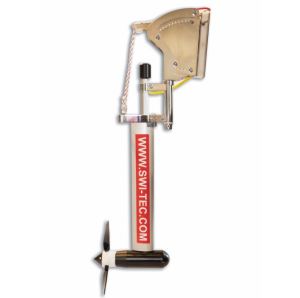
Swi-Tec
Generator
We have two main expectations regarding the genset: noise on one hand, and fuel consumption on the other, beyond the obvious MTBF. Both factors push us toward variable speed technology.
- Panda 5000i.Neo PMS (Germany)
- Panda 8000i PMS (Germany)
- Wisper power Piccolo 5 Marine 4.4 kVA / 3 kW (Netherlands)

Fischer Panda 5000i Neo 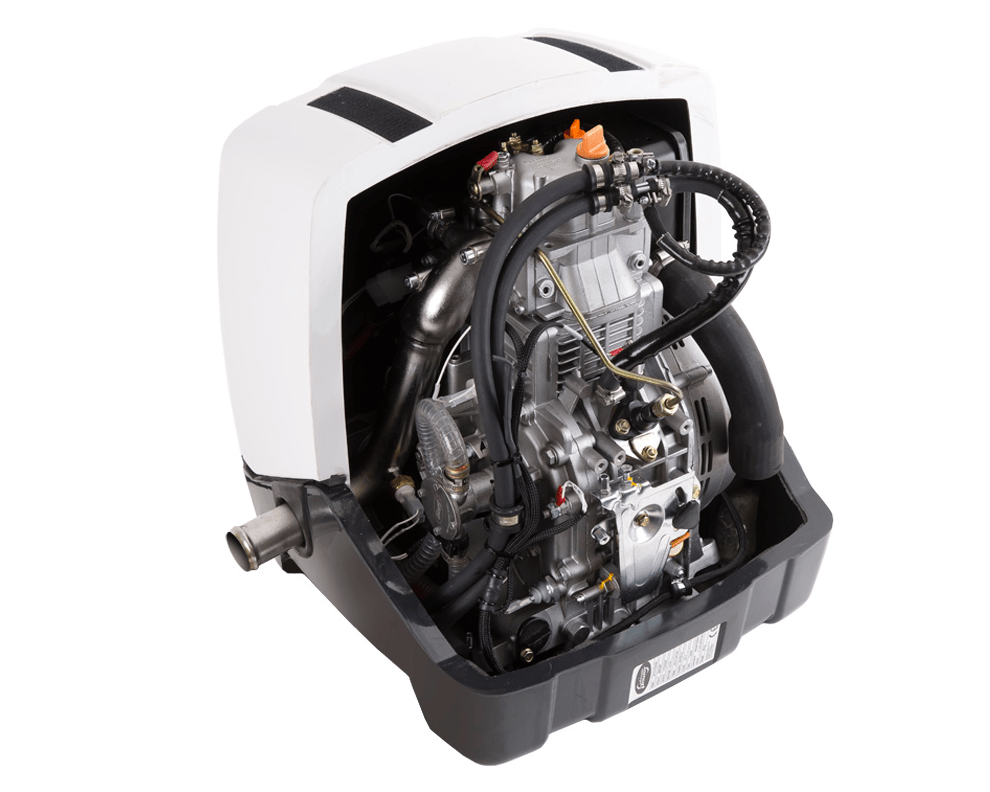
Whisper Power Piccolo 5 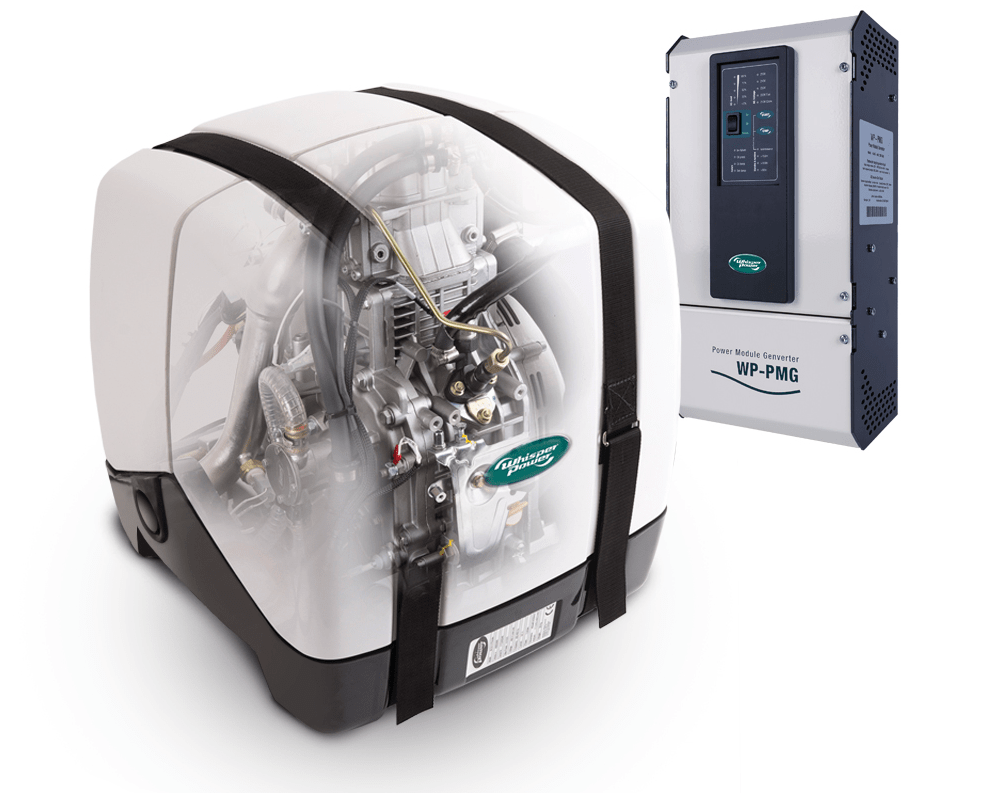
Whisper Power Piccolo 8

Engines alternators
The engines installed on the boats are 2 Volvo d2-75. They come with standard 115A, internally regulated, alternators, and they’re likely to overheat while charging our LiFePo4 bank. So we’d like either to change the standard one, or keep it for the starter battery, and set a second alternator, externally regulated for the bank.
Now this is something we’ll have to discuss with the yard technicians, as increasing side load on the main bearings, such as bolting on a second alternator, may create problems, for instance wearing the water pump (same way excess belt tension impacts externally belted water pump seals and bearings).
It might end up in a warranty-debate with the engine vendor (Volvo Penta).

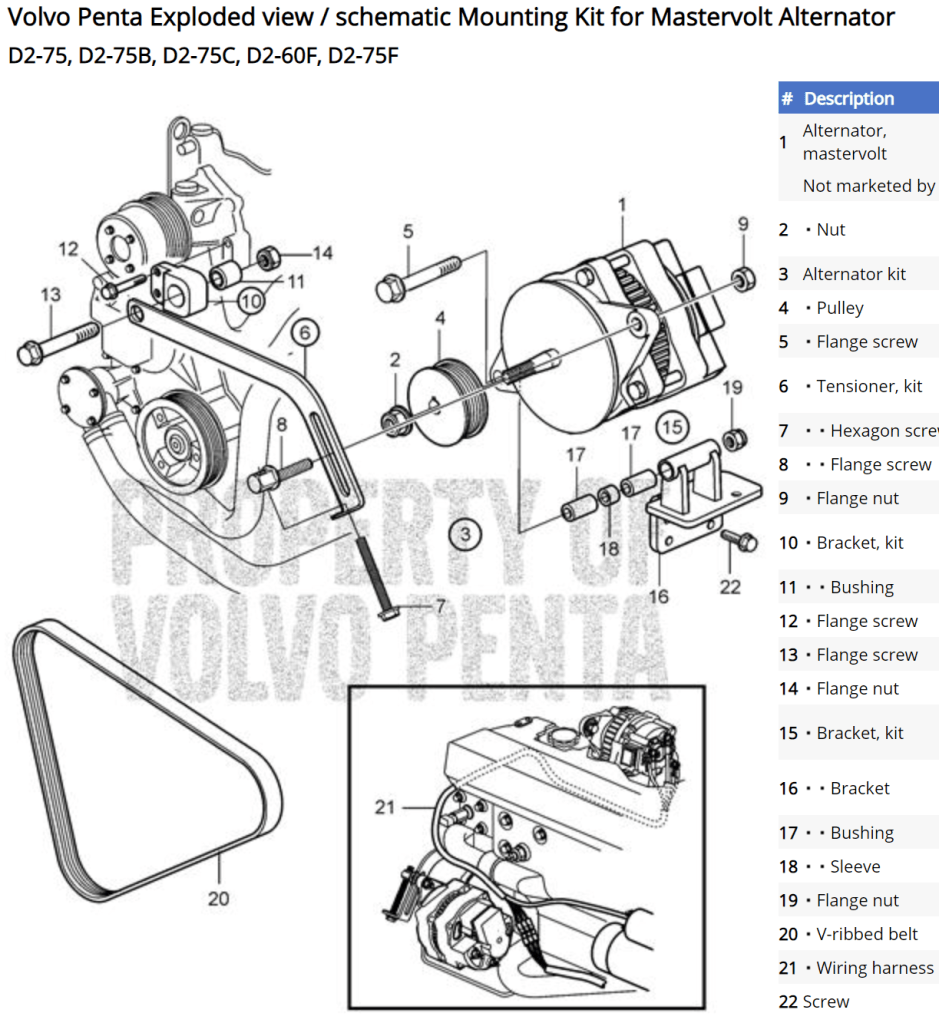
But we did find a kit allowing for the installation of a Mastervolt alternator in Volvo’s part store, as shown here: optimized to deliver continuous high power output in storage applications, suitable for all battery types, including Lithium Ion, high charge current at idle RPM.
 70th parallel