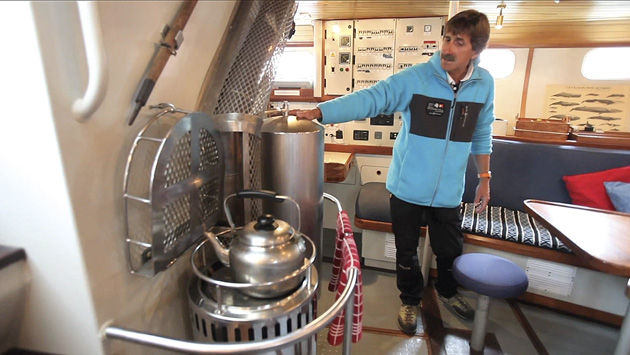
Winter and Northern sailing plans require lots of thinking about thermal efficiency. And since energy is one of the scarce resources on a boat, trying to limit heat loss is as much a priority as producing heat in an efficient way. When Skip Novak goes along with his Pelagic and Pelagic Australis introduction, he insists on the central role played by their fuel stove. But then, there are more than one ways to skin a cat.
In fact, there are different situation to deal with when heating a boat, and Skip’s fuel stove would only be part of the answer:
- Heating when plugged to shore power, an easier issue to deal with. For instance we’ve had this Canadian neighbor once, who would be using an electric blanket while wintering in a marina.
- Off-the-grid heating, which we’re most interested here: (i) while under sail (ii) while motoring and (iii) while anchoring or docked w/o electricity
- Zone heating, to avoid wasting energy on unused areas within the boat.
Most common heating solutions
We choose not to present a reverse air conditioning system because they’re likely to require the use of the generator. So there would be:
- Radiator-type heating, like in a house
- Forced-air heating, when heated air is ducked throughout the boat
- Engine heaters, transforming the engine heat build-up into usable boat heating
- Fuel stove, which can be standalone, or connected to a radiator circuit.
Let’s see their main brands and characteristics.
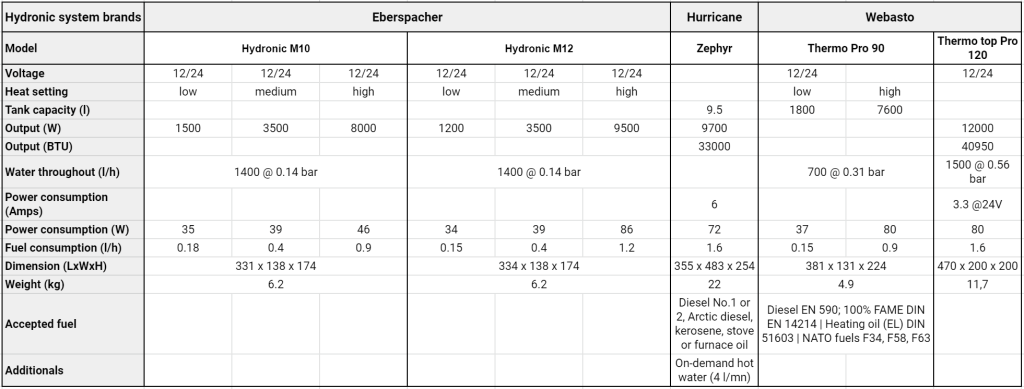
- Hydronic heating
- Installation: typically installed in the engine room, it doesn’t require the large holes and tubing associated with forced air ducted systems. It works just like a house hot water heating, with the water running through tubing to classic radiators or blower-type radiators. The boat can be divided into multiple independent heated zones. The system can be integrated with the engine’s cooling, but the engine itself does not need to be running while the heater is in use as hydronic systems would simply use the coolant to disperse heat.
- Consumption: Hydronic heaters draw electricity to power the system’s coolant pump, a fan for combustion and a fuel-metering pump. They draw the most power during the starting phase, after which energy demand drops once the boat is warm and the system only has to maintain cabin temperature.
- Suppliers: Eberspächer, Hurricane Zephyr, Webasto, Kabola (only on AC voltage), …
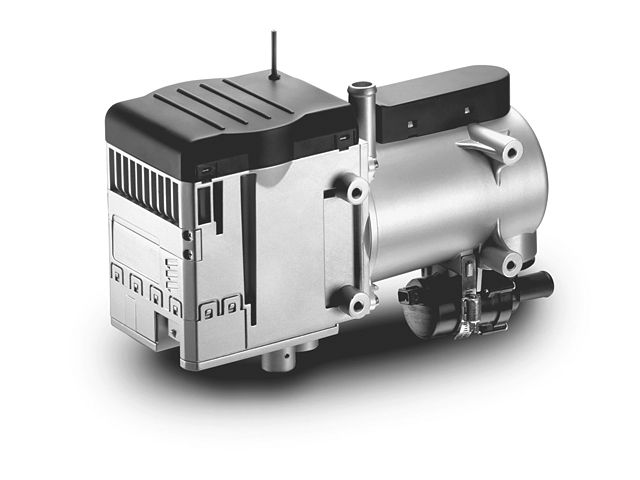
Eberspächer Hydronic M10 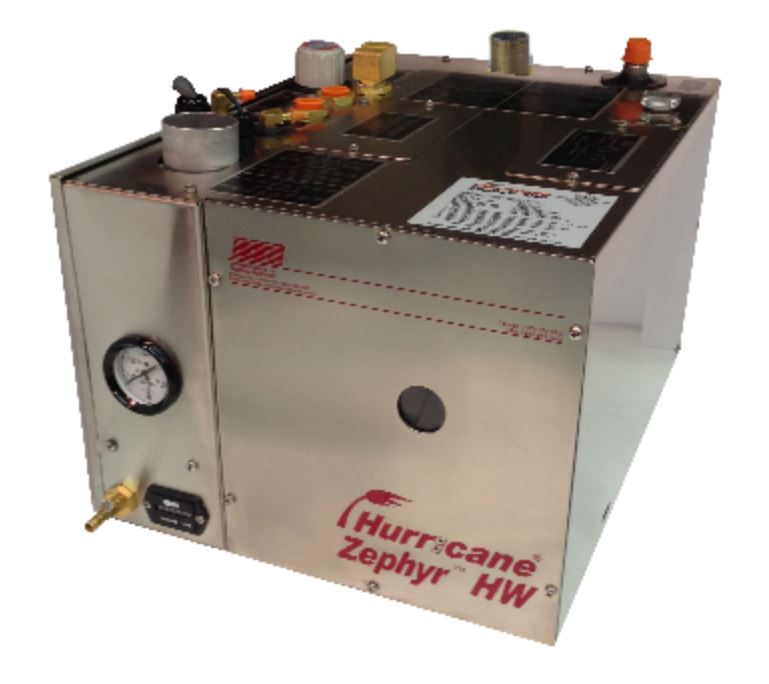
Hurricane Zephyr 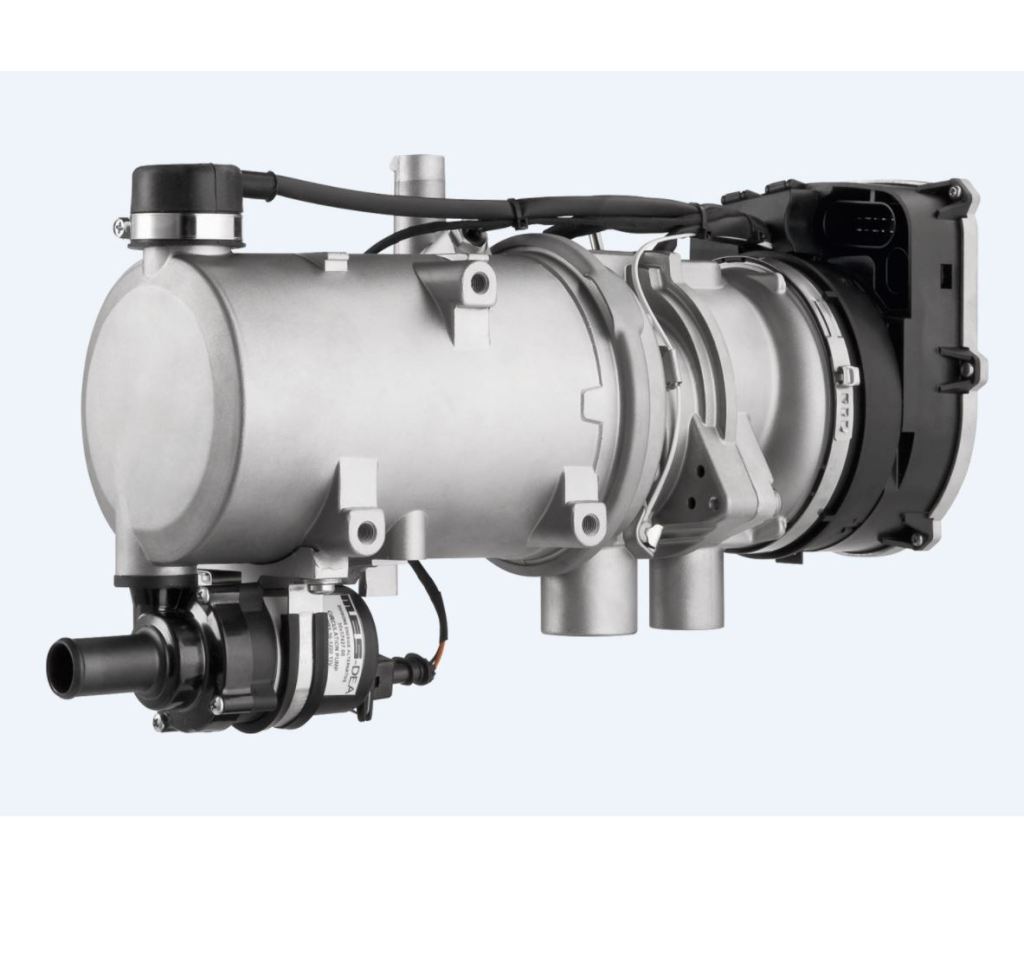
Webasto Hydronic pro 90
- Forced-Air Systems
- Installation: the heater is usually located in the engine compartment, and a burner will heat air through a heat exchanger, which is forced through behind-panels ducts to vents throughout the boat. The combustion exhaust will usually be directed to the stern to be discharged. This system requires more space as the ducks are larger.
- Consumption: ex. Webasto’s Air Top 5500 produced 5,000 to 17,000 BTU/h burning 0.15 to 0.6 l/h of fuel while drawing 1.2 to 8 Ah.
- Brands: Eberspächer’s Airtronic range, Webasto, …
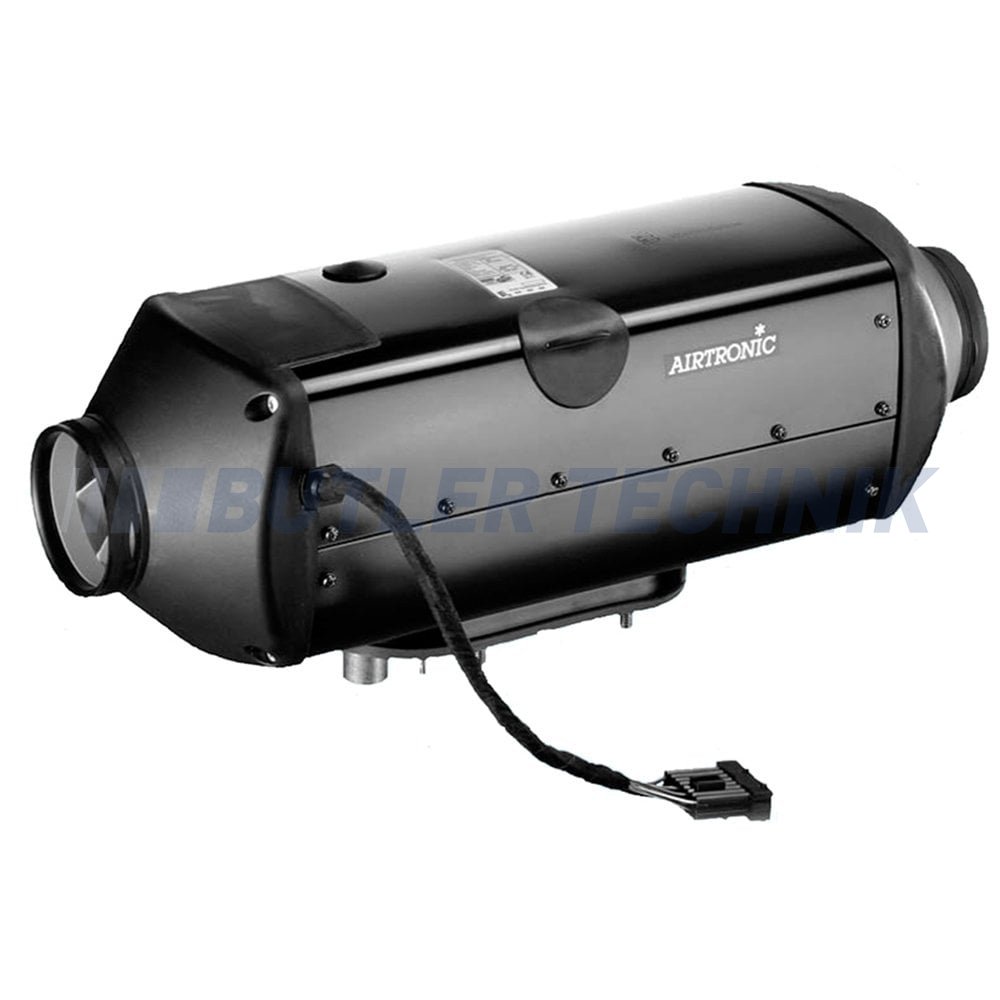
Eberspächer Airtronic D4 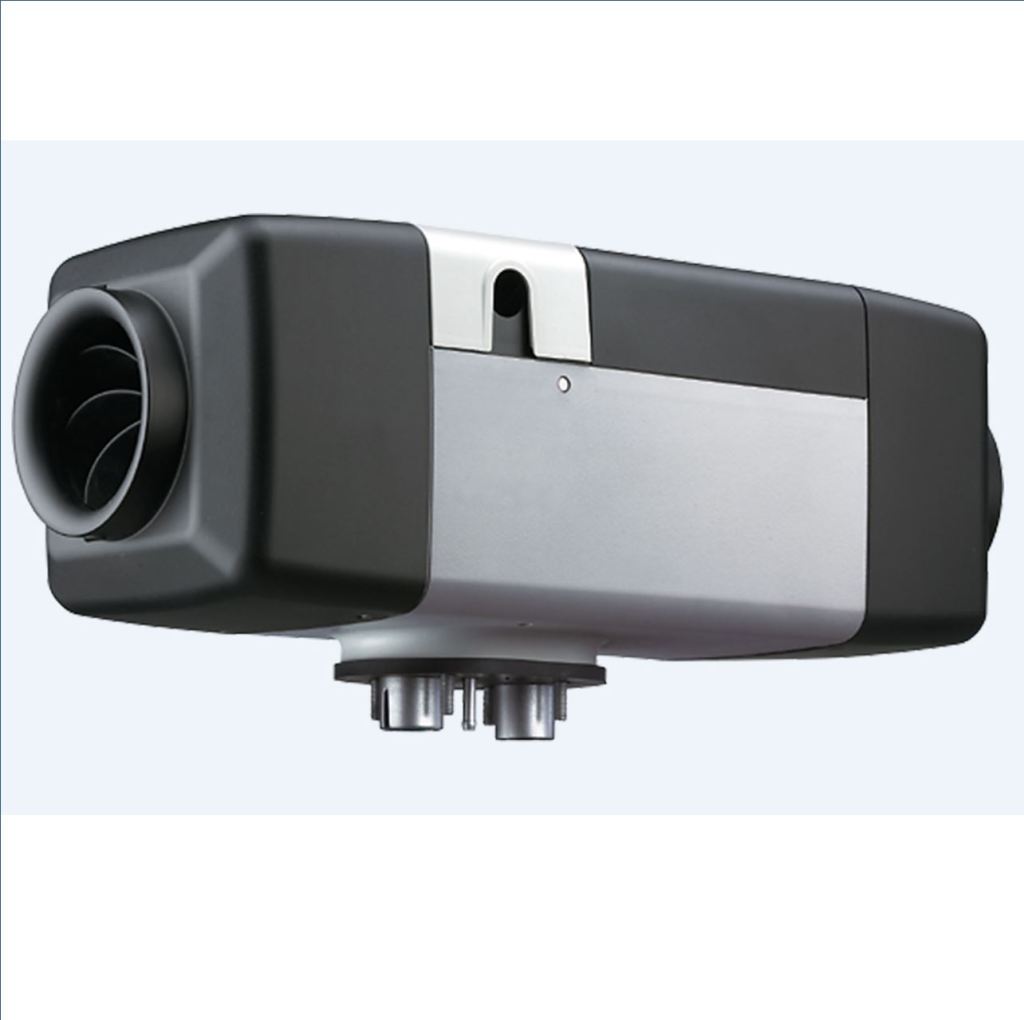
Webasto Air Top Evo 40
- Fuel stove which works with a gravity-fed fuel supply
- Installation (standalone): a day tank, plumed with valve and filter, is set above the stove, avoiding a pipe to the main fuel tank (or maybe one with a small fuel pump, to be activated whenever needed). And in addition to the exhaust pipe, it is usually a good idea to set a pipe drawing air from the outside, maintaining draft in high wind situation, and preventing the stove from burning all the cabin’s O2.
- Installation (radiator-connected): some models will allow their connection to a global heated-water radiator system (see hydronic system above). In this case, some electricity is required to pump the water flow throughout the boat’s radiators.
- Brands: Sig Marine (Canada), Refleks (Sweden), Marine stove and Dickinson (USA) are the most common brands found on high latitude boats, and there is as well Glembring (Norway) and the Arctic Blue flame project (ex-Norskblueflamme).
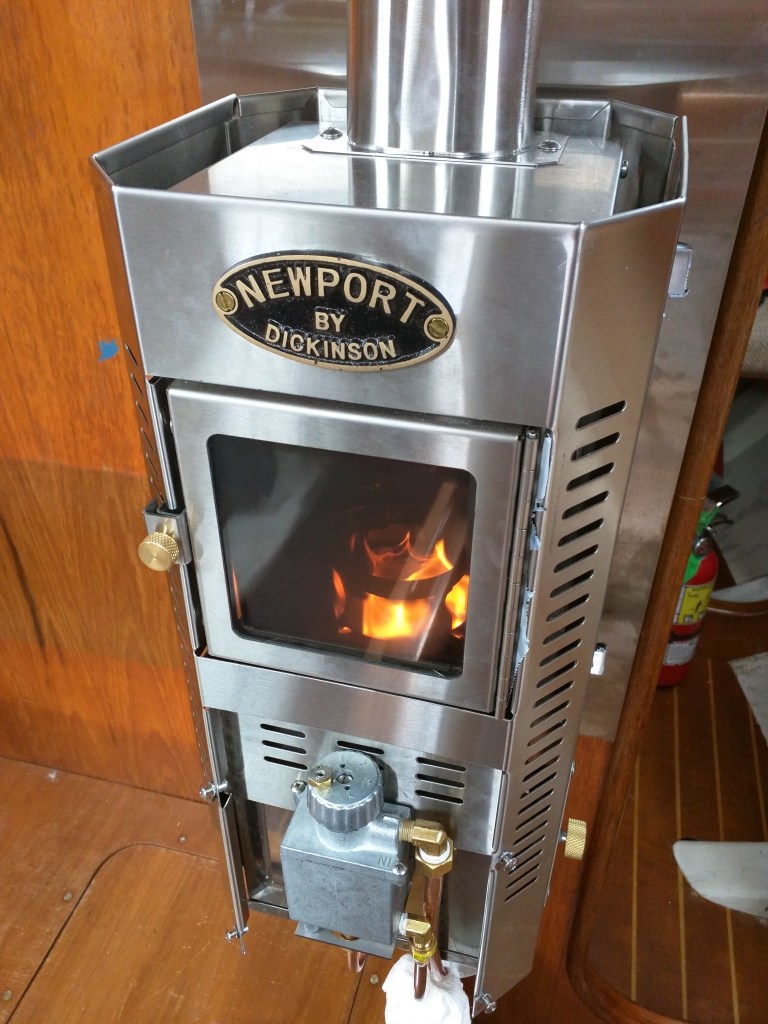
Dickinson fuel stove 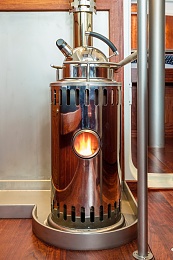
Refleks fuel stove 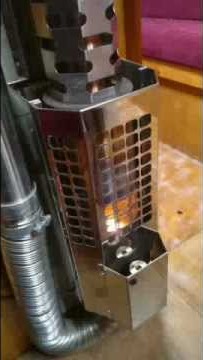
Sig Marine fuel stove 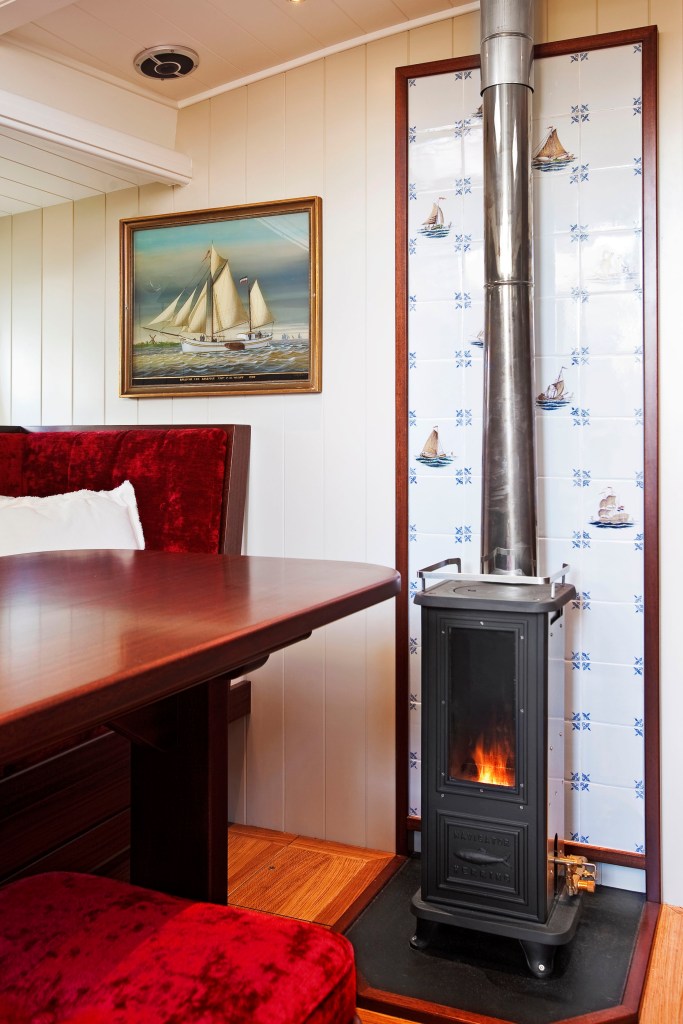
KM Bestevaer s/y Suse – Marine stove “herring” model
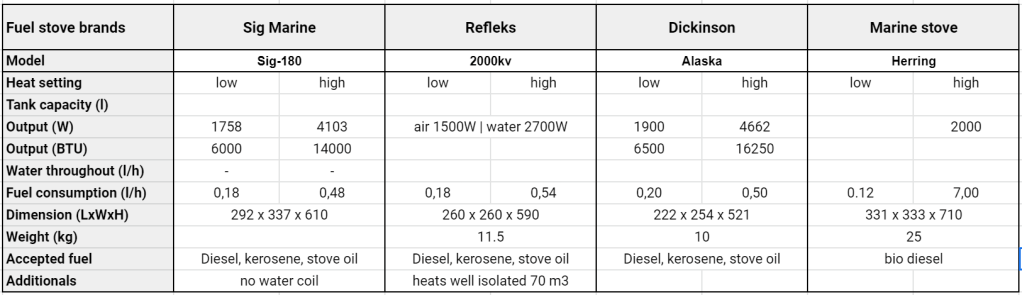
The Refleks stove are fitted in many small Danish commercial north-sea all-seasons fish-boats. They will be the most common in high latitude boats, proposed as a standard options in KM Bestevaer or Boreal range. While many of these high latitude sailor would consider their fuel stove as essential as Skip Novak does, there is a learning curve to prevent smells, smokes, leaks or soot.
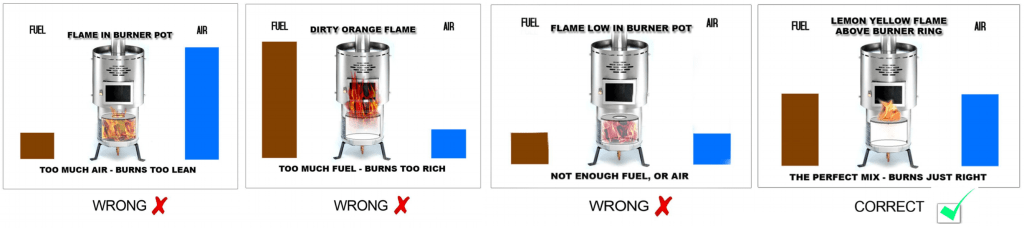
From our standpoint, the nice concentrated heat coming out of it, the little flame in the cold, with the additional benefits of keeping a hot kettle on the ready or its cooking ability are priceless. We will definitely try our best to fit one of these in the heating system of the boat. Since we’d like to have it as a backup unit for the main hydronic system, it’s likely to be the Refleks 2000kv, which includes as an option the coiled radiator connection.
Note
- Somme Boat Safety Scheme (“the” BSS in the UK for instance) wouldn’t accept to fill the small tank inside the boat. This implies to find way to fill the day tank from the outside, or to connect it to the main tanks, or to install the day tank outside (?).
- Engine heaters
- Installation: engine manufacturers would propose as an option their own air heater solution, using the engine’s closed-coolant circuit as heating fluid within the heat exchanger. For the rest of it, the installation can mimic the hydronic or forced air.
- Consumption: while this is the best solution while motoring, as it doesn’t use any incremental fuel for heating, in any other situation, it’s not economical both in terms of consumption and engine maintenance.
- Brands: Volvo Penta’s QL Air Heater (output 5kW or 10kW), …
Boat water boiler
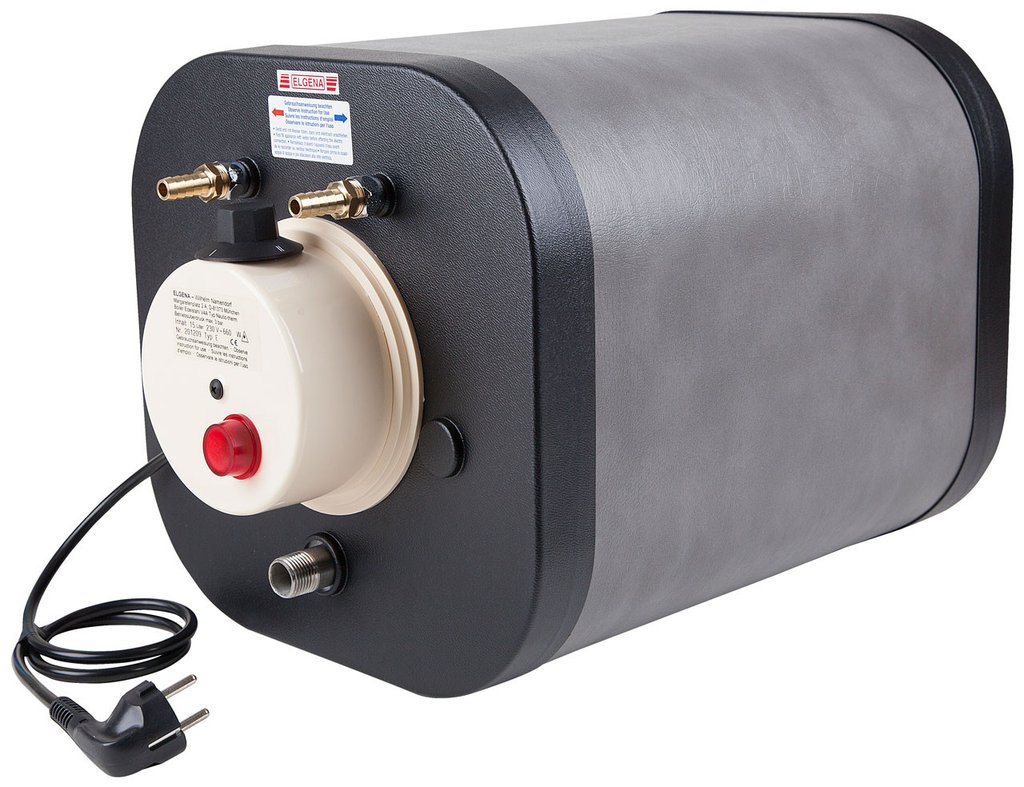
Water boilers can be heated from three different power sources, like with the Elgena range (Germany):
- On shore electricity when the boat is connected
- On batteries, although this would require multiple energy production sources while off-the-grid.
- With the radiator heating circuit
- Heated by the engines when motoring
- Heated by the hydronic system otherwise
Looking for redundancy
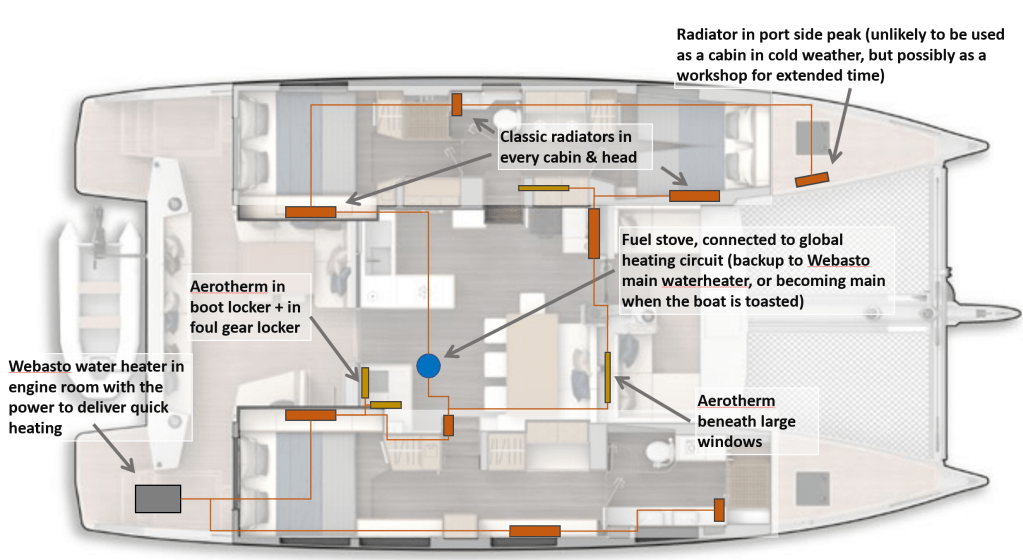
We obviously can’t duplicate every heating system on-board. But the simple fact that two of them can cope with the heating needs in any given situation is expected to do the trick. We plan to use a mix of three different heating sources:

And on top of this, each hull would be fitted with a triple energy 40 l. water heater with a by-pass for the potential failed unit.
Zoning the boat
Based on a heated water circuit with radiators, it is important that we can shut down the heating in areas which are not being used. We can easily think of the following five:
- Zone 1: Front port side cabin + head
- Zone 2: Back port side cabin + head
- Zone 3: Back starboard side cabin and hull space + head
- Zone 4: Central living area
- Zone 5: Port side peak area — as it would be the workshop in cold, high latitude, journeys, maybe it’s a good idea to make it a usable space whenever needed.
Appendix
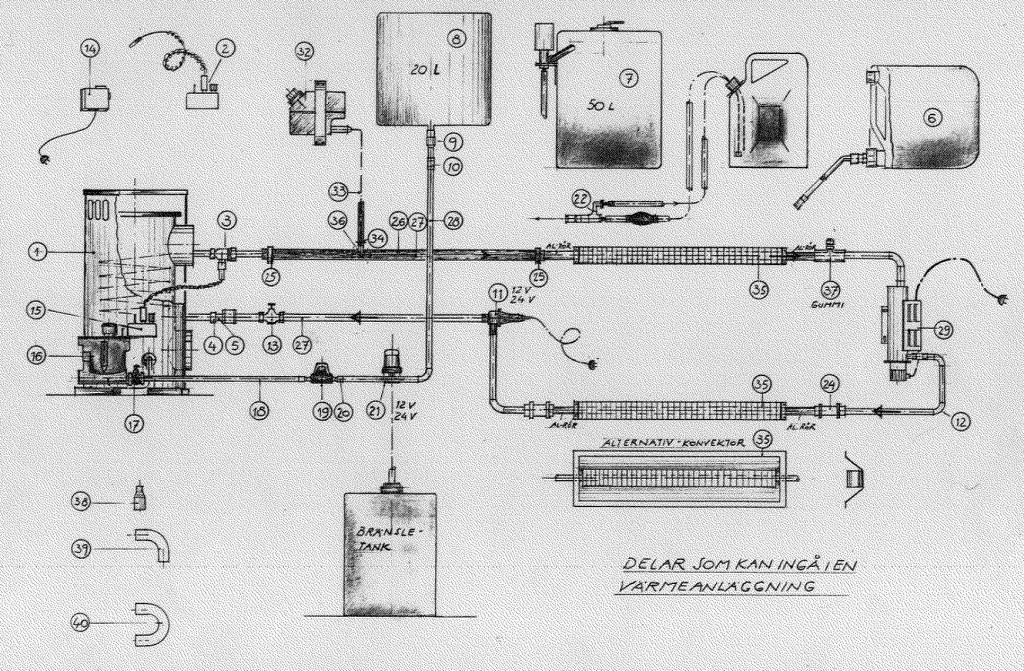
Sig Marine fuel stove installation schematics
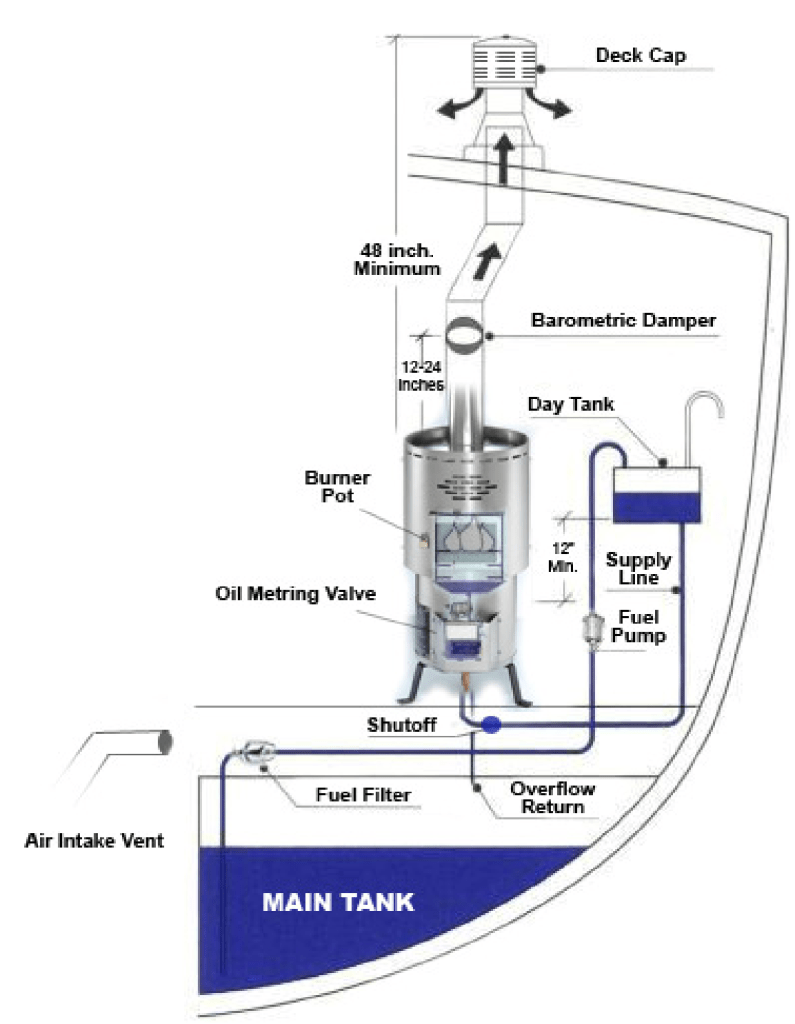
Glembring fuel stove installation schematics
Carbon monoxide (CO) is colorless and odorless, and for this reason, it is recommended to install CO detectors aboard all cruiser with elaborate heating systems and multiple engines. Below one example from MTI industries (UK)
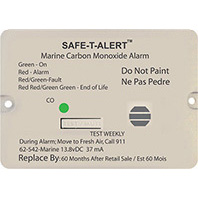
- NMMA Listed Component.
- Space Saving design works in harsh marine environment.
- Works in extreme temperatures. (-40°F to 158°F).
- No False Alarms due to new boat smell, outgassing or non-hazardous levels of hydrocarbon gases encountered while boating.
- Low Current Draw (37 mA).
- Alarm Mute with Auto Reset. With a press of a button, the mute circuit will temporarily silence the alarm while the boater ventilates the cabin.
- End of Life Signal alerts to replace the alarm after 5 years of service.
- Memory Scan. Retains the CO level that activated the alarm.
- Rapid recovery sensor resets when silenced or reactivates alarm if dangerous levels of CO remain.
 70th parallel