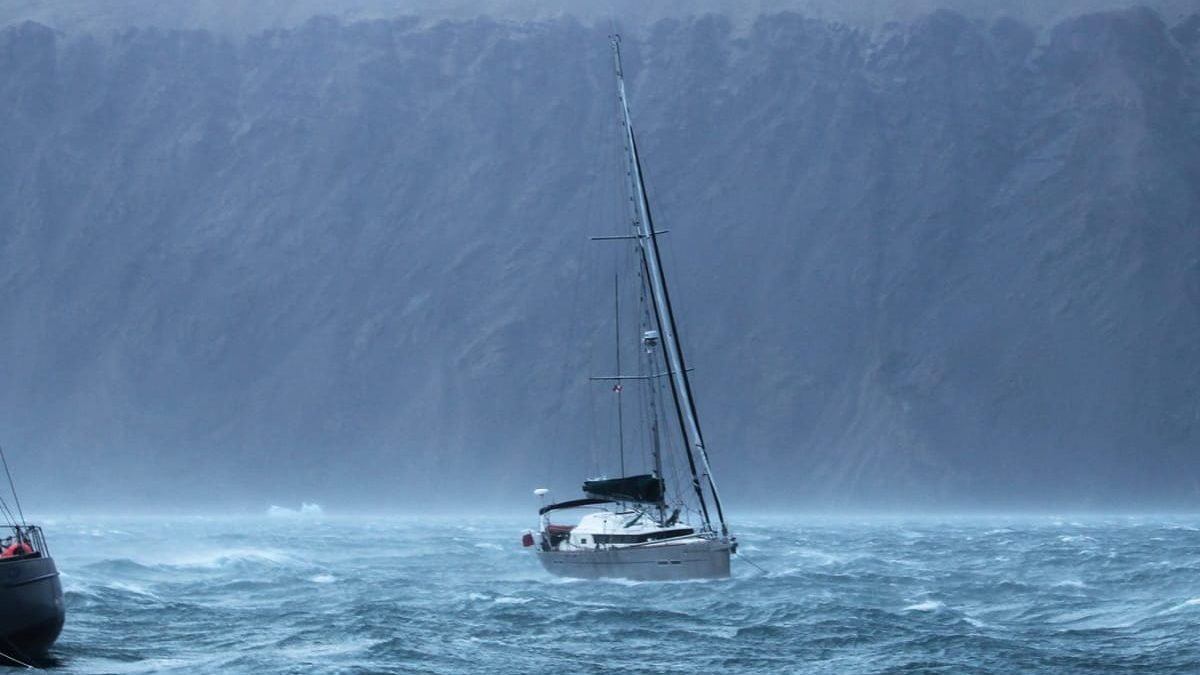
It has been the IRC goal for thirty years to calculate how seaworthy were the boats engaged into races all around the planet. Their Safety and Stability Screening (SSS) method was define to rank all participating boats from a stability and safety perspective. The higher the SSS number is, the more seaworthy, in regard with IRC’s criteria.
When speaking of seaworthiness for offshore and high latitude boat, although we have speed and stability considerations in mind, in no way do we consider racing capabilities. What we have is mind is speed in different sailing circumstances, like light wind and upwind, anchoring behavior and boat handling in storm condition.
Speed
Because of their rugged and autonomous design, high latitude sailing boats are usually heavy, and likely to sail at their hull speed, which is determined by their waterline length.
Hull Speed: otherwise called “displacement speed” is the speed at which the wavelength of the bow wave is equal to the length of the boat. The bow wave’s wavelength increases with the speed, and usually its crest-to-trough dimension (height) increases as well. Hull speed formula is H ~ 1.34 × √(L), where L is the boat’s waterline length.
Wikipedia
Weight is a key factor, but all the other sailing parameters should be considered, especially sail area compared to weight or to wet surface. In the Southern seas, wind isn’t an issue, and sailing will usually be reefed – with the exception of Antarctica, where low pressures will induce motor sailing mainly. High North, sailing will as well mostly occur in light winds, requiring a minimal wet surface, combined with large sails.
And of course, the boat should have the usual sailing capabilities for all areas in between, especially upwind capability, as downwind isn’t always an option when trying to dodge an incoming gale near a coast.
Anchoring
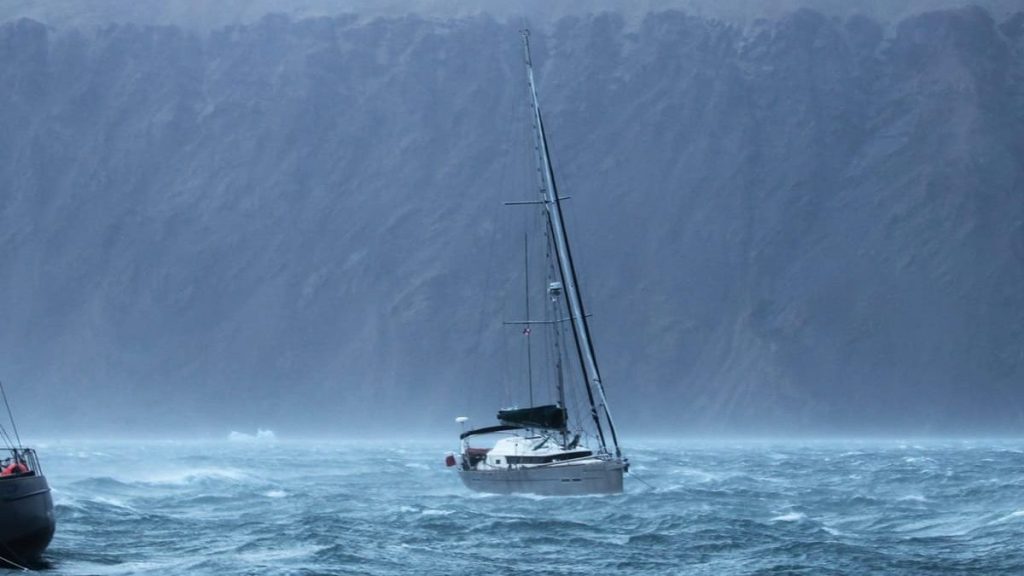
From our standpoint, as we know we spend most of the time on anchor, seaworthiness should include boat behavior while on anchor in gale conditions. There are many anchor and anchoring techniques to be discussed here, but at this stage, we’re only interested in windage and deck cluttering as key safety factors in those circumstances. Many high latitude boats will have lots of stuff on deck related to autonomy increase (fuel tanks for instance), or specific anchoring condition (large reels of long mooring lines). Windage is a difficult value to calculate, but we can easily understand how deck cluttering and layout can impact its value.
Handling
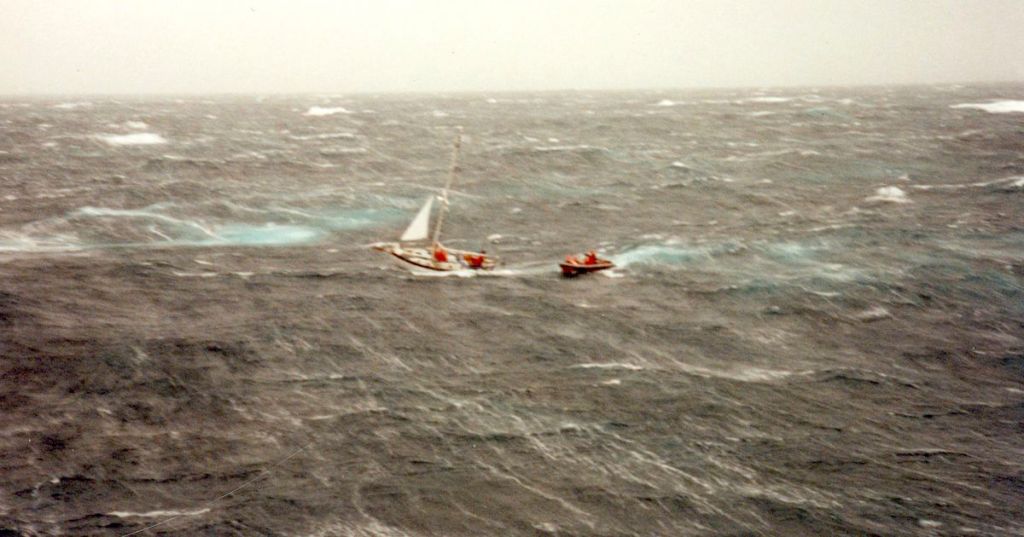
Another item to factor into our seaworthiness assessment is how the boat behaves in very strong winds. These days, thanks to global communication systems and increasingly reliable weather forecasts, a boat captain is unlikely to be surprised by a storm. Even the Drake passage, for a long time considered as one of the most hazardous sailing journey, is now crossed in optimized weather windows. Mind you, that doesn’t mean that a sudden squall or storm won’t ever hit you, either by surprise, or by necessity (forcing you to move out of an anchorage for instance). On the contrary, this will happen pretty often, and reefing easiness and boat handling in these condition are key safety factors.
With this in mind, boat handling in gale condition is an important criteria for us, especially since we’re regularly sailing shorthanded, or even solo. Staysail, or even storm sail, winch position, reefing organization etc all important points to factor in.
Strong wind conditions brings up the topics of reefing or Jordan Serie drogue deployment. Regarding reefing, we’ll be looking for a 4 reef main sail instead of the usual 3, and while we rule out in-mast furling we’ll consider boom furling.
So that brings up the question : how specialized should a boat be?
Some sailors have a radical answer : one program, one boat.
Most try to compromise. Demanding sailing areas such as iced North, or the Roaring Forties in the South, would suggest that the boat should be fitted for the most demanding areas.
As far as we are concerned, we plan to keep her for at least ten years, and there can be only one boat. So we’ll try the exercice of complying with the most demanding places, while not making deal-breaking choices for the tropical cruise which will surely happen at some point.
When considering our options, as far as seaworthiness is concerned, we’ll be benchmarking potential sailing performance against a few key data :
- Sail area / displacement
- Sail area / wetted surface
- Lenght / displacement
“Sail area/displacement” is a key ratio to assess speed capabilities in windy conditions, while “Sail area/wetted surface” is better to assess light wind speed capabilities. In the high North, light wind sailing capability might come directly in contradiction with the large fuel tank weight impact on wetted surface.
Which brings us to the boat’s length and hull shape, as it is directly related to the sail area it can carry. For instance, recent boat design, with their large flat hull, carry larger sail surface than older classic design, but increasing as well their wetted surface, especially while heeled. As these cruising boats are usually deeper than their racing inspiration, an overweigh such boat is likely to underperform in light wind because of its additional wetted surface.
The “length/displacement” ratio will be used as well to rank the results of our search for the ideal high latitude boat, taking into account its seaworthiness.
 70th parallel